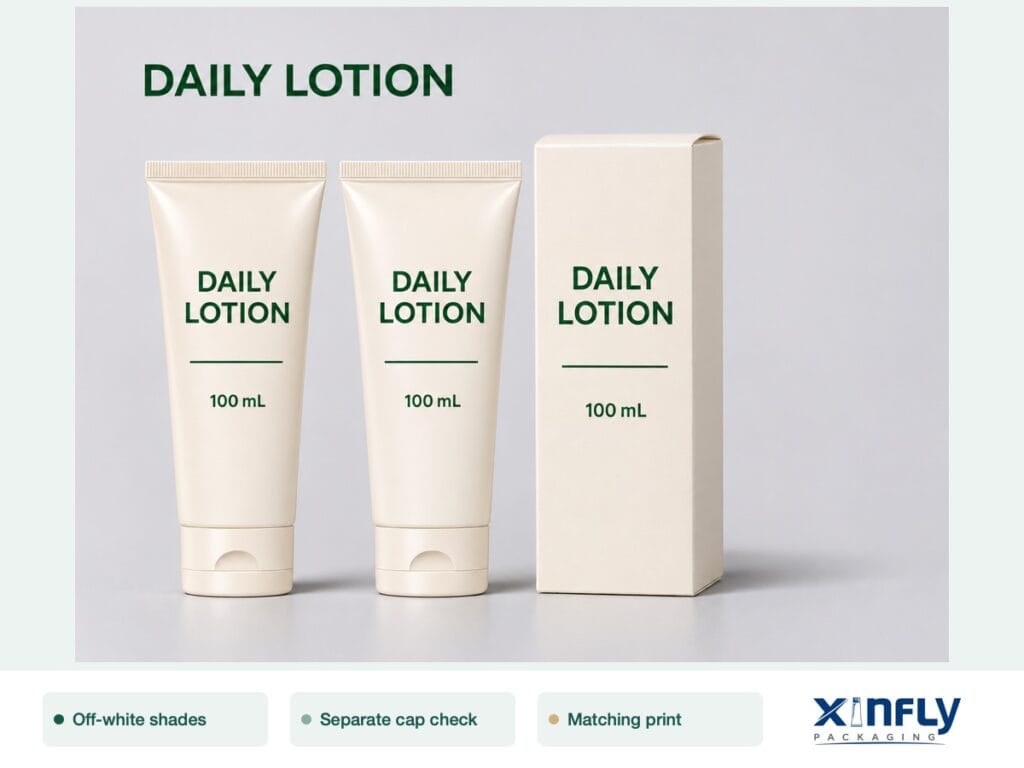
A buyer approves a warm ivory lotion tube and sees a slightly cooler shade on the next delivery. The product name is printed correctly and the caps fit, but a row of the tubes on a shelf makes the difference obvious. The supplier and buyer both believe they matched the original proof. They may have looked at different surfaces, used different lighting, or compared samples from different points in production.
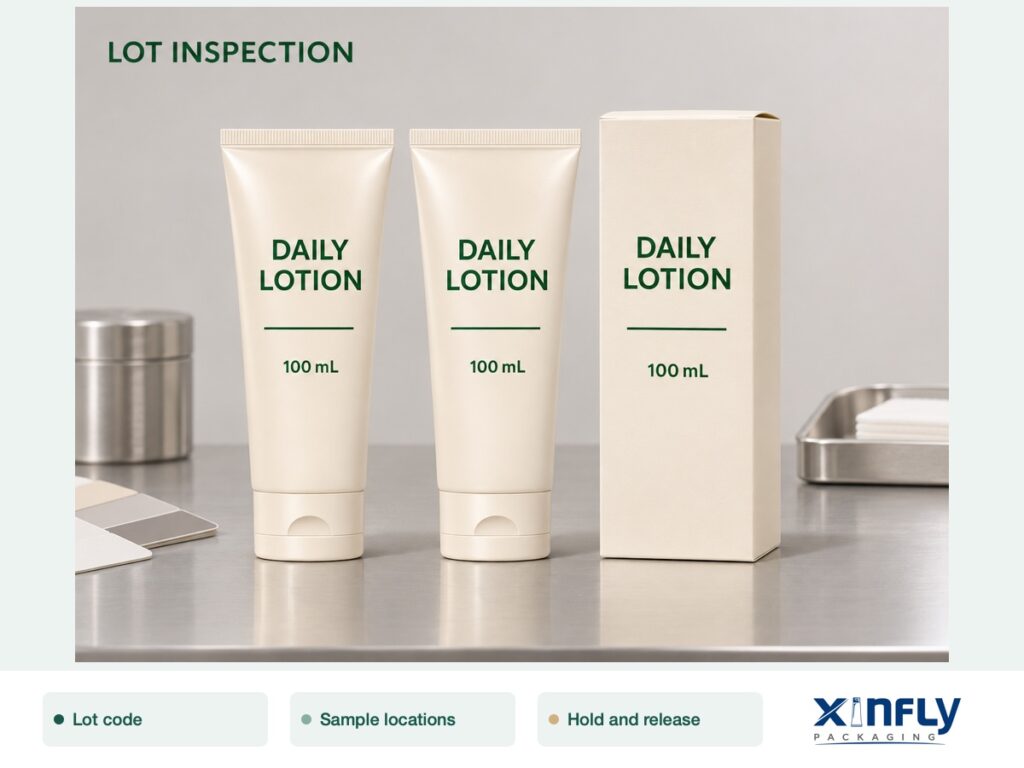
A PCR tube incoming color lot check gives both sides the same reference and decision rules. The example is a 100 mL flexible PE body with a proposed post-consumer recycled resin blend, molded shoulder, straight sealed tail, cream flip-top, and one-color green print. The visual examples use two nearby off-white shades to explain the check. They are illustrations of comparison, not evidence of recycled content or a measured production result. Start with the available PCR cosmetic tube constructions and agree on the actual material and decoration before setting tolerances.
Decide Which Color You Are Buying
Identify the Reference by Part and Surface
A complete tube may have a body, shoulder and cap made separately. Agree on the reference for each visible part. Define whether the cap should match the body, sit within a deliberate family of tones, or contrast. Note whether the material is matte, glossy, translucent, or opaque, since finish changes how a surface looks under light. A flat color chip is useful for choosing a direction. A retained production-style tube is more useful for deciding whether a curved decorated pack meets the agreed brief.
Ask What the Recycled Content Declaration Covers
Request the agreed material construction, supplier specification, and how recycled content is calculated for the part you are buying. Record whether the percentage relates to a layer, the tube body, or another defined scope. Keep documentation for the order separate from appearance results. A visual inspection cannot establish the amount of recycled material or the package's recyclability. If you want a body blend with a different layer or finish, ask the supplier for an updated sample and part description.
Keep a Signed Master Away From Daily Handling
Retain the signed physical standard with its date, revision, and relevant print information. Store it in a way that protects it from repeated handling, sunlight, and unnecessary exposure. Use a working reference for routine receiving checks and compare that copy with the master at intervals your team agrees. If the master gets damaged or discolors, document the replacement rather than treating a new tube as if it were the old standard.
| Part | Approved reference | Record separately |
|---|---|---|
| Tube body | Production-style body with target color and finish | Material and layer scope, viewing zone, and acceptable range |
| Shoulder | Retained assembled tube showing the body transition | Whether a visible tone difference is acceptable |
| Closure | Actual molded part and fitted tube | Color, finish, and cap revision |
| Signed print proof on the accepted tube | Ink target, substrate, and acceptable appearance | |
| Folding carton | Printed paperboard proof assembled beside the tube | Which colors should match and which should contrast |
Check the Incoming Lot in a Consistent Way
Look at the Same Areas Under the Same Light
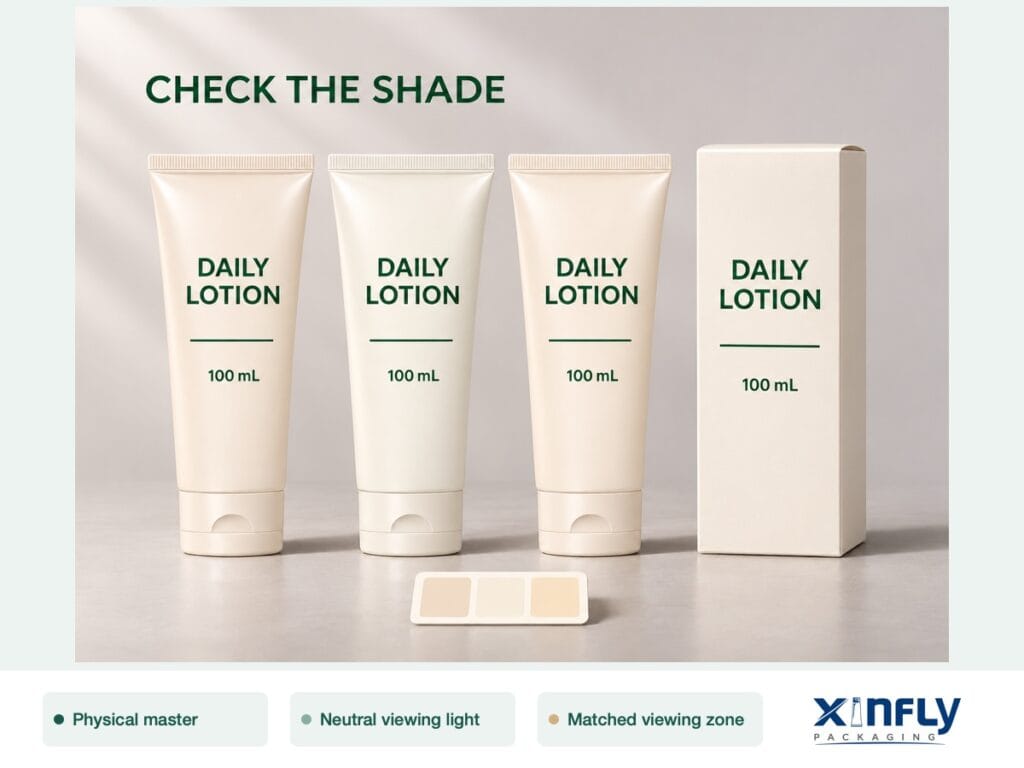
Set the master and samples side by side against an agreed neutral background. View the same parts from the same angle. Compare the body at an agreed unprinted area before judging the green print or the cap. If the package will be sold under warm retail lighting, make that a separate viewing check. Two samples can look close at the desk and visibly different under another light. If the team uses a viewing booth, agree on the settings and train both supplier and buyer on the same procedure.
Sample More Than One Carton
Ask the supplier how the shipment is divided by production lot and when each section was made. Have the receiving team record the lot code, carton, and sample positions. Do not mix several lots into one pile before checking. If a color change appears only in one lot, the team should be able to isolate it without holding every carton. Decide the number of units and how to sample based on your existing quality plan and the shipment configuration. Record the actual sample, including any units set aside for a closer check.
Agree on How to Use a Measurement Device
If your quality team uses a color instrument, agree on the device setup, measurement geometry, aperture, backing, and location on the tube. A curved surface may be difficult to measure consistently without a fixture. For a translucent part, use the same backing each time. A supplier's measurement is comparable only if the method and interpretation match. Pair the numbers with a visual reference and state how the team should decide when the two checks disagree.
Separate Body Shade From Ink and Cap Shade
The green ink can appear darker on a cooler body, even when its own formulation is unchanged. A gloss difference can also change the impression of color. Check an unprinted zone first, then compare the print and cap separately. If one area is out, photograph it with a sample code and refer to the correct approved reference. Xinfly's guide to color shifts between tube production batches provides context for discussing repeatability with the supplier.
| Observation | Check first | Record or action |
|---|---|---|
| Body shade changes across lots | Unprinted viewing area and approved body reference | Hold affected lot for review and document carton IDs |
| Ink appears different on the same body | Print proof, lighting and actual substrate | Confirm ink and finish before requesting correction |
| Cap and body look mismatched | Approved references for both parts | Check whether resin, colorant or component revision changed |
| Only some cartons vary | Lot, manufacturing sequence and packing record | Keep affected cartons separated for a traceable comparison |
| Instrument and visual checks disagree | Setup, location, viewing condition and surface shape | Repeat with the agreed procedure and escalate if needed |
Decide Whether to Release the Shipment
Create a Hold and Review Step
Define who can place a lot on hold, who contacts the supplier, and what evidence is required to release it. Save photographs and measured observations alongside the retained sample and lot code. Do not use photos alone as the color standard because screens and cameras can render the same tube differently. If the parts are otherwise in specification, agree whether your brand permits a documented exception. A release decision for one batch should not quietly change the reference for all later orders.
Tell the Supplier Which Changes Need New Approval
Ask for advance notice if the resin grade, colorant, material blend, surface treatment, cap source, or printing process changes. The supplier can then show what changed with updated paperwork and a new physical proof when appropriate. Record which compatibility, appearance, and filling checks must be repeated for each type of change. If the first quotation uses a stock sample, request production-representative tube samples before treating its color as the order standard.
Review the Assembled Tube Against the Printed Carton
Place the lot sample beside the approved carton under both agreed viewing conditions. Decide which paperboard and plastic colors are intended to match. The surfaces may behave differently in the light even if the artwork file uses the same color on both. Ask for a physical carton proof, and compare the green print and off-white background side by side. If the design uses a deliberate contrast, show an accepted pair in the packing specification so inspectors know what to expect. Check the lot identification and product name on the printed carton independently of its color.
Keep a Record the Supplier Can Reproduce
Describe what the inspector saw before choosing a cause. Use the lot code, carton number, sample position, comparison light, and part observed. Ask the supplier to pull a retained sample from the same run, then share the procedure and the record. If either side changes the lighting or measurement location during the investigation, capture the new result separately. Keeping the original observation intact makes it easier to tell whether the disagreement comes from a material change or a different viewing setup.
Decide What to Check When a Repeat Order Is Split
If a repeat order will ship in several deliveries, ask the supplier which parts will come from the same production lots and which could change. Decide whether to keep the deliveries separate in storage and packout. This is especially useful when cartons of the same product may sit side by side in a retailer display. Tie each delivery to the same approved master.
Decide Which Incoming Samples to Retain
For custom PCR cosmetic tubes, label a retained unit from each accepted lot with the supplier lot number, receipt date and product variant. Protect the samples in the same way as the approved working reference. When a customer later reports a mismatch between two deliveries, compare both retained pieces under your agreed light before inferring which component changed. Ask the supplier whether it can identify the body and cap lots from the same record. When quoting PCR plastic tubes across a range of colors, set the reference process for each colorway. An approval for one ivory package does not establish the acceptable range for a clear or dark variant.
Price the Acceptance Scope, Not Just the Part
Request comparable quotes for the same material scope, body and cap, finish, decoration, visual reference, and sample approval method. Ask who supplies the working references and what is included in repeat orders or a new colorway. Confirm who pays for a second trial if the chosen combination differs from the approved sample. Send Xinfly Packaging the tube drawing, finish and receiving criteria so the team can quote the exact configuration and identify where more proof is needed.
Frequently Asked Questions
Can I use a digital proof as the incoming color standard?
Use a digital proof to review artwork and layout. Approve the material color against a physical reference under agreed lighting, and keep that reference with the specification.
Does a warmer shade mean the tube has more recycled material?
Appearance cannot establish recycled content. Ask for the supplier documentation and component scope for the actual order. Check color separately against the approved pack.
Do the body and cap need to have the same color tolerance?
Set a requirement for each part and for the assembled appearance. The material and surface may be different. Document where a small contrast is acceptable and where a match is important.
What if the first shipment looks different from the sample but still looks good?
Hold the affected units for review and compare them against the documented criteria. If the authorized brand and quality teams accept an exception, record the lot and its limits separately from the master.
Can I reuse the same test after changing the tube finish?
Reuse the inspection structure, then agree on a new physical reference for the updated finish and review whether the lighting or measurement method needs to change.
Conclusion
Use a PCR tube incoming color lot check to make the agreed appearance repeatable. Compare the body, cap, and ink against their own references, sample the shipment by lot, and keep material declarations separate from visual acceptance. Give the supplier a record of which changes require another approval before the next order.