
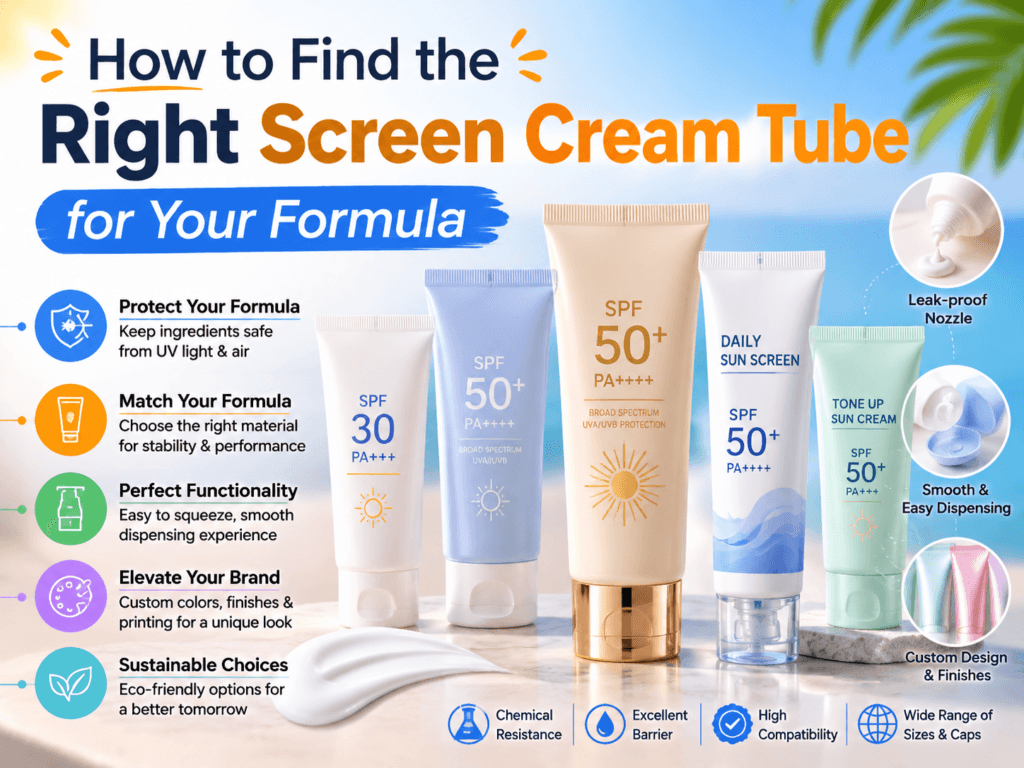
To choose screen cream packaging, you must match the tube’s material, structure, and closure to your formula’s needs. You also need to think about how people will use your product. Good packaging does more than just hold your cream; it keeps your formula safe and fresh while also helping to showcase your brand. If you do not check packaging compatibility, you may encounter problems like swelling tubes, cracks, or changes in your cream’s texture. These issues can lead to a loss of trust in your brand. That is why you should always consider the technical needs. You should check how easy the packaging is to use and see how it aligns with your brand style. Compatibility testing is essential to ensure that your packaging protects both your product and your reputation.
- Incompatibility can cause:
- Product degradation
- Container swelling
- Stress cracking
- Texture changes
Key Takeaways
- Always try your formula in the real tube to stop leaks and texture changes.
- Pick the tube size based on how thick your cream is. This helps stop spills and makes it easy to get the cream out.
- Choose packaging that keeps air, light, and water away from your formula. This helps your cream last longer.
- Think about using eco-friendly materials like PCR tubes. This can make your brand look more green.
- Use the final checklist to make sure your tube is right before you order it.
Assess Formula and Product Needs
Ingredient Compatibility
When you start looking for the right cosmetic tube, always check how your formula reacts with the packaging. Some ingredients can break down certain tube materials, which can cause leaks or even change the color and smell of your cream. You should fill a sample tube with your actual formula and place it in a warm area for a few weeks. Check the tube for leaks, swelling, or cracks. Also, look at your cream for any changes in color or odor. This simple test helps you spot problems before your product reaches customers.
Tip: Always test your final formula in the exact cosmetic tube you plan to use. This step can save you from costly mistakes later.
Viscosity and Tube Diameter
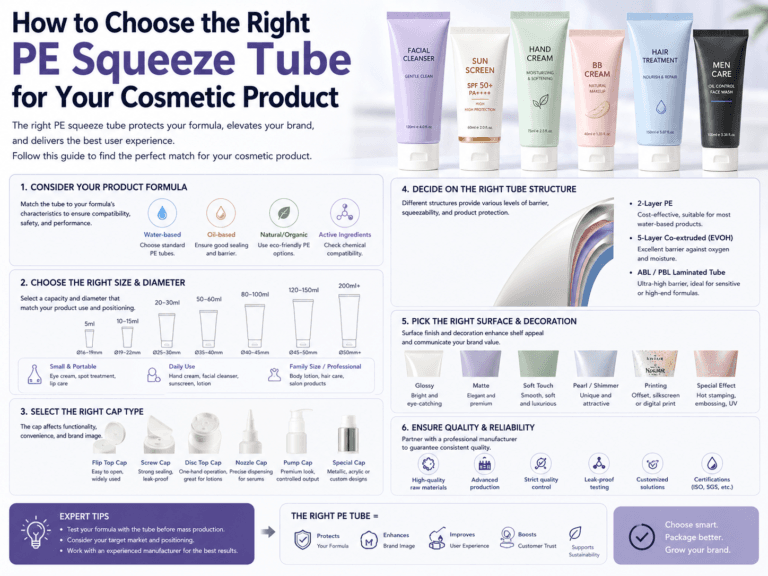
The thickness of your cream matters a lot when picking a tube. If your product is thin, like a serum, you need a small opening to prevent spills and waste. For thick creams, a wider tube makes it easier for customers to squeeze out the right amount. Here’s what you should keep in mind:
- Watery serums need narrow tubes for better control.
- Thick creams need wider tubes for easy flow.
- Matching the tube diameter to your product’s viscosity helps avoid leaks and makes dispensing simple.
Choosing the right diameter means your cosmetic tube will work well for your formula and keep customers happy.
Sensitivity to Air, Light, and Moisture
Some creams lose their power when exposed to air, light, or moisture. If your formula is sensitive, you need packaging that protects it. Multi-layer tubes or special barrier tubes can block out air and light. This keeps your cream fresh and stable for longer. Always think about where and how your customers will use the product. If your cream will travel in bags or sit in bright bathrooms, strong packaging is a must.
If you skip these steps, you might see problems like tube deformation, leaks, or changes in how your product looks. Careful testing and the right cosmetic tube choice help you avoid complaints and keep your brand strong.
Choose Screen Cream Tube Material and Structure
When you pick screen cream packaging, the tube’s material and structure matter a lot. The right cosmetic tube keeps your formula safe and fresh. It also makes your product easy to use. Let’s look at your choices so you can find the best one for your sunscreen or skincare.
Tube Material Options (PE, ABL, PBL, Aluminum, PCR)
You can pick from different tube materials. Each has good and bad points. Here are the most common options:
| Material Type | Description | Recyclability |
|---|---|---|
| PE plastic | 100% recyclable, produces clear tubes, retains shape after use. | Yes |
| Aluminum-plastic | Mix of aluminum and PE plastic, lets you see how much cream is left. | Not 100% recyclable |
- PE (Polyethylene) Tubes:
These tubes are light and can be recycled. They work for most screen cream formulas. PE tubes keep their shape and look neat after many uses. If you want something simple and green, PE is a good choice. - ABL (Aluminum Barrier Laminate) Tubes:
ABL tubes look shiny and fancy. They block out water, air, and light. This helps protect sunscreen ingredients. You can print nice designs on them. But they are harder to recycle because they mix plastic and metal. Sometimes, they show dents after squeezing. - PBL (Plastic Barrier Laminate) Tubes:
PBL tubes use only plastic layers. They cost less and let you print bright colors. These tubes feel smooth and keep their shape. They do not block air and water as well as ABL tubes. But they are easier to recycle. - Aluminum Tubes:
Aluminum tubes block air and light very well. They are great for formulas that break down fast. These tubes can be hard to squeeze and may crease. But they keep your product safe. - PCR (Post-Consumer Recycled) Tubes:
PCR tubes use recycled plastic. This helps cut down on waste. They are a good pick if your brand cares about the planet. PCR tubes can cost more, but many people want eco-friendly packaging.
Tip: If you want screen cream packaging that meets high standards, look for certified suppliers. Xinfly Packaging has PE, PCR, ABL, and PBL tubes. They have certifications like ISO, RoHS, SGS, and GRS. This means you can trust their tubes for safety and the environment.
Pros and Cons at a Glance
- ABL Tubes
- 👍 Look fancy, strong barrier, good for sensitive sunscreen.
- 👎 Harder to recycle, can show dents.
- PBL Tubes
- 👍 All plastic, easy to recycle, good printing, saves money.
- 👎 Not as strong a barrier as ABL.
- PE Tubes
- 👍 Can be recycled, keeps shape, simple and neat.
- 👎 Basic barrier, not for very sensitive formulas.
- Aluminum Tubes
- 👍 Best for blocking air and light, protects weak creams.
- 👎 Can crease, not always easy to recycle.
- PCR Tubes
- 👍 Good for the planet, supports green choices.
- 👎 Costs more, sometimes less clear than new plastic.
Single vs. Multi-Layer Tubes
You also need to pick between single-layer and multi-layer tubes. This choice changes how well your tube protects your formula.
- Single-layer tubes are best for stable products like basic cleansers or shampoos. They give enough protection for formulas that do not break down fast.
- Multi-layer tubes add extra barriers. They keep out air and water. This is important for sunscreen and creams with active ingredients. These tubes help your product last longer and work better.
| Tube Type | Cost Level | Key Features |
|---|---|---|
| Standard plastic tubes (PE) | Lowest cost | Good for mass-market and mid-range products |
| Laminated tubes (ABL/PBL) | Higher cost | Better barrier, common for sensitive skincare |
| PCR / PCR-PE recycled tubes | Often higher cost | Eco-friendly, adds sustainability value |
| Bio-based or biodegradable tubes | Highest price category | Best for green brands |
Multi-layer tubes cost more and can be harder to recycle. But they give your sunscreen or sensitive cream the best protection. If your formula needs to stay fresh for a long time, pick multi-layer tubes.
Note: Brands now use new materials like EVOH in multi-layer tubes. These materials give even better protection for active ingredients.
Airless Tubes for Sensitive Formulas
If you want screen cream packaging for very sensitive formulas, airless tubes are a smart pick. Airless technology keeps air out of the tube. Your cream stays fresh from the first pump to the last. This is important for sunscreen with UV filters or actives that break down in air.
- Airless tubes stop air from getting in, so your formula stays strong.
- They help stop germs from getting into your cream.
- Your product keeps its power and lasts longer, so customers get the best results.
- Airless tubes also cut down on waste because you can use almost every drop.
Many brands now use airless tubes for sunscreen and other sensitive skincare. Customers like that these tubes are clean and easy to use.
Tip: If you want to stand out, try new packaging trends like biodegradable tubes, refillable systems, and smart packaging. Xinfly Packaging has many of these choices and can help you find the right cosmetic tube.
When you pick screen cream packaging, think about your formula, your brand, and what your customers want. The right tube material and structure help your product look great and keep customers coming back.
Tube Shape, Size, and Closure Selection
Tube Shape and Market Appeal
When you choose a tube for your screen cream, shape matters more than you might think. The shape of your packaging can change how people see your product. Round tubes are classic and work for many creams and lotions. Oval tubes look more modern and give your brand a premium feel. Some brands use custom shapes to stand out, but these can cost more and take longer to make.
| Tube Shape | Description | Best for | Advantages |
|---|---|---|---|
| Round | Classic cylindrical shape, widely used | Skincare creams, haircare products, toothpaste | Simple, cost-effective, customizable |
| Oval | Slightly flattened, broader front panel | Premium skincare and makeup | Elegant aesthetics, unique shelf appeal, easier to grip |
- Oval tubes make your product look luxurious and new.
- Unique tube types help your brand stand out on crowded shelves.
- Custom shapes build brand loyalty but may increase costs.
| Tube Type | Cost Implication |
|---|---|
| Standard tubes | No tooling cost |
| Slightly modified sizes | Small mold fee |
| Unique shapes | Expensive tooling + longer lead time |
| Odd capacities | Higher cost |
You should think about your target customers. Many people like packaging that looks special and feels good in their hands. Decoration and printing also help your tube catch the eye.
Size: Travel vs. Home Use
Picking the right size for your tube depends on how your customers use your product. Travel sizes fit in bags and are easy to carry. Home-use sizes last longer and work well for daily routines.
| Tube Size | Use Case |
|---|---|
| 30ml | Travel |
| 50ml | Home Use |
| 80ml | Home Use |
If you offer both sizes, you can reach more people. Some want a small tube for trips, while others want a bigger one for home.
Cap and Closure Types
The cap or closure on your tube affects how easy it is to use and how well it keeps your cream safe. Screw caps give a tight seal and stop leaks. Flip-top caps let you open the tube with one hand, which is great for busy mornings. Nozzle tips help you put the cream exactly where you want it. Pump caps give the same amount every time and help reduce waste.
A good closure keeps air and germs out. Crimp seals and airtight caps protect your cream from bacteria and dust. Tamper-evident seals show if someone has opened the tube before you. These features help your packaging keep the product fresh and safe.
Tip: Always match your closure to your formula and how your customers will use the tube. This keeps your product strong and your customers happy.
Sustainability and Eco-Friendly Packaging Choices
Eco-Friendly Tube Packaging Choices
Eco-friendly packaging is more important than ever. You want your screen cream to look nice and help the planet. Today, there are many green tube packaging choices. Some brands use bamboo because it grows back fast and is good for one-time use. Other brands pick tubes made from recycled stuff or parts that break down in nature. Some tubes use sugarcane or wheat straw. These choices help you give green options to people who care about the earth.
- Bamboo: Comes from plants, good for green and break-down packaging.
- Sugarcane: Grows quickly and can take the place of plastic.
- PCR (Post-Consumer Recycled): Made from old paper, cardboard, or bottles.
- Wheat straw: Another plant that works for cosmetic tubes.
Picking the right green tube shows your brand cares about the earth.
Recyclable and PCR Materials
Recyclable and PCR materials help the planet a lot. PCR tubes use plastic from old bottles and boxes. They help cut waste and support reusing things. These tubes keep your cream safe and work just like normal tubes. PCR tubes may cost a bit more, but they make your brand look better and show you care about the earth. Recyclable tubes also help lower pollution and let your buyers recycle after use. When you pick green and break-down tubes, you help the earth and make buyers trust your brand.
Supplier Selection and Xinfly Packaging
You need a supplier who cares about the planet too. Look for companies with many material choices, like PE, PCR PE, ABL, PBL, sugarcane, and wheat straw. See if they can change tube size, shape, cap, and look to fit what you want. Ask if they use recycled or plant-based stuff. Certifications are important. Jiangsu Xinfly Packaging Co.,Ltd. is a top tube supplier for beauty brands. They make custom PE, PCR, ABL, and PBL tubes. Xinfly has ISO, RoHS, SGS, and GRS for PCR plastic. You can check their certificates at SGS Online and Xinfly Packaging Certifications. These awards show you can trust their tubes to be safe, high-quality, and green.
| Criteria | Description |
|---|---|
| Material Options | PE, PCR PE, ABL, PBL, sugarcane, wheat straw |
| Customization Capabilities | Tube size, structure, cap style, decoration, formula compatibility |
| Sustainability Practices | Use of recycled or renewable materials, eco-friendly production |
| Certifications | ISO, RoHS, SGS, GRS, third-party testing |
Tip: Always ask your supplier for proof of awards and details about their green actions.
Branding, Compliance, and Final Checklist
Custom Printing and Decoration
You want your skincare tubes to look special and show your brand. Custom printing and decoration help your packaging stand out. There are many ways to make your tubes look cool:
- Silk screen printing makes strong logos and instructions.
- Hot stamping adds shiny parts that look fancy.
- UV spot coating makes important details stand out.
- Embossing and debossing give your tube a nice feel.
Here are some common printing methods:
| Printing Technique | Benefits | Best Use Cases |
|---|---|---|
| Silk Screen Printing | Lasts long, feels textured, good for bold logos | Simple designs with solid colors |
| Offset Printing | Smooth, cheap for big orders | Designs with many colors |
| Hot Stamping | Shiny finish, looks expensive | Logos and borders |
| Heat Transfer Printing | Shows full-color pictures, looks clear | Designs with gradients |
| Digital Printing | Fast, good for small orders and custom prints | Special editions and custom tubes |
Picking the right decoration helps your brand look better. Smart designs can also show your eco-friendly message.
Regulatory Considerations
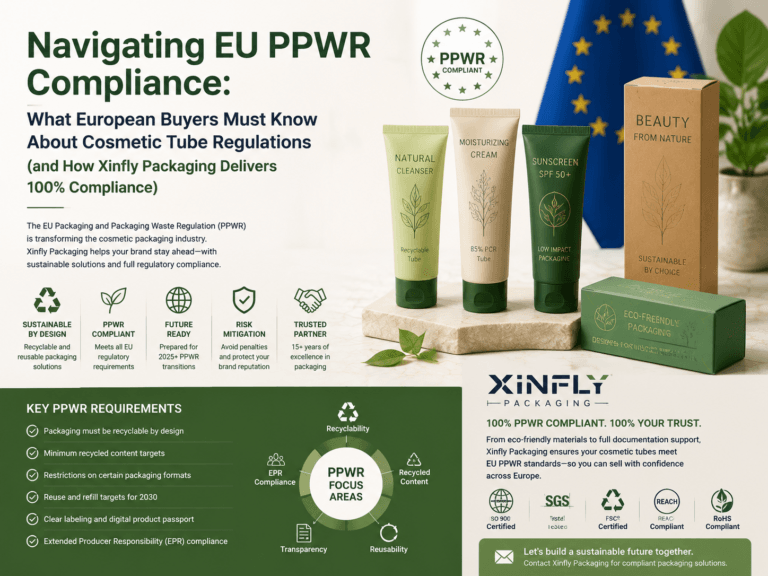
You must follow rules for packaging in every country. In the US and EU, skincare tubes have strict rules. Here are some important things to remember:
| Requirement | Description |
|---|---|
| Classification | Skincare packaging is ‘contact-sensitive’ in EU law. |
| Conformity Assessment | You need a signed paper for each tube type. |
| Heavy Metals Limit | Heavy metals must be less than 100 mg/kg. |
| Producer Registration | Register as a producer in every EU country you sell in. |
| Supplier Documentation | Keep all papers from your tube supplier if you import. |
| Recycled Content Methodology | By 2026, you must track recycled content in your packaging. |
Be careful of common mistakes. Use child-resistant packaging if needed. Make sure your tube matches your formula. Check your label and include all needed info. These steps help you avoid problems and keep your eco-friendly promise.
Final Checklist Before Ordering
Before you order, use this checklist for picking tubes. It helps you remember all the important things:
- Write your product details clearly.
- Pick the best tube material for your skincare.
- Choose the right tube size and how much it holds.
- Decide how you want your tube to look.
- Pick the best cap and closure for easy use.
- Figure out how many tubes you need.
- Know how you will fill and seal the tubes.
- Ask for samples to test with your formula.
- Make sure you meet all rules and requirements.
- Check how long it takes to make your tubes.
- Set your packaging and shipping choices.
- Plan your budget.
- Check your supplier’s awards and certificates.
- Ask about how much you can customize.
- Include all details in your request for quotes.
- Compare prices from different suppliers.
This checklist helps you get safe, eco-friendly, and nice-looking packaging. If you want a trusted supplier, Jiangsu Xinfly Packaging Co.,Ltd. has certified eco-friendly tubes for skincare brands. Their tubes support your brand and make users happy.
Picking the right tube for your screen cream is important. The packaging should fit your formula and feel nice to use. It also needs to match your brand’s look. When your tube choice matches your goals, your product can do well.
If your tube works with your filling line, meets green goals, and fits what buyers want, your product stays safe and matches your brand and what people care about.
Here’s an easy way to check your plan:
- Make sure your tube design connects with your buyers.
- Choose materials that fit your brand, like fancy or green.
- Let each part show what makes your product unique.
Use the checklist before you buy tubes. If you need help, ask suppliers like Xinfly Packaging. They have certified and custom tubes for beauty brands. Always check what your formula needs before you pick your tube.
FAQ:How to Choose the Right Screen Cream Tube Packaging
A complete guide to selecting screen cream tube packaging with applicator heads, cooling metal tips and precision dispensing systems for premium skincare products like eye cream and targeted treatment formulas.
What is screen cream tube packaging?
What are the benefits of applicator head tubes?
What materials are used in applicator tubes?
What is the difference between metal head and traditional tube?
What products use screen cream tubes?
Are cooling metal applicator tubes effective?
What is the MOQ for screen cream tubes?
Can applicator tubes be customized?
Do applicator tubes affect formula stability?
What is better: roller or brush applicator?
Are these tubes eco-friendly?
Why choose Xinfly Packaging?
Upgrade Your Skincare Packaging with Applicator Tubes
Xinfly Packaging helps brands develop premium screen cream tubes with metal applicators, precision dispensing systems and fully customized OEM solutions for skincare products.