
Published: .
Technical review: pending.
Run a hair mask tube dispense cutoff test when a thick formula leaves a strand at the outlet after a squeeze. The strand can remain connected to a bead on the hand, drop from the tip, or stay on the lid area when the tube is returned upright. A packaging buyer needs to decide whether a proposed outlet and closure can keep the use sequence manageable for the intended product. Compare the end of a squeeze with filled samples under conditions the formulation and packaging teams agree together. Record the separate events clearly enough to guide the next sample round.
Define the Product and Outlet
Start With a Filled Production-Intent Sample
Ask the supplier to identify the complete body, shoulder, closure, orifice and finish of each proposed tube. The illustrated option is a round lilac PE tube with a molded shoulder, straight ribbed heat-sealed tail, short white flat-base flip-top cap and a violet screen-printed wave motif. The open cap reveals the selected face and outlet. Use the supplier's approved assembly drawing to confirm the intended aperture and the place where product could collect. Buyers reviewing wide-orifice squeeze tubes for hair masks can start with existing configurations and ask for drawings for the options they plan to trial.
Keep the Formula and Fill Comparable
Ask the filler for a common approved formula batch and a defined fill state for each comparison. A bottle of bulk formula sent to the buyer can help explain the product presentation. Use the intended preparation, filling and conditioning for the actual sample record. Specify whether the first opening, a repeat use or a partly emptied tube is the decision condition. Record the temperature at observation and the conditioning period that the product team approves. When a stand-in is used for early handling checks, name it and ask what must be repeated on the project formula.
Select One Change for the First Comparison
Choose the feature to vary, such as the proposed outlet diameter, outlet face profile or a different matched closure. When a wider outlet also requires a different closure, record both assembly changes together. Ask the manufacturer to state which other details stayed constant and how it identified each sample. This helps a buyer relate observations to the configurations that can actually be purchased.
Define the End of a Squeeze

Name the release moment and the movement that follows it. For a salon use proposal, an evaluator may hold the tube above a clean tile representing a gloved palm, express a bead, stop pressing and put the tube back upright. Record the angle, approximate starting gap to the contact surface and the first movement after pressure is released. Use a clean collection area and the same visual reference for all samples. Leave the pause and handling sequence to the project team and state them in the brief.
Observe Separation and Residue as Different Events
A visible strand continuing to the deposited bead is one observation. A new drop appearing after that strand separates is another. Product remaining on the cap face is a third. Ask the observer to record each event and its location. A side-view still or short clip can help identify which event came first. If the product team wants a measured strand length or duration, ask it to agree the method, reference points and interpretation before testing.
| Field | What to agree before the trial | What to retain with the result |
|---|---|---|
| Complete tube assembly | Body, shoulder, closure and outlet drawing revisions | Decorated trial sample or marked drawing for each assembly |
| Formula and fill | Approved batch reference and defined full or partly used state | Fill record and relevant conditioning notes |
| Use angle and placement | How the hand holds the tube and where the bead is dispensed | Side view or sketch from the actual test position |
| Release point | When pressure stops and how the hand moves next | Simple sequence and agreed reference for observation |
| Observation period | Time or action at which the team checks for a strand or drop | Recorded conditions and any observed exception |
| Surface condition | Clean outlet or specified residue from an earlier cycle | Before and after photograph and cycle identifier |
Set a Clear Trial Reference
Use an accepted filled pack or the first agreed sample as a control. Record where product is expected to land, what the evaluator may do with the tube after releasing it, and the normal steps before returning it to the shelf. Have the product team decide which motion best represents the intended use. If the desired comparison includes a deliberately changed motion, log it as a separate group so the supplier can tell it apart from a hardware change.
Compare Cutoff on Filled Samples
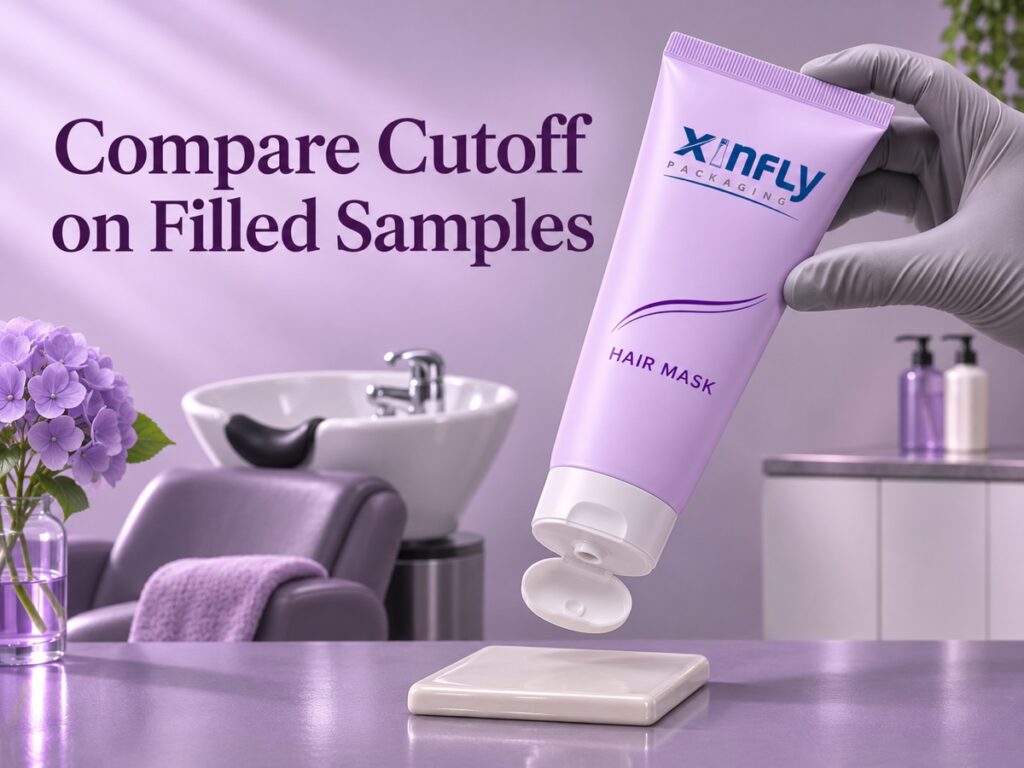
Carry out the recorded sequence using the proposed assemblies. Ask each observer to mark the release moment and note whether the deposited bead separates, stretches with movement, or leaves a drop on the outlet face after the tube is returned upright. Keep the camera angle and receiving surface consistent across trials. Prepare a new clean surface at each observation according to the agreed procedure, and identify any observation that was interrupted. Record each case before discussing possible causes.
Keep the Trial Order and Fill State Visible
Choose the intended repeat or rest intervals in advance. Compare the same fill and conditioning state on the different assemblies. Ask the product team whether to run a second group using partially dispensed tubes. A filled unit may be held and squeezed differently as its body becomes easier to fold. Treat the recorded fill condition as part of the comparison. Use a pause or a new identified sample if the previous outlet residue would otherwise change the next check.
| Observation | What to write or capture | Packaging follow-up |
|---|---|---|
| Bead separates during the agreed movement | Sample ID, release point, action and surface contact | Compare consistency across the agreed set of filled samples |
| Strand remains at the first movement | When it appeared, where it attaches and the complete assembly used | Check the outlet face and ask how other options would be matched |
| Deposit appears after separation | Point of origin, elapsed observation interval and tube angle | Repeat the same handling and compare with the control |
| Product stays near the hinge or recess | Contact spot and before-and-after views of the closed area | Review access to wipe the face and condition of the intended closure |
| Grip changes near the end of the sequence | Actual squeeze area and defined fill state | Compare whether the result follows the body or the proposed outlet |
| Difficult to compare | Any changed conditioning, positioning or recording | Repeat the trial with aligned conditions before deciding |
Document One Mixed Result
Imagine a wider aperture is easier to load onto the receiver but leaves a longer visible strand on the movement the buyer has agreed to observe. Record both observations under that configuration. Ask the supplier whether another shape can be made with the same body and closure. Then request a sample and repeat the same trial with the current build alongside it. Ask the responsible project owners to say what observable change will justify selecting the new part. Treat the decision as specific to the fill and use sequence represented in the trial.
Capture the Same View in Each Trial
Set the receiving surface, camera position and part of the tube visible in the photo before the check. When reviewers observe only from above, a strand between the tip and the sample can be obscured by the cap. Arrange a side view that shows the lip of the outlet, deposited bead and first movement after release. If product is transferred to a second area during the observation, record that location on the same sample line. Give the resulting stills or clip a filename that points back to the unit, assembly and cycle on the worksheet.
Tie the Trial to the Use Setting
For a single-use sample or a salon service pack, the team may care about what remains on the outlet before the tube is put down. For a retail tube, a second use after a rest may carry more weight in the decision. Ask the buyer to write down the exact cycle and the reasons for that chosen condition. A peer reviewer should be able to tell from the record how the product was prepared, whether a wipe was used and which part change was evaluated.
Put the Comparison in the RFQ
Request the Exact Mating Parts
Provide the target format, head geometry, cap drawing and the receiving surface shown in the intended use sequence. Ask for samples with the actual body and compatible closure. When requesting custom squeeze tubes for keratin hair masks, share the approved paste reference with the filler or formulation team and clarify who will provide filled trial units. Have the supplier identify the dimensions it will document and any option that needs a new fitting, sample or tool. Use the custom tube sample development process to agree the sample build and follow-up.
Set a Documented Release Decision
List the accepted observations on the approval record and the configuration to which they apply. Give the accepted unit a reference that can be matched to the quotation, the approved drawing and the fill instructions. Ask the supplier to flag changes at the outlet face, insert or closure, and clarify when the product team needs to repeat the trial after a formula or filling change.
Frequently Asked Questions
Does an easy first squeeze qualify the package?
Check the first flow and the final release as different observations in a filled trial. A supplier can help tune one part of the dispensing sequence while you assess the other. Use the same fill, grip and conditioning for the options you compare.
Can I judge cutoff on empty tubes?
Use empty assemblies to compare the outlet face, shape and closure access. Fill and condition the selected samples with the team-approved formula to run the deposit and release sequence. Identify the exact combination in the record.
Should I ask for a numerical cutoff limit?
Start with the use condition and observed feature the buyer wants to control. Where a numerical limit is needed, have the project team choose the measurement method and establish a relevant criterion. Ask suppliers to state what conditions their data represent.
When should a second trial follow an initial pass?
Consider changes to the body, outlet geometry, cap, fill or formula and whether they affect the intended handling sequence. Agree repeat conditions during sample approval and preserve the original control for a consistent comparison.
What should I send to quote hair mask tube packaging?
Send the tube geometry and closure, artwork and finish, approved fill reference, proposed cutoff sequence and trial condition. Include the outlet or sample revisions you wish to compare and the buyer's planned acceptance record.
Conclusion
Use a filled sample to decide whether a hair mask tube releases the target bead cleanly through the intended hand movement. Keep the release, strand, residue and closure observations on one record for each configuration. Send Xinfly Packaging the chosen tube and outlet drawings, use sequence and fill information when you request a hair mask tube trial sample so the supplier and filler can discuss matching options and the checks required for approval.