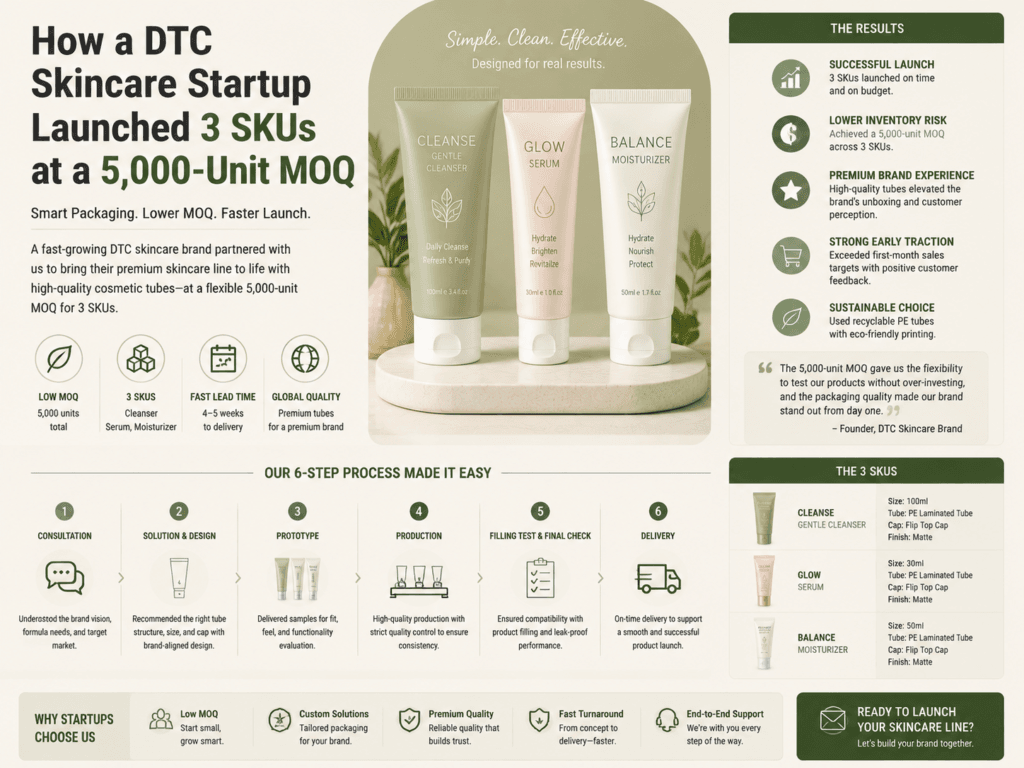
You can start three SKUs as a dtc skincare startup if you pay attention to minimum order quantity rules. Many indie beauty founders, like Rhode, use smart ideas to reach these numbers. Minimum order quantity is usually 5,000 units, which is a lot for a skin care brand. Some low-MOQ makers let you buy as few as 50 units. This helps you lower risk and spend less money. Low-MOQ choices and clear money goals help you make your launch plan. Winning in skincare means knowing the market and making good choices.
Key Takeaways
- Know what Minimum Order Quantity (MOQ) means to stay safe with money. High MOQs can make you buy too much and lose cash.
- Look for factories that let you order small amounts. This helps you try out products without spending a lot at first. You can change things fast if customers do not like something.
- Make sure people want your products before you sell many kinds. Use surveys and ask groups of people what they think. This helps you know if your products are good for them.
- Make easy-to-understand money goals to help with ads and selling. If you know how many you need to sell, you can make better plans.
- Take care of your products so you do not lose money. Watch your sales numbers and change your orders if you need to. This way, you will not have too many things left over.
MOQ Impact for DTC Skincare Startups
Defining MOQ in Manufacturing
You should know what moq means before you start your skincare brand. In manufacturing, moq is the smallest number of items a supplier will make or sell at one time. For example, if you want glass bottles for your products, the supplier might set the moq at 5,000 pieces. Even if you only want 2,000, you still have to buy 5,000. This rule helps the supplier pay for things like making molds, paying workers, and using machines.
Note: MOQ stands for Minimum Order Quantity. It is an important word in skincare manufacturing.
Most skincare packaging suppliers use moqs to make production easier and keep each item cheap. You will see different moqs for different types of packaging. Here is a table to help you compare:
| Packaging Type | Common MOQ Range |
|---|---|
| Plastic bottles/jars | 3,000–10,000 pcs |
| Glass containers | 1,000–5,000 pcs |
| Tubes | 5,000–20,000 pcs |
| Paperboard boxes | 500–3,000 pcs |
| Droppers/pumps | 3,000–5,000 pcs |
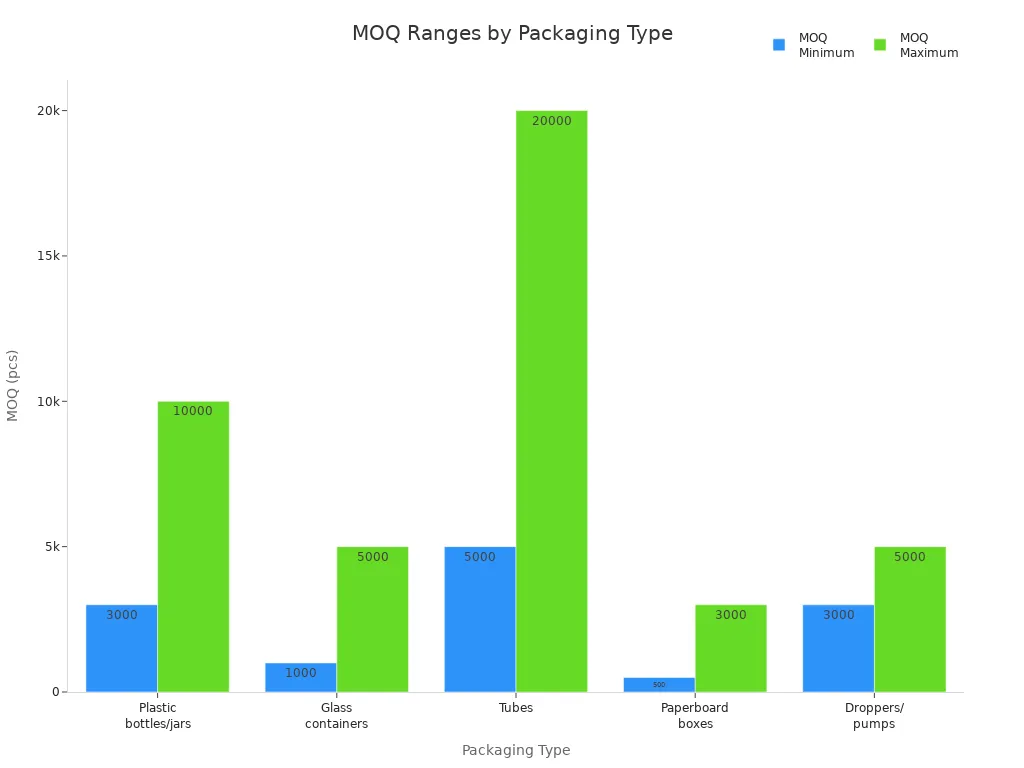
You will notice that 5,000 units is a normal moq for tubes and bottles. This number is important because it helps suppliers cover their costs and keep their business going. For your skincare startup, this moq might seem high, but it is normal in the industry.
Challenges of High MOQ
You will face many problems when you deal with high moqs in skincare manufacturing. High moqs mean you have to spend a lot of money at the start. You need to buy thousands of items before you know if people will buy your products. This can make you feel worried about running out of money. You might not have enough left for marketing or customer service.
High moqs also make it hard to try new formulas or packaging. If you want to test three different products, you must order 5,000 of each. That means you need 15,000 units in total. You could end up with too much stock that you cannot sell. This can lead to waste and lost money.
Here are some common problems you might have:
- You must handle hard steps like making formulas, finding ingredients, testing, packaging, and following rules.
- You risk using all your money on inventory instead of growing your brand.
- You may not get the newest ideas, since some makers only work with big orders.
- You could have white label overlap, so your formula is not special.
- If you want to grow, you might need a new supplier, which can cause delays and extra costs.
You should think hard before you agree to high moqs in skincare manufacturing.
Low-MOQ Alternatives
You can pick low-moq options to lower your risk and make your launch easier. Low-moq manufacturing lets you start with smaller batches, like 250 or 500 units for each sku. This helps you test your products in the real world and see what customers like. You can change your formulas, packaging, or branding without being stuck with extra stock.
Here is a table that shows how low-moq is different from regular manufacturing:
| Aspect | Traditional Manufacturing | Low-MOQ Private Label |
|---|---|---|
| MOQ per SKU | 5,000 units | 250 units |
| Total units | 15,000 | 750 |
| Estimated cost | $60,000–$90,000 | $7,500–$12,500 |
| Inventory risk | High | Low |
| Flexibility to pivot | Limited | High |
Low-moq manufacturing gives you many good things:
- You can start small and test your products with less money.
- You do not have to use all your cash on lots of inventory.
- You can change quickly when trends or feedback change.
- You can launch more skus and see which ones do best.
- You can keep your stock fresh and pay less for storage.
- You can focus on building your brand and marketing instead of worrying about unsold items.
One big mistake I see skincare founders make is making too many products before they know people want them. They try to lower the price for each item, order bigger moqs too soon, and use up their money on inventory before they know what customers need. Low-moq manufacturing helps indie skincare brands lower risk, save money, move faster, and make better choices early on.
You can find private label makers who offer low-moq choices. Some companies let you order as few as 150 units. This makes it possible to start your skincare brand without spending a lot of money. You can also find suppliers who offer certified packaging, like Jiangsu Xinfly Packaging Co.,Ltd., which has custom tubes with global certifications. This helps you meet quality rules and build trust with your customers.
Low-moq manufacturing gives you the freedom to test, learn, and grow your skincare brand with less risk. You can check your ideas, get feedback, and grow bigger when you see success.
Market Readiness and SKU Strategy
Assessing Demand for Multiple SKUs
You need to know if people want your skincare before you commit to a high moq. Testing product-market fit helps you avoid mistakes. You can start by talking to your target customers and asking what they need. You can use surveys, social media polls, or small focus groups. You should look for clear signs that your skincare solves real problems.
Many successful brands, like Rhode, use smart ways to check demand before launch. Here are some steps you can follow:
- Focus on what your customers care about most, like simple routines and visible results.
- Create multi-use products that help people save time and money.
- Listen to feedback from early testers and adjust your formulas.
- Make sure your brand values match what your customers want.
Testing product-market fit means you try your ideas in the real world. You can use pre-orders or small batch runs with a low moq. This lets you validate demand without spending too much. You can also use private label suppliers who offer low moq options. This way, you can test three different products and see which one sells best.
You should remember that launching three SKUs at once can help you learn faster. You get more feedback and can improve your skincare quickly. You also build trust when your products match your brand story.
Setting Revenue Goals
You need clear goals for how much money you want to make from your skincare launch. Setting revenue goals helps you plan your marketing and spending. You should think about how many units you need to sell to break even. You can use different strategies to reach your goals, even with a 5,000-unit moq.
Here is a table with some smart ways to set and reach your revenue goals:
| Strategy | Description |
|---|---|
| Hero SKU Approach | Focus on one product to maximize resources and simplify marketing. |
| Pre-Orders and Crowdfunding | Validate demand and reduce financial risk by selling before production. |
| Negotiate Creative Payment Terms | Flexibility in payment can ease financial pressure despite fixed moqs. |
Your revenue goals shape your whole launch plan. If you want to grow fast, you need to focus on getting and keeping customers. You should aim for a positive net marketing contribution. This means you make more money from each sale than you spend on ads. You can also work with influencers to reach more people and boost sales. This helps you build your brand, even if your first revenue is small.
You should always check your numbers. Make sure your goals match your budget and your moq. This helps you avoid running out of money and keeps your skincare business strong.
Minimizing Inventory Risk
You can lower your risk by planning your inventory the right way. Reduced inventory risk means you do not get stuck with products you cannot sell. You should use best practices to keep your skincare launch safe and smooth.
Here are steps you can follow:
- Segment your inventory by product type and storage needs.
- Use packaging that protects your skincare and looks good for your brand.
- Track batches, control expiry dates, and rotate your stock.
- Set up systems that can grow with your business and handle busy times.
- Offer fast shipping and flexible ways to send out orders.
- Make returns easy for your customers, especially for beauty products.
- Use data to plan how much to order and when to restock.
- Keep all your paperwork ready for rules and cross-border sales.
You can also choose suppliers who offer certified packaging. For example, Jiangsu Xinfly Packaging Co.,Ltd. gives you custom tubes with global certifications. This helps you meet safety rules and build trust with your customers.
Launching three SKUs at a 5,000-unit moq can feel risky. You can manage this risk by testing product-market fit, setting smart revenue goals, and using best practices for inventory. You can learn from brands like Rhode. They focus on what customers want, use feedback, and keep their launch simple. You can do the same and build a strong skincare brand.
Low-MOQ Manufacturing Choices
Selecting a Manufacturing Partner
You must pick the best partner for low-moq manufacturing. Look for gmp-compliant quality standards first. This helps your skincare meet safety and quality rules. Check if the manufacturer can do everything from start to finish. You want them to handle formulation, filling, labeling, and packaging. This gives you more control over quality. Make sure pricing is clear and timelines are easy to understand. Ask for quotes and check for hidden fees. Your manufacturer should be able to make bigger batches as you grow. Many startups use Jiangsu Xinfly Packaging Co.,Ltd. for custom tube packaging. They offer PE, PCR, ABL, and PBL tubes. These come with ISO, RoHS, SGS, PCR Plastic GRS, and third-party testing certifications. This helps you stand out and build trust.
Negotiating MOQ Terms
You can talk with private label manufacturers about moq terms. Start by sharing your business needs and sales plans. Open talks help you find a good deal. You can pay more per unit or promise future orders. This may lower the moq for your products. If you cannot meet the moq alone, join with other brands for a group order. Being flexible in talks helps you get better deals. Learn why the manufacturer set the moq. Sometimes, paying more for a smaller order helps you begin. Making fewer product types at launch also lowers your risk and cost.
Managing Production Costs
Keeping production costs low is important in low-moq manufacturing. Work with full-service manufacturers to make things easier. They handle everything from making to packaging. This cuts down on problems and saves time. Lock your product brief early to avoid extra costs. Finish your formula before testing to stop delays. Confirm packaging minimums at the start. This keeps your inventory and money safe. Pick your main market early to follow rules and avoid costly changes. Smart sourcing, like knowing your ingredients, helps keep quality high. Build flexibility into your process so you can grow as your brand gets bigger.
| Manufacturing Type | Speed of Launch | Cost Structure | Control Over Formulation | Ideal For |
|---|---|---|---|---|
| Private Label | Weeks to months | Lower upfront costs | Limited | New startups, influencers |
| Custom Manufacturing | Longer timeline | Higher R&D costs | Full control | Established brands seeking differentiation |
Tip: Always ask for certifications and test reports from your packaging supplier. This helps your private label skincare meet global quality standards.
Launch and Scale Strategies
Planning the Launch
You need a simple plan to start your private label skincare brand with three SKUs at a 5,000-unit moq. Here are steps you can follow for a good launch:
- Spend two to four weeks learning about the market. Find your special area and look at other brands.
- Make your business plan and set your budget. You will need about $20,000 to $35,000 for two or three SKUs.
- Pick a private label manufacturer you can trust. Make sure they can meet your moq and product needs.
- Check all the rules you must follow. Register your place and list your product with the FDA.
- Design your brand and packaging. Use custom packaging from trusted suppliers like Jiangsu Xinfly Packaging Co.,Ltd., which has certified tube packaging.
- Build your marketing plan. Start your social media and content two to three months before you launch.
- Use a step-by-step launch. Start with a small launch to get feedback, then go public.
Tip: Start with smaller batches to test your private label skincare and lower your risk.
Distribution and Fulfillment
You must keep track of your inventory and shipping for private label skincare. Good inventory control helps you handle different SKUs. Using smart fulfillment tools lets you track orders and make customers happy. Split your inventory by sales channel to balance retail and DTC needs. Choose packaging that keeps your products safe and matches your brand. Work with suppliers who have certified packaging, like Jiangsu Xinfly Packaging Co.,Ltd., for global standards.
- Split inventory by sales channel.
- Pick shipping partners who support private label and custom packaging.
- Track data to help you get your products to market faster.
Iterating and Scaling
You can test and improve your private label skincare after you launch. Get feedback from surveys and social media. Answer reviews and watch customer service questions. Look at who buys again to find your best products. Use ideas like Lean Startup to make your SKUs better. Watch numbers like how much it costs to get a customer, how much people spend per order, how many buy again, and how much money you make from each customer over time.
| Metric | Description |
|---|---|
| Customer Acquisition Cost (CAC) | The cost to get a new customer. |
| Average Order Value (AOV) | The average spent per order. |
| Repeat Purchase Rate | The percent of customers who buy again. |
| Customer Lifetime Value (LTV) | Total revenue from a customer over time. |
| LTV to CAC Ratio | LTV should be three times CAC for growth. |
You can grow by selling in new places, building a group of fans, and using tech to make things personal. Focus on private label, packaging, and growing your brand. Start with small batches, listen to feedback, and change your private label skincare to do well.
You can launch three SKUs at a 5,000-unit MOQ if you get ready for the market, pick low-moq options, and use smart manufacturing. First, check if people want your products. Test your products with small batches. Private label suppliers help you spend less and get certified packaging. Manage inventory risk by using pre-orders, keeping less stock, and making products only when needed. Set clear goals for how much money you want to make. Track your numbers to see how you are doing. Learn from DTC skincare brands:
- Check if people want your products before you order.
- Test your products and follow rules.
- Make creative content and focus on getting sales.
- Build campaigns that feel real.
Low-moq lets you test products, change fast, and lower inventory risk. You can use packaging that matches your brand and meets global standards. The table below shows how low-moq helps you:
| Insight | Implication |
|---|---|
| Low-moq lets you test products easily | You can change your SKUs based on feedback. |
| It is easier to target a niche | You can focus on special needs and build loyal customers. |
| You do not need to keep lots of inventory | You lower risk and use your money better. |
| Unique formulas may be harder to make | You must balance new ideas and cost. |
| Each unit costs more | You need to plan to make money. |
| You can make seasonal or limited products | You can create excitement and sell more. |
You can do well if you use low-moq, certified packaging, and private label manufacturing. Stay flexible, listen to your customers, and keep making your products better.
How a DTC Skincare Brand Launched 3 SKUs at a 5,000 Unit MOQ
A real-world packaging strategy case showing how startups optimize cosmetic tube MOQ planning, reduce inventory risk, and launch multiple SKUs efficiently with OEM cosmetic tube manufacturing.
Is 5,000 MOQ per SKU or total?
How can a brand launch 3 SKUs with 5,000 MOQ?
Why is MOQ important for DTC skincare brands?
What risks come with high MOQ cosmetic packaging?
Can cosmetic tube manufacturers support low MOQ startups?
What is the best packaging strategy for startup skincare brands?
Which materials are best for low MOQ launches?
How can brands reduce cosmetic packaging costs?
What industries use 5,000 MOQ strategies?
Can I mix SKUs in one production order?
Why choose Xinfly Packaging for startup cosmetic tubes?
Planning Your First Cosmetic Launch?
Xinfly Packaging helps DTC skincare brands reduce MOQ pressure, launch multiple SKUs efficiently, and build scalable cosmetic packaging systems.