A lip gloss applicator can feel smooth when you try it once, then leave a ring of sticky formula inside the cap after a week of normal use. The next applicant may open an identical-looking tube and get a blob because the first squeeze broke through a pocket of air. Buying the tip from a drawing or choosing the softest option by touch leaves both questions unanswered.
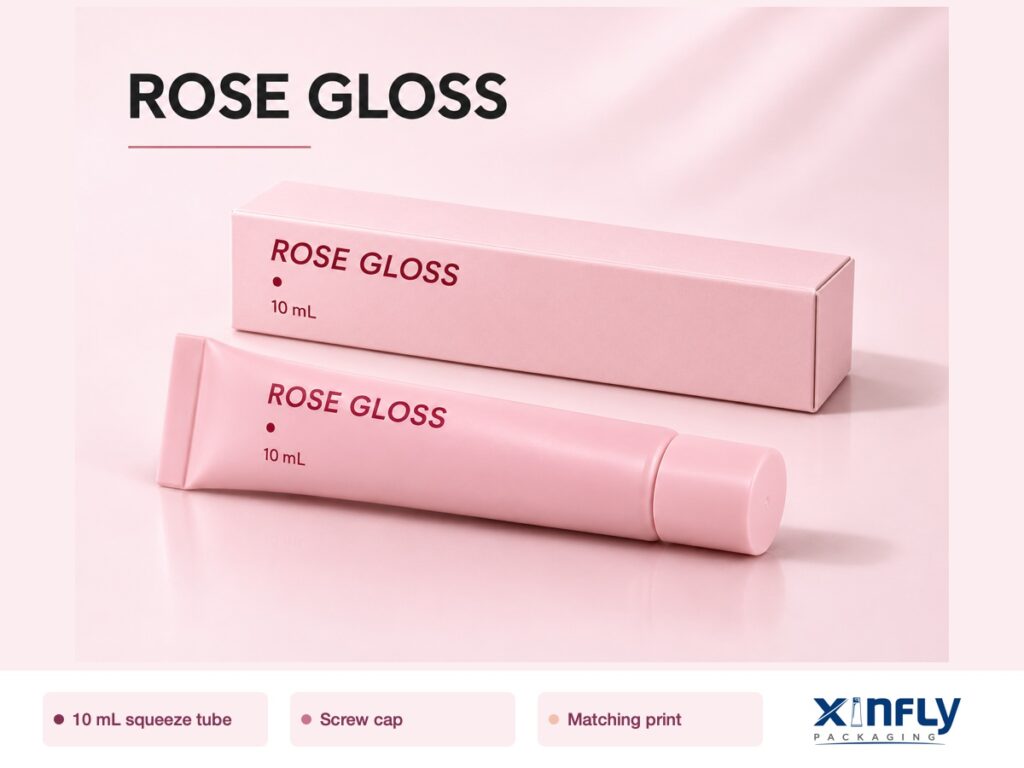
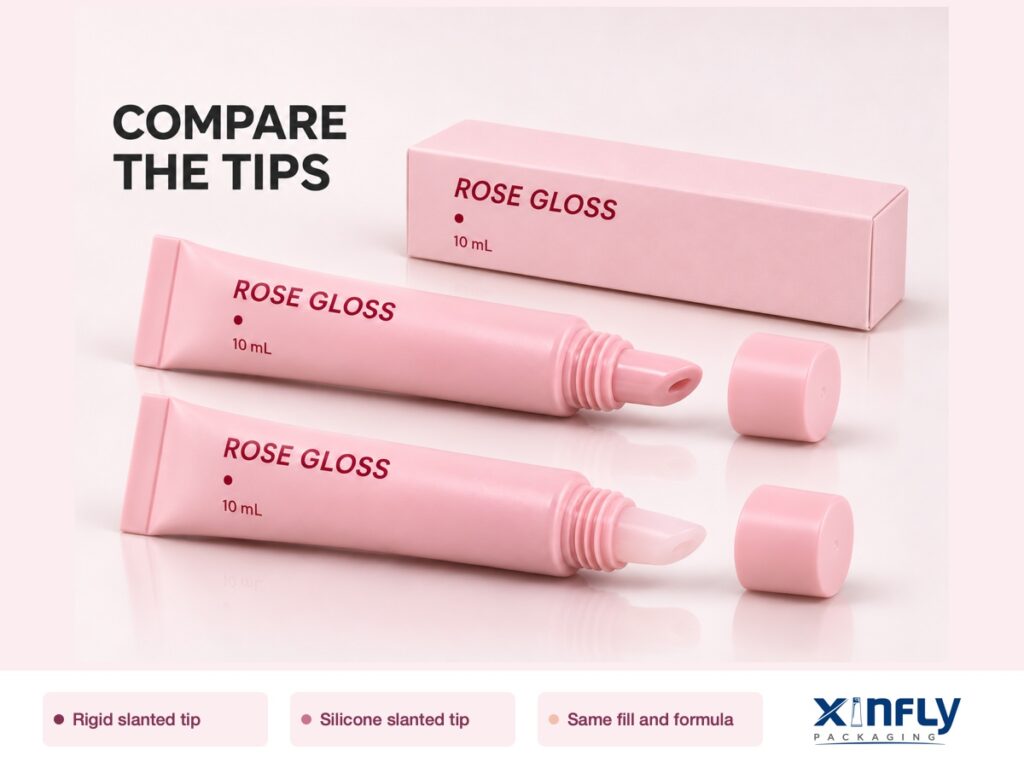
Use this 10 mL lip gloss applicator sample test to compare a rigid slanted tip and a soft silicone tip with your own formula. It is designed for brands buying a PE squeeze tube with a molded shoulder, straight heat-sealed tail, screw closure, and original single-color print. Work from the 10 mL lip gloss squeeze tube format and ask for the actual cap and tip revisions for each candidate.
Give Each Tip the Same Starting Conditions
Compare Samples at the Same Fill and Temperature
Fill the same lot of gloss into both samples. Record the net mass, formula temperature when filled, conditioning period, and storage position before you start. If one prototype has a noticeably different wall thickness, ask the supplier whether the two tips can be assembled on a common body. If a common body is unavailable, compare both complete assemblies and label the difference. You can still choose a better package, but you will need another trial to tell which component caused a change.
Request a Drawing of the Outlet and the Cap
Ask for the angle, outlet size and location, tip material, neck drawing, and cap drawing. A silicone tip can deform when it is pressed against a surface or tightened under a cap. The sample review should therefore include the cap and the point where it seals. Ask whether the cap uses a plug at the opening, contacts another sealing surface, or has a different arrangement. Get a drawing of how the insert is retained if the tip is a separate part.
Keep Nominal Fill Separate From Container Space
A 10 mL tube describes the intended product volume. Ask the filler how they will confirm the corresponding mass for this formula and how much space they need to load and seal the tube. Make sure the proposed tube and neck fit the filler’s holder and filling nozzle. Ask whether orientation of the slant matters for artwork or handling. Keep the initial print proof and the finished, capped sample in the same record so you can check the intended direction against the sealed package.
| Candidate | Request from the supplier | Compare with actual gloss |
|---|---|---|
| Rigid slanted tip | Surface and edge finish, outlet location, seal design | Spread width, first dispense, residue at the rim |
| Silicone tip | Material and firmness specification, retention and cap fit | Deformation during application, recovery, visible product transfer |
| Matching screw cap | Seal contact, thread and cap depth | Closure engagement, residue after use and storage, changes in reopening |
| Common PE body | Wall construction, neck and tail drawings, print location | Squeeze response at different fill levels and hand positions |
Compare the First Swipe and the Tenth
Agree on a Sample Dispense Method
Use a clean, nonabsorbent test card or tile for the initial comparison. Bring each pack to the same temperature and mark the distance for one swipe. Have the same operator use each version with the same starting instructions, or have several operators test both versions in a balanced order. Note the first dispense separately because an outlet that feels easy later can be difficult to prime. For a numerical comparison, weigh the product delivered to the test surface. Treat the number as a measure of the sample and method, then decide which range works for your design.
Evaluate Whether the Tip Spreads or Pushes the Gloss
Use the card to look at the width and continuity of the gloss stripe. Record pooling where the user starts or stops the stroke. Inspect the sides of the tip, where formula can collect even when the swipe looks clean. Pay attention to the difference between surface contact and outlet behavior. A wide, soft contact surface might feel pleasant while a small opening still demands more squeeze pressure. Compare the available lip gloss applicator designs when deciding what to change for the next prototype.
Record What Happens After the Cap Goes Back On
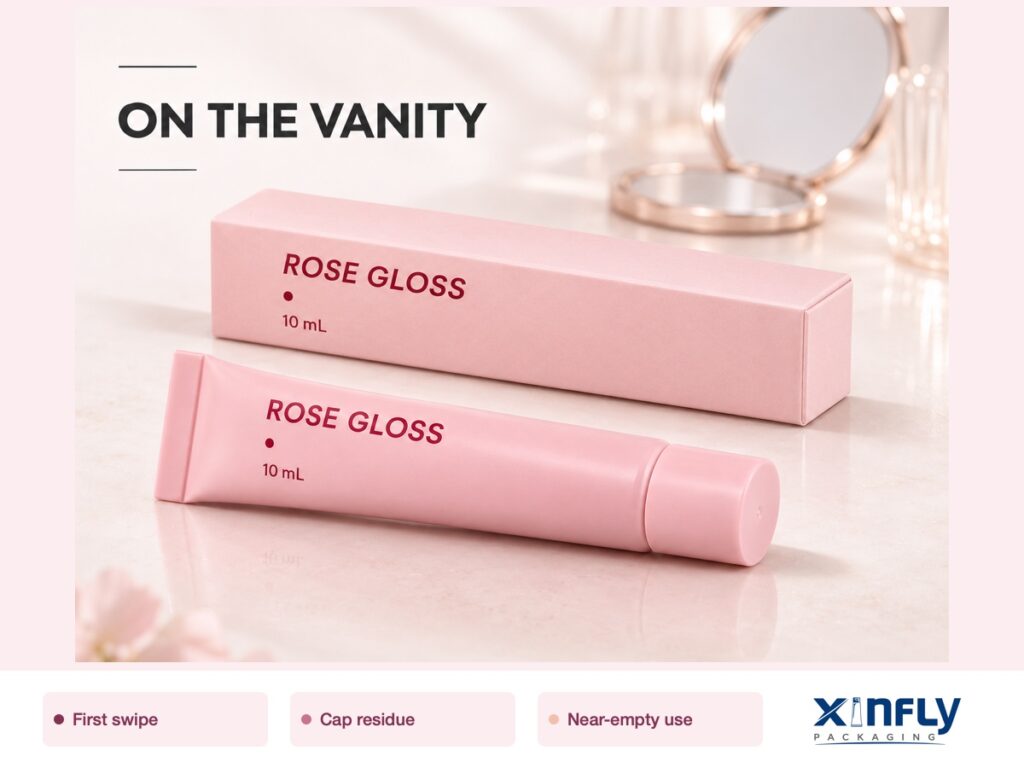
Use a clean baseline and a separate set closed after a normal dispense. Record whether each pack was wiped before closing. Store samples in positions that reflect a purse, a display carton, or a shipped unit. When you reopen the tube, note where you find any gloss: on the tip, on the cap interior, at the threads, or outside the assembly. If product appears outside the pack, photograph the first wet point and repeat with a fresh, clean sample. This helps you separate product transfer during use from leakage during storage.
Check the Tip Again Near the End of Use
Repeat the comparison with the same tubes at lower fill levels. Keep track of how you reach the low-fill condition so you can reproduce it. An air pocket or a collapsed wall may change the angle at which the user holds the pack. If the user needs two hands to get the last usable amount out, note the behavior and the effect on the stripe. Review the fit between the tip, outlet, and wall together before deciding the tip alone is responsible.
| Trial | Record per sample | What it tells the buyer |
|---|---|---|
| First dispense | Conditioning, orientation, prime attempts and mass delivered | Which configuration starts easily and consistently |
| Repeat swipes | Stroke length, spread, edges and tip residue | Whether gloss delivery matches the intended application |
| Close and reopen | Wipe method, cap engagement, storage position and product location | Whether the tip and cap work together in normal use |
| Low fill | Remaining amount, handling angle and any air or sputter | Whether the user can apply the last usable product |
| Pilot filling | Line speed or setting, rejects and observation at tail seal | Whether the production sample can be filled and sealed as quoted |
Confirm Artwork and Pilot Filling Before You Buy
Approve the Print on the Finished Assembly
A single-color screen print can suit a small flexible tube when the name and graphic have enough room to stay legible. Ask for the supplier’s limits on stroke weight and spacing for this diameter. Check the new artwork on a finished pack, with the cap fitted and the tail sealed. If the slanted tip needs a specific front, record the angle between the tip and the print. Ask the filler to confirm how it will control that relationship before you sign the proof.
Request the Same Checks for Each Formula That Differs
A clear gloss and a gloss with suspended shimmer may look similar in the tube while behaving differently at the outlet. Identify which formula or shade represents the hardest condition for each check, and have the product and quality teams decide which other versions need confirmation. Keep each formula result with its own sample code. For custom lip gloss tubes, note which features are shared across shades and which are dedicated to an individual product version.
Check Each Cap Against Its Own Applicator
Hold the cap by the area customers will grip. Check whether it catches at the first turn, whether it seats cleanly, and whether a second operator can repeat the result without guidance. If the cap reaches what feels like a stop before it seats, document the position and ask the supplier to check the fit. Record the accepted closing method and any torque range specified by the supplier and filler. There is little value in comparing caps that were closed by different methods.
Retain an Unused Reference Set
Set aside several filled samples from each configuration and store them under the conditions agreed for the review. Keep one decorated empty tube with its original cap and tip as a visual reference. These retained units help if the formula changes or a complaint appears after launch. Label the sample by date, formula lot and part revision. A reference labeled only with the shade name will be hard to match to a later shipment.
Separate a Filling Problem From an Applicator Problem
Ask the filler to record the loading direction, product temperature, fill process and tail seal setting used on both versions. If there is air in the first few doses, inspect how it got there before changing the outlet. The gloss may need a different filling sequence or headspace adjustment. If the first fill was prepared by hand, run a small trial on the intended equipment before approving the pack. Give the filler and tube supplier the same acceptance record so an issue cannot fall between two approvals.
Check the Contact Surface Before Applying the Gloss
Inspect a small set of clean, dry tips under consistent lighting. Look for a rough spot on the rim, excess material at a molding line, or an uneven edge next to the opening. If lip gloss squeeze tubes with silicone applicators are part of your shortlist, include an unused tip and a tip after the agreed handling sequence. Ask the supplier what it considers a normal molding mark and which defects it will exclude. Keep the visual criteria separate from decisions about the formula or claims for the finished product. This gives your receiving team a concrete reference for an issue it can see before filling.
Ask for Prices on an Identical Configuration
Compare the two quotes using the same fill, tube dimensions, tip and cap materials, print finish, quantities, and packing requirements. Ask for separate lines for one-time setup, the first order, repeat orders, and the cost of additional prototypes. Ask who owns the tip or cap tooling if a custom part is needed. Keep the supplier’s accepted drawings and a retained sample together, so purchasing can identify a substitution before it appears in a repeat order. Xinfly Packaging can review your project when you send the formula behavior, desired tip, and artwork brief.
Frequently Asked Questions
Is a silicone tip always the better option for thick gloss?
Test both tips with the intended formula. The stiffness of the material, size and position of the outlet, geometry of the contact surface, and body squeeze response all influence the result.
Should I approve gloss samples based on their first squeeze?
Record the first squeeze, then check repeated uses and the pack near empty. A tip that primes smoothly can still collect residue inside the cap or dispense unevenly later.
Do I need separate caps for the two tips?
Confirm this with the supplier. A cap must mate with the intended neck and sealing surface. Use the cap quoted for each candidate even if the two designs look alike.
Can I approve artwork using an empty print proof?
You can use an empty proof to evaluate basic type and color. Review placement, orientation, and final readability again on a filled, sealed tube assembled with the actual cap.
What belongs in the sample request for a 10 mL gloss tube?
Include the intended fill, formula description, target use, candidate tip shapes, cap type, print file, line constraints, and the application and storage checks you want the sample to support.
Conclusion
Choose a lip gloss tip by testing its first dispense, repeat application, closure behavior, and low-fill performance with the same formula. Use a paired test to show what changed, then attach the accepted assembly and print reference to the order. That gives your supplier a decision they can build again.