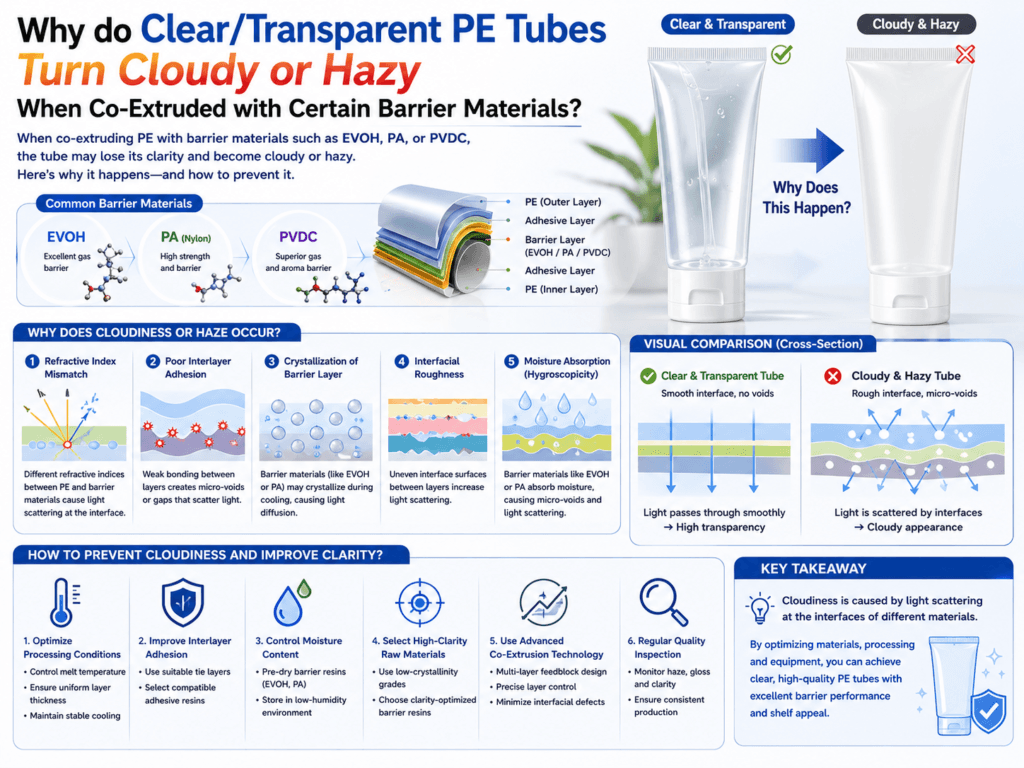
Clear or transparent PE tubes may turn cloudy or hazy when co-extruded with certain barrier materials because each layer has different optical properties, crystallinity, refractive index, melting behavior, and cooling shrinkage. Even if the outer PE layer looks transparent, the full multi-layer structure may scatter light after EVOH, tie resin, or other barrier layers are added.
In simple terms, a transparent tube is not only about using clear PE. The final clarity depends on the complete structure: outer layer, inner layer, barrier layer, adhesive tie layer, extrusion temperature, layer thickness, cooling speed, material compatibility, and surface smoothness. When these factors are not well matched, the tube may look milky, cloudy, or slightly grey instead of crystal clear.
Why Clear PE Tubes Become Hazy
| Cause | What Happens | Visible Result |
|---|---|---|
| Different refractive index | PE, EVOH, tie resin, and other layers bend light differently | Light scattering, haze, cloudy appearance |
| Barrier layer opacity | Some barrier materials are naturally less transparent than PE | Milky or greyish tube body |
| Crystallinity change | PE crystals or barrier-layer crystals scatter light | Lower transparency and reduced gloss |
| Layer interface mismatch | Poor optical matching between layers creates micro-distortion | Uneven haze or cloudy bands |
| Processing instability | Temperature, extrusion speed, or cooling are not optimized | Flow marks, streaks, uneven clarity |
Is the Barrier Layer the Main Reason?
Often, yes. Barrier materials such as EVOH or special functional polymers are added to improve oxygen, aroma, or formula protection. However, these materials may not have the same optical clarity as transparent PE. When the barrier layer is placed inside a clear tube wall, it can reduce overall transparency, especially if the layer is too thick, uneven, or poorly matched with the surrounding PE layers.
Important: A tube can be “translucent” and still have good barrier performance. But if the brand wants a crystal-clear glass-like effect, barrier structure must be selected very carefully.
How Co-Extrusion Structure Affects Transparency
| Structure Factor | Impact on Clarity | Engineering Direction |
|---|---|---|
| Barrier layer thickness | Thicker barrier layers may increase haze | Use only the necessary barrier thickness |
| Tie layer material | Incompatible tie resin can create cloudy interfaces | Select optically compatible tie layers |
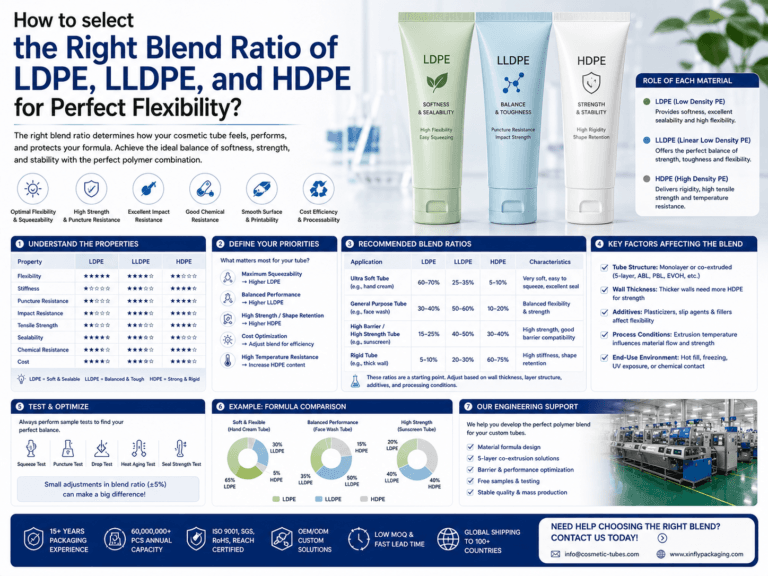
| PE grade | Some PE grades are naturally clearer than others | Use high-clarity PE or suitable blend |
| Layer balance | Uneven layer ratios can distort light transmission | Optimize layer distribution and extrusion stability |
| Cooling condition | Slow or uneven cooling may increase crystallinity and haze | Control cooling rate and tube forming conditions |
Common Haze Problems in Transparent Barrier Tubes
- Milky appearance: The tube looks semi-transparent instead of clear.
- Greyish tone: Barrier or tie layers reduce optical brightness.
- Cloudy bands: Layer thickness or extrusion flow is not uniform.
- Fine streaks: Material flow, temperature, or die design may need adjustment.
- Loss of gloss: Surface smoothness or crystallinity affects light reflection.
Transparent PE vs. Transparent Barrier Tube
| Tube Type | Clarity Level | Barrier Performance | Best Use |
|---|---|---|---|
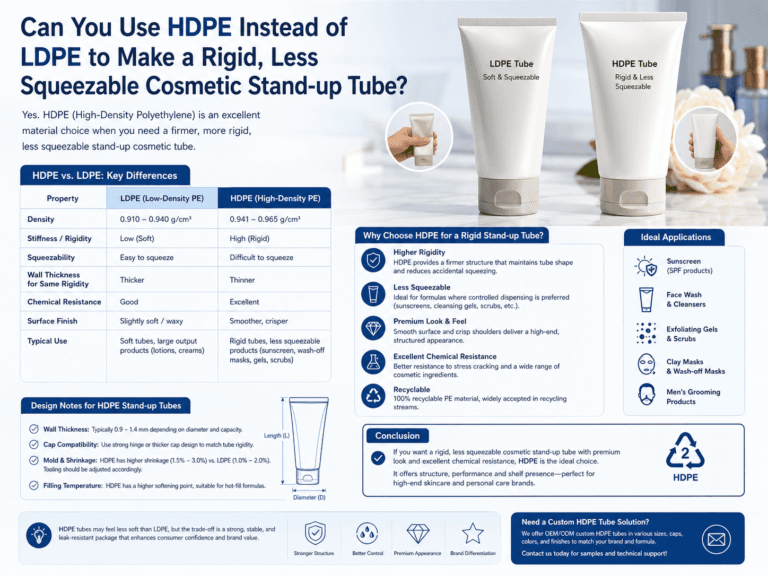
| Single-layer clear PE tube | Better transparency | Basic barrier | Low-risk formulas, gels, simple lotions, visual-content packaging |
| 2-layer clear PE tube | Good to moderate transparency | Better structural balance than mono-layer PE | Moderate-risk formulas where high barrier is not required |
| 5-layer EVOH clear tube | May become translucent or slightly hazy | Much stronger oxygen and aroma barrier | Sunscreen, active skincare, fragrance-sensitive formulas |
| High-barrier laminate tube | Usually not crystal clear | High to very high barrier | Toothpaste, functional skincare, high-protection formulas |
Why EVOH Can Reduce Clarity
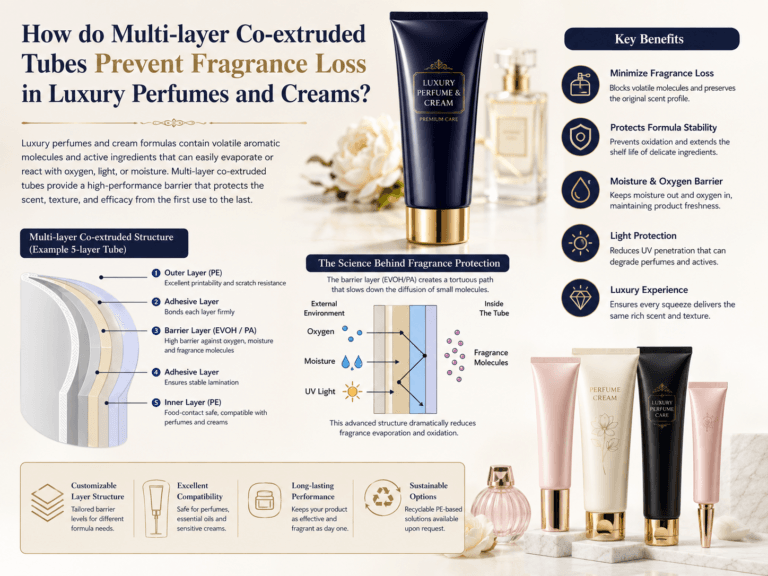
EVOH is valued for barrier protection, but it is not always visually identical to clear PE. It may create haze because its optical behavior, moisture sensitivity, crystallinity, and interface compatibility are different from PE. In a 5-layer tube, EVOH is usually sandwiched between PE layers with tie resin. If the layer design is not optimized, the tube may become translucent rather than clear.
- Different optical index: EVOH and PE transmit and bend light differently.
- Interface scattering: Light may scatter where different layers meet.
- Moisture influence: EVOH performance and appearance can be affected by humidity conditions.
- Layer thickness: A thicker EVOH layer may make haze more visible.
How to Reduce Haze in Clear Barrier Tubes
| Solution | How It Helps |
|---|---|
| Use high-clarity PE grades | Improves the base transparency of outer and inner layers |
| Optimize barrier layer thickness | Reduces unnecessary light scattering while keeping needed barrier performance |
| Select compatible tie resin | Improves optical transition between PE and barrier layers |
| Control extrusion temperature | Reduces flow marks, gels, and material degradation |
| Control cooling rate | Helps manage crystallinity and surface clarity |
| Approve physical samples | Confirms actual transparency before mass production |
When Should Brands Avoid Clear Barrier Tubes?
Brands should be careful with clear barrier tubes when the product requires a perfect crystal-clear look, luxury glass-like transparency, or a completely colorless appearance. If the formula also needs strong EVOH, PBL, or ABL barrier protection, the brand may need to choose between maximum clarity and maximum protection.
| Brand Requirement | Recommended Direction |
|---|---|
| Crystal-clear appearance is the top priority | Use clear PE and avoid heavy barrier structures if formula allows |
| Formula protection is the top priority | Use EVOH, PBL, or ABL even if the tube becomes translucent |
| Both clarity and barrier are important | Develop samples with optimized thin barrier layer and high-clarity PE |
| Formula is UV- or oxygen-sensitive | Consider opaque, tinted, or decorated tubes for better protection |
Alternative Design Options
- Use a translucent design intentionally: Turn slight haze into a soft premium frosted look.
- Add tint color: Light blue, amber, green, or smoke tint can make haze less noticeable.
- Use a clear window only: Keep most of the tube opaque while showing the formula through a controlled window.
- Choose pearlescent or frosted finish: Hide unavoidable haze while creating a premium appearance.
- Use opaque high-barrier packaging: Best when formula protection matters more than transparency.
Testing Before Mass Production
| Test | Purpose | What to Check |
|---|---|---|
| Transparency / haze comparison | Compares different material structures | Clarity, milkiness, color tone, visual consistency |
| Layer thickness inspection | Confirms barrier layer distribution | Uniformity, barrier continuity, optical stability |
| Formula compatibility test | Checks whether formula changes tube clarity | Clouding, swelling, oil absorption, stress whitening |
| Aging and heat storage test | Checks long-term haze change | Clarity loss, yellowing, deformation, layer interaction |
| Print and decoration test | Checks final brand appearance | Logo visibility, background readability, shelf effect |
Common Misunderstandings
| Misunderstanding | Correct Explanation |
|---|---|
| “Clear PE means the final co-extruded tube will be clear.” | Not always. Barrier and tie layers can reduce final clarity. |
| “Haze means the tube is defective.” | Not necessarily. Slight haze can be a normal result of multi-layer barrier structure. |
| “A thicker barrier layer is always better.” | Thicker barrier may improve protection but can reduce transparency and flexibility. |
| “Transparent packaging is always better for skincare.” | Some formulas need protection from oxygen, light, fragrance loss, or ingredient migration, so opaque or barrier tubes may be safer. |
Best Practical Recommendation
If the brand wants a truly clear cosmetic tube, start with a standard clear PE or carefully optimized transparent PE structure. If the formula needs stronger protection, use a 5-layer EVOH or other barrier structure, but accept that the tube may become translucent or slightly hazy. For premium skincare, sunscreen, essential-oil formulas, or active products, formula protection is often more important than absolute transparency.
The best solution is to develop physical samples with different layer structures and compare clarity, barrier performance, formula compatibility, decoration appearance, and shelf effect before final approval.
Summary
Clear or transparent PE tubes can turn cloudy or hazy when co-extruded with certain barrier materials because different layers have different refractive indexes, crystallinity, thickness, compatibility, and cooling behavior. EVOH, tie resin, or other barrier layers can scatter light and reduce clarity, especially when the structure is thick or not optically optimized.
To reduce haze, use high-clarity PE, optimize barrier thickness, select compatible tie layers, control extrusion and cooling conditions, and approve real samples. If crystal transparency and high barrier cannot both be achieved, brands should decide whether visual clarity or formula protection is more important for the product.
Learn more: What Is EVOH Barrier Material?, EVOH Barrier Tubes Manufacturer, 5-Layer Plastic Tubes, Multi-Layer Cosmetic Tubes, PE Tubes, Quality Assurance.
Need Clear PE Tubes With Better Barrier Performance?
Xinfly Packaging helps brands balance transparency, haze control, EVOH barrier performance, formula compatibility, and decoration appearance for clear, translucent, frosted, and high-barrier cosmetic tube projects.