
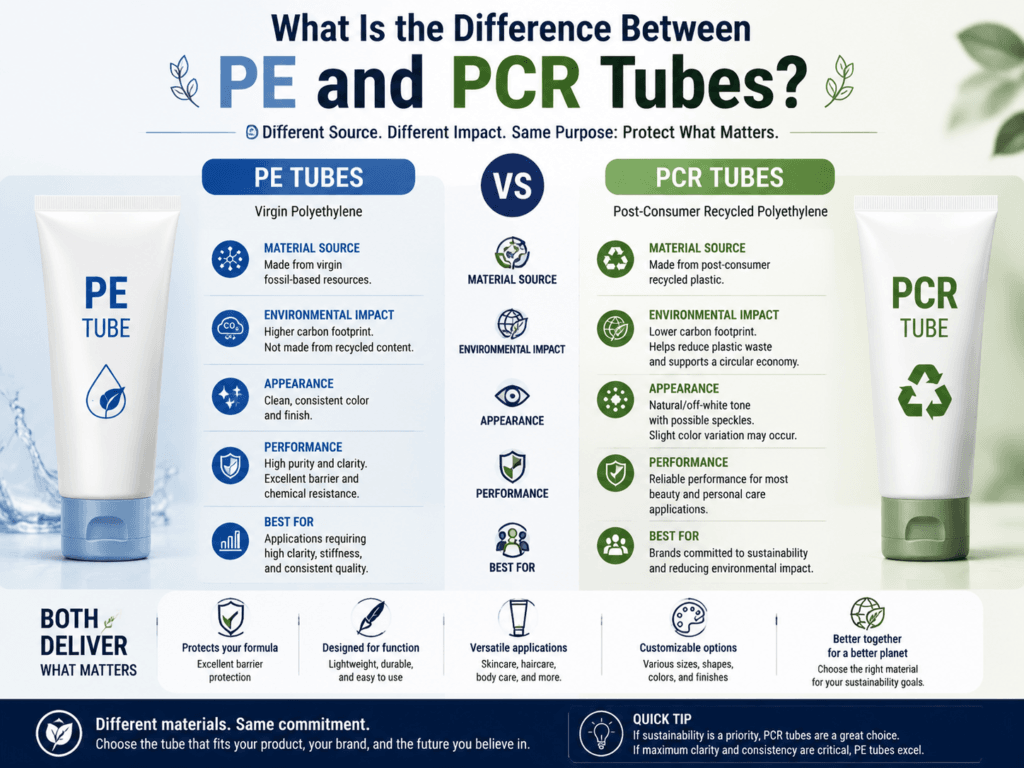
PE (Polyethylene) tubes are made from virgin plastic, offering uniform color and flexibility, whereas PCR (Post-Consumer Recycled) tubes are made from recycled plastic, which supports sustainability but may have slight color variations. Both types are widely used in cosmetic packaging, including skincare, sunscreen, hand cream, and toothpaste tubes.
Comparison of PE vs PCR Tubes
| Feature | PE Tubes | PCR Tubes |
|---|---|---|
| Material Source | Virgin plastic resin | Post-consumer recycled plastic |
| Appearance | Consistent color and finish | Slight color variation possible |
| Environmental Impact | Higher carbon footprint | Lower carbon footprint, eco-friendly |
| Typical Use | All cosmetic tubes, flexible and pump tubes | Skincare, sunscreen, hand cream, and eco-friendly product lines |
| Customization | Full color and printing options | Most colors possible, slight limitations depending on recycled content |
Benefits of PCR Tubes
- Supports sustainability initiatives
- Reduces virgin plastic usage
- Complies with environmental regulations
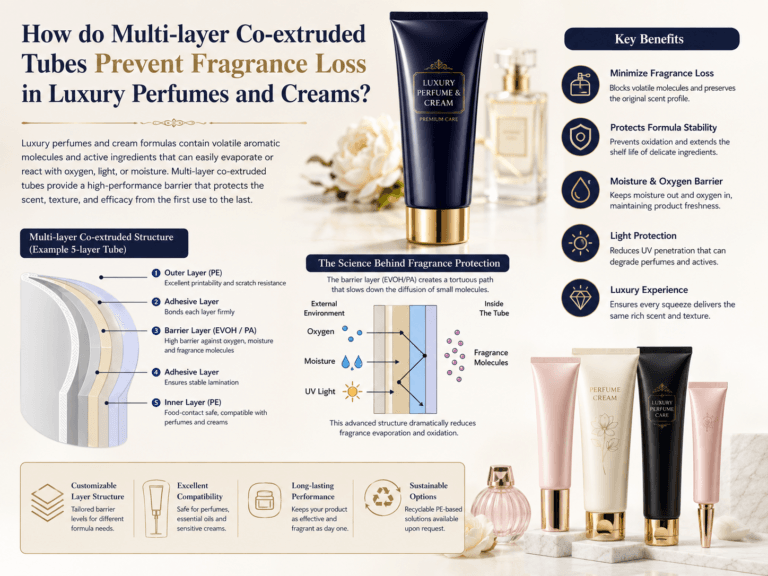
- Available with custom printing, soft-touch, and barrier layers
- Suitable for sensitive cosmetic formulas when combined with EVOH layers
Learn more about sustainable and custom solutions at PCR Cosmetic Tubes and PE vs PCR Tubes Comparison.
Looking for Custom Cosmetic Tubes?
Xinfly Packaging provides both PE and PCR cosmetic tubes with flexible recycling content, color customization, printing options, and barrier structures for a wide range of beauty products.