Published: .
The toothpaste artwork is approved. Then the filling partner asks where its variable information is supposed to go. The proposed area contains a decorative stripe, the designer has used a different view of the tail, and the supplier's sample represents a closed display pack. The missing handoff is larger than an empty rectangle.
A toothpaste tube variable code area brief connects fixed artwork with the operation that will add changing information. Begin with the proposed toothpaste tube packaging, identify the actual component and supply state, then ask the responsible filler or coding provider what it needs. This guide provides artwork-handoff fields and a stage-review checklist. It does not determine required label content, coding equipment settings or legal date declarations.
Identify the Information and Its Owner
Separate Approved Content from Available Space
The brand's responsible team should identify the information to be applied and who approves it. The packaging discussion then addresses how the proposed component and artwork accommodate that instruction. Do not ask a packaging supplier to infer changing content from a decorative mockup or an old production photograph.
Use a placeholder or field reference when the actual information is not yet approved. Label it as a placeholder in the review file. A convenient example should not accidentally become production data simply because it was present in the artwork used for a sample meeting.
Identify the Party Applying the Information
Ask which organization or operation will apply the variable information and at what project stage. Record its contact and required input. The person printing fixed tube artwork may not be the person responsible for the later coding operation, so their approvals should remain distinguishable.
Keep the responsibility clear even when one provider coordinates several activities. Ask which proposed process and component state the relevant review addresses. A broad statement that a pack is “ready for coding” needs an explanation tied to the actual project.
Ask the Coding Provider to Define Its Input
Provide the Proposed Component Reference
Send the drawing, decoration layout and relevant supply-state description to the coding provider. Ask what additional information it needs to assess the proposed area. A picture of the retail pack can communicate appearance while leaving the component geometry or production-stage question unresolved.
For laminated toothpaste tube packaging, keep the actual body and closure references identifiable. Ask which proposed surface and specimen state the provider needs to review. Do not assume that experience with another laminate, finish or pack automatically qualifies the current combination.
Record the Proposed Field Requirements
Ask the responsible provider to identify the relevant content format, intended placement, orientation and other requirements for its proposed operation. Keep the answer with the artwork brief. This article supplies no universal number of characters, field dimensions or coding-method specification.
If those requirements are still provisional, make the status visible. A design team can preserve an identified provisional area while the provider completes its review, but the purchasing record should not present an unanswered field as an accepted production instruction.
| Field | Information to obtain | Responsible confirmation |
|---|---|---|
| Content reference | Approved information or clearly marked placeholder | Brand's responsible content owner |
| Applying operation | Organization, process stage and relevant contact | Filler or coding provider |
| Component identity | Drawing, construction and decoration references | Packaging provider and buyer |
| Area definition | Proposed location, boundary and viewing orientation | Designer and relevant technical provider |
| Surface and state | Which component condition the proposal assumes | Coding provider and preparing party |
| Acceptance scope | Required review, specimen and decision owner | Responsible project reviewers |
Define the Area on the Correct View
Name the Physical Location Instead of Saying “At the Top”
Ask the drawing owner to identify the proposed location and boundaries. A tail-related area, a body panel and a location described from an assembled retail view can involve different references. Use an annotated applicable drawing rather than allowing “top” to stand in for several possible locations.
Identify the direction in which the information will be read on the intended pack view. If a presentation image has been rotated, retain the original drawing orientation as well. A rotated preview should not silently reverse the production instruction sent to another provider.
Keep the Required Supply State Attached
Ask what condition the tube will be in when the variable information is applied. Keep that answer connected to the proposed location and review specimen. A closed display sample does not by itself establish the component state or sequence used in the actual operation.
Resolve Tail-Related Questions with the Relevant Provider
Where the proposed area relates to the tail, ask the filler or coding provider which features and operations affect its review. Do not invent a safe distance or assume every finished tail presents the same usable area. Retain the applicable drawing and the provider's project-specific explanation.
Coordinate Fixed Artwork with the Proposed Area
Identify Which Printed Features Surround It
Mark nearby graphics, text and any relevant treatment in the layout. Ask the designer and coding provider whether the proposed combination needs adjustment for the intended operation and review. A rectangle drawn over a finished mockup does not automatically remove underlying decoration from the production artwork.
Keep the final file changes identifiable. If the reserved area or surrounding artwork changes, update the relevant production-art reference and composite preview together. The next recipient should not have to guess which of several similar files includes the accepted arrangement.
Keep Registration Marks Distinguishable
If the project includes an eye mark or another process-related graphic, identify its purpose separately from the variable-information field. Ask the relevant equipment or filling partner to review the applicable arrangement. Do not treat every small unprinted or dark area as interchangeable process space.
The eye-mark positioning guide can help frame that separate conversation. The current project still needs its own applicable layout and provider confirmation. This article does not import generic registration-mark values into the variable-code area specification.
Ask for the Right Specimen
State What the Review Must Represent
Ask the coding provider which specimen is required to assess the proposed surface, location and component state. Identify whether available samples represent those features. A visual packaging reference can be useful without demonstrating the actual fixed-decoration and variable-coding combination.
Discuss sample development requirements with the packaging supplier before arranging the activity. Record who prepares the specimen and what remains provisional. Do not assume that supplying an empty tube includes preparation or qualification of the later coding operation.
Preserve the Specimen and File Identities
Connect the supplied specimen to the drawing and artwork references. Where the activity uses an approved placeholder, preserve that status in the record. An image of a sample should not be presented as proof that live production information has been applied or accepted.
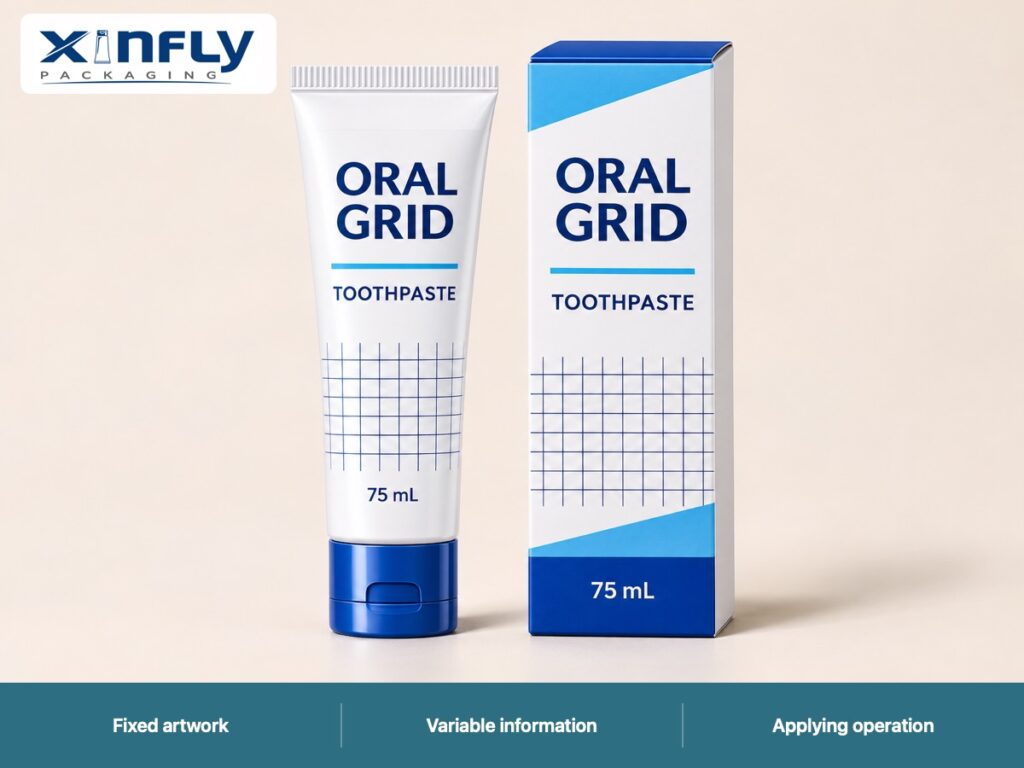
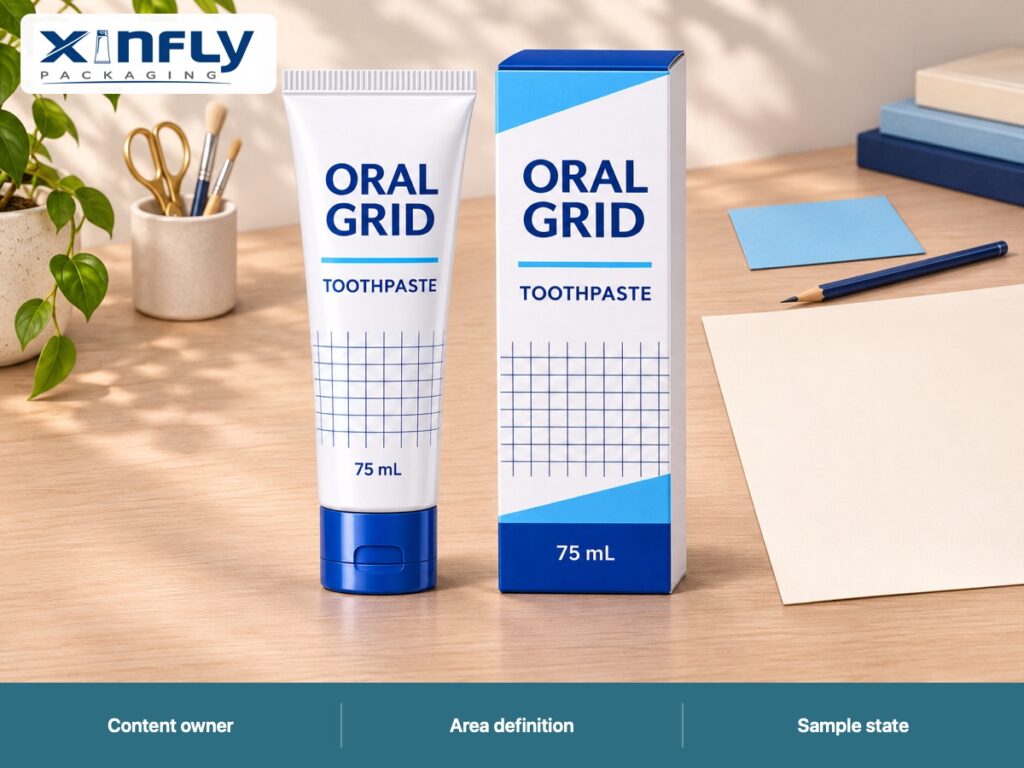
The ORAL GRID concept shows a white PBL-style body, molded shoulder, straight crimped display tail and cobalt round flip-top stand-up cap. Navy and sky-blue offset-style graphics coordinate with a designed carton, with an illustrative unprinted band near the tail. The picture identifies no qualified coding area, actual code or completed coding trial.
Review the Handoff at Defined Stages
Keep File Review and Physical Review Separate
A file review can identify whether the agreed area and surrounding artwork appear in the current layout. A physical review addresses the proposed specimen and operation. Record the scope of each decision rather than using one “approved” label for every stage of the project.
The checklist below helps a buyer organize that handoff. It is not a coding test procedure or a source of passing criteria. Ask the responsible providers to define the activity and acceptance basis needed for the actual component and operation.
| Stage | Record to connect | Decision or open question |
|---|---|---|
| Content preparation | Approved content reference or marked placeholder | Who authorizes the changing information? |
| Layout coordination | Current drawing and artwork revisions | Is the intended area identifiable on the correct view? |
| Provider review | Proposed operation and supply-state requirements | What specimen or information is still needed? |
| Sample preparation | Specimen identity and represented features | Does the sample match the intended review scope? |
| Defined physical activity | Responsible provider's instructions and identified specimen | What was observed and what does it support? |
| Order handoff | Accepted references and unresolved limitations | Which features are released and which remain open? |
Record Observations Before Assigning a Cause
If the responsible provider reports an issue, keep the specimen, files, activity and observation identifiable. Ask the relevant teams to assess the cause and next action. Do not attribute a concern to the laminate, ink or field position from a photograph alone.
If a revision is proposed, identify what changes and which prior decisions need review. Keep the unchanged references visible too. This makes it easier to understand the new proposal without pretending that a revised layout has already produced an accepted physical result.

Keep Commercial and Technical References Aligned
Include the Accepted Area in the Decoration Brief
The commercial inquiry should identify the current decoration file and relevant open questions. Use the tube printing and design brief to discuss the fixed artwork scope while the appropriate provider confirms the later operation. Do not add an unconfirmed coding service to a packaging-only proposal by implication.
For custom toothpaste tubes with stand-up caps, retain the actual cap and body references when discussing the pack view. A visual presentation requirement and an operation-stage coding requirement may need different supporting views. Keep both connected to the same proposed item.
Send Xinfly Packaging a Complete Handoff Question
Share the intended tube, current layout, responsible coding contact and proposed area question. Identify the information already confirmed and what remains provisional. You can send Xinfly Packaging your toothpaste coding-area brief to discuss which packaging and specimen references can be provided for the project.
At reorder, preserve the accepted layout and component references and ask providers to identify relevant changes. A familiar product name should not hide an altered surface, artwork area or operation requirement. Keep the actual changing content under its designated approval process.
Frequently Asked Questions
Does an Empty Rectangle in a Mockup Qualify the Coding Area?
It identifies a design intention, but the responsible provider still needs to review the applicable component, surface, location and state. Connect the area to the drawing and production artwork. Keep any required physical activity and acceptance decision identifiable rather than inferring qualification from a preview.
Who Should Decide What Information Is Printed There?
Identify the brand's responsible content owner and its approval process. The filler or coding provider should confirm the relevant operational input requirements. This article does not determine mandatory labeling content, batch conventions or legal date declarations for a market.
Is an Eye Mark the Same as a Variable-Code Field?
Identify each feature's intended purpose and ask the relevant provider to confirm the arrangement. A registration feature and a field for changing information should not be treated as interchangeable space. Keep their applicable instructions distinguishable in the artwork handoff.
Can a Closed Display Tube Represent the Required Coding Specimen?
Ask the responsible provider which specimen state the planned review requires and what the available sample represents. Keep any limitation visible. The external appearance of a display tube should not establish the production supply state or sequence through implication.
What Should I Preserve for the Next Order?
Retain the accepted drawing, decoration layout, area definition, component references and relevant provider requirements. Keep content approval and technical acceptance scopes identifiable. Ask about changes before reusing an earlier decision, rather than assuming that unchanged branding means the complete proposal is unchanged.
Conclusion
A useful toothpaste coding-area handoff connects the approved information owner, applying operation, component state and current artwork. Name the physical area, keep registration features distinguishable, and ask the responsible provider to define its specimen and acceptance needs. Xinfly Packaging can review the packaging brief with you so an apparently simple blank area becomes an identifiable part of the project instead of a late-stage assumption.