

How to Choose Oxidation-Sensitive Vitamin C Cream Tubes to Prevent Formula Yellowing
Vitamin C cream formulas are highly sensitive to oxygen, light, heat, metal ions and repeated air exposure. When the packaging barrier is not suitable, the formula may turn yellow, darken, lose activity or develop an unstable appearance before the end of shelf life. This guide helps skincare brands choose the right Vitamin C cream tubes, including EVOH barrier tubes, ABL tubes, PBL tubes, airless pump tubes and opaque PE tubes.
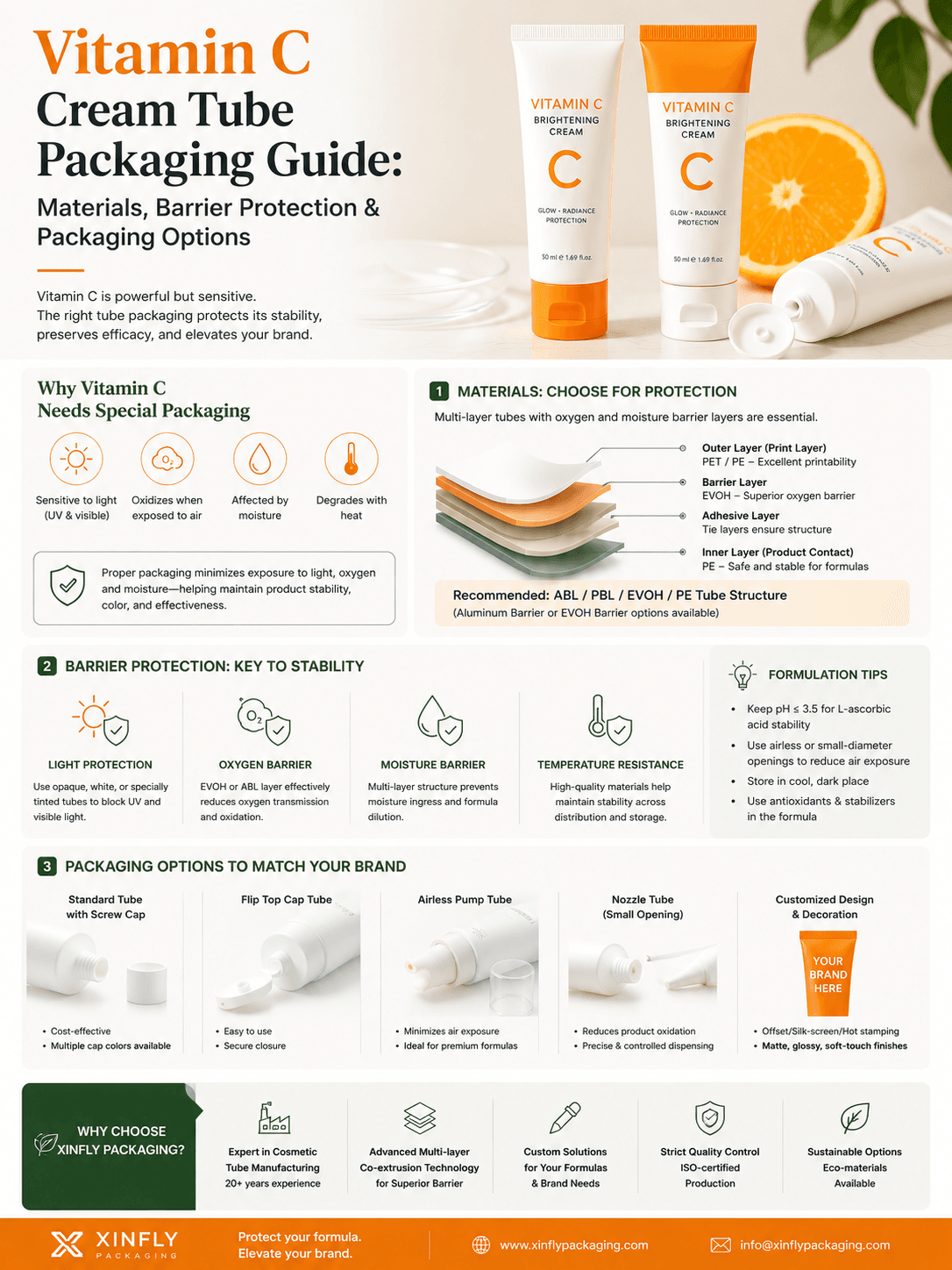
Common Purchasing Pain Points for Vitamin C Cream Tube Packaging
Vitamin C skincare products are easy to market but difficult to package. The tube must protect the formula from oxidation, light exposure, air entry, material migration and unstable storage conditions.
The cream turns yellow or brown too early
Yellowing is one of the most common complaints for Vitamin C formulas. Poor oxygen barrier, transparent packaging or frequent air exposure can accelerate visible color change.
Standard PE tubes may not be enough
Ordinary PE tubes may work for stable creams, but sensitive Vitamin C derivatives, antioxidants and active systems may require EVOH, ABL, PBL or airless structures.
Transparent tubes can increase stability risk
Vitamin C products should usually avoid clear packaging unless the formula has been proven stable. Opaque, white, pearlized or dark tubes are safer choices.
Formula may interact with the tube wall
Some active formulas contain acids, oils, solvents or chelating agents. The inner layer must be tested to avoid odor change, discoloration, swelling or migration.
Repeated use introduces oxygen
Standard squeeze tubes allow product dispensing, but air exposure depends on formula, headspace, cap design and user behavior. Airless pump tubes may help premium active formulas.
Packaging must prove formula protection
Vitamin C buyers care about freshness and efficacy. The packaging design should visually communicate barrier protection, opaque safety and high-performance skincare value.
Choose Vitamin C Cream Tube Structure Based on Oxidation Risk
Xinfly engineers usually review Vitamin C type, pH, oil phase, antioxidant system, light sensitivity, oxygen sensitivity, filling temperature, headspace and shelf-life target before recommending a tube structure.
| Formula Type | Main Packaging Risk | Recommended Tube Structure | Factory Engineer’s Suggestion |
|---|---|---|---|
| Standard Vitamin C cream Stable derivative formula | Moderate oxidation, color change, light exposure | Opaque PE tube or multi-layer PE tube | Use white, pearlized or dark tube body. Avoid transparent packaging unless stability testing confirms safety. |
| High-active Vitamin C cream | Yellowing, oxygen sensitivity, shelf-life risk | EVOH co-extruded tube, ABL tube or PBL tube | Use high-barrier structures and run accelerated aging tests with real filled samples. |
| Low-pH Vitamin C formula | Inner layer compatibility, active degradation, odor change | Tested PE inner layer, EVOH PE or laminate tube | Compatibility testing is essential. Confirm inner layer resistance before mass production. |
| Vitamin C eye cream or serum cream | Small dose, oxygen exposure, premium positioning | Airless pump tube, long nozzle tube or EVOH barrier tube | For high-value small-volume formulas, consider airless or precision dispensing structures. |
| Premium anti-aging Vitamin C cream | Formula protection, brand trust, luxury shelf appeal | Airless pump tube, ABL tube, PBL tube or EVOH tube | Combine barrier structure with opaque premium decoration such as soft-touch, hot stamping or pearlized finish. |
EVOH vs. ABL vs. PBL vs. Airless: Which Is Better for Vitamin C Cream?
There is no single best packaging for every Vitamin C formula. The right choice depends on oxidation risk, formula value, filling line, decoration target and cost range.
| Packaging Option | Main Advantage | Potential Limitation | Best Use Case |
|---|---|---|---|
| EVOH Co-Extruded Tube | Good oxygen barrier while keeping a plastic tube feel | Needs correct layer design and formula compatibility testing | Vitamin C cream, anti-aging cream, active skincare formulas needing oxygen protection |
| ABL Tube | Strong barrier with aluminum layer and premium aluminum-like appearance | Less plastic-like recovery and not ideal for every recyclable direction | High-barrier Vitamin C cream, premium skincare, strong shelf-life requirement |
| PBL Tube | Plastic-based laminate structure with good barrier and clean appearance | Barrier level depends on laminate design | Modern skincare brands needing barrier performance and flexible decoration |
| Airless Pump Tube | Reduces repeated air contact and improves premium dispensing experience | Higher component cost and more assembly control required | High-value Vitamin C cream, eye cream, serum cream and premium anti-aging products |
| Opaque PE Tube | Cost-effective, flexible, easy to customize and good for stable formulas | Lower oxygen barrier than dedicated barrier structures | Stable Vitamin C derivative cream with proven compatibility and shorter shelf-life risk |
Factory Engineer + Packaging Designer Solutions
A good Vitamin C cream tube should protect against oxygen and light, reduce formula yellowing risk, support stable filling and clearly communicate freshness, efficacy and premium skincare value.
Engineer’s Solution for Preventing Formula Yellowing
From a factory engineering view, Vitamin C tube selection should focus on barrier structure, light blocking, inner layer compatibility and filled-product stability testing.
- Use opaque, white, pearlized, dark or UV-blocking tube bodies instead of clear tubes.
- Use EVOH, ABL or PBL barrier structures when oxygen sensitivity is high.
- Use airless pump tubes when repeated air exposure must be reduced for premium formulas.
- Control headspace and tail sealing quality to reduce unnecessary oxygen exposure after filling.
- Run compatibility, accelerated aging, light exposure, leakage, drop and heat storage tests before bulk production.
Designer’s Solution for Vitamin C Tube Packaging
Vitamin C packaging should make consumers feel the formula is fresh, protected and effective. The visual design should avoid looking transparent, unstable or low-barrier.
- For brightening cream: white or pearlized tube with orange, gold or clean clinical accents.
- For anti-aging Vitamin C: dark blue, amber, silver or champagne color system with premium typography.
- For dermatology skincare: clean white tube, blue details, clear active percentage area and simple claim hierarchy.
- For natural Vitamin C cream: opaque tube, soft botanical color and antioxidant protection message.
- For e-commerce: large “Vitamin C” claim, clear anti-yellowing packaging story and scratch-resistant finish.
How to Choose Vitamin C Cream Tube Capacity, Diameter and Cap
Vitamin C cream tubes are often positioned as high-value skincare packaging. Smaller and medium capacities help reduce long open-use time and better match active formula positioning.
| Product Positioning | Common Capacity | Suggested Diameter | Recommended Cap / Structure | Best For |
|---|---|---|---|---|
| Trial Vitamin C cream | 5ml, 10ml, 15ml | Ø13mm – Ø22mm | Screw cap or small nozzle | Sample kits, travel sets, promotional skincare testing |
| Daily Vitamin C cream | 30ml, 40ml, 50ml | Ø25mm – Ø35mm | Screw cap, flip-top cap or nozzle cap | Brightening cream, daily antioxidant cream, private label skincare |
| Premium Vitamin C cream | 30ml, 50ml, 60ml | Ø30mm – Ø35mm | Airless pump tube or barrier squeeze tube | High-active Vitamin C, anti-aging cream, luxury skincare products |
| Vitamin C eye cream | 10ml, 15ml, 20ml | Ø16mm – Ø25mm | Long nozzle, metal applicator or airless tube | Eye brightening cream, active eye treatment, premium small-dose skincare |
| Professional treatment cream | 50ml, 75ml, 100ml | Ø35mm – Ø40mm | Barrier tube or airless structure | Spa, clinic skincare, high-performance antioxidant cream |
Quick Recommendation: Which Tube Is Best to Prevent Vitamin C Yellowing?
The safest packaging direction is to reduce oxygen exposure, block light and verify formula compatibility with filled-product stability testing.
You need oxygen barrier with a plastic tube feel
EVOH co-extruded tubes are suitable for Vitamin C creams that need better oxygen protection while keeping a flexible PE-style tube appearance.
You need stronger barrier and premium shelf trust
ABL and PBL tubes are suitable for high-active Vitamin C creams, long shelf-life targets and brands that need stronger formula protection messaging.
You need reduced repeated air exposure
Airless pump tubes are recommended for premium Vitamin C cream, serum cream and eye cream formulas where air contact control is an important selling point.
6-Step Process to Choose Vitamin C Cream Tubes
This process helps skincare brands avoid yellowing complaints, wrong barrier selection and unstable shelf-life performance.
Check Formula
Confirm Vitamin C type, pH, oil phase, antioxidant system, oxygen sensitivity and light sensitivity.
Define Risk Level
Classify formula as stable derivative, moderate-risk active or high-risk oxidation-sensitive cream.
Select Structure
Choose opaque PE, EVOH PE, ABL, PBL or airless pump tube based on oxidation risk.
Block Light
Use opaque, white, pearlized, dark or UV-blocking tube body instead of transparent packaging.
Confirm Artwork
Prepare AI/PDF files, barrier protection message, active claim, color system and finish.
Test Samples
Run compatibility, accelerated aging, light exposure, leakage, heat storage and printing adhesion tests.
Mass Production
Xinfly controls tube extrusion, barrier structure, printing, cap matching, inspection and export packing.
Final Inspection
Check tube size, barrier layer, opacity, cap fit, printing quality, sealing area and carton protection.
Build Your How to Choose Packaging Knowledge Cluster
Continue reading related Xinfly guides to compare barrier tubes, airless tubes, skincare tube materials, active formula protection and private label customization options.
FAQ: Choosing Vitamin C Cream Tubes to Prevent Yellowing
These questions help skincare brands quickly confirm barrier structure, opacity, airless options, cap selection and testing before requesting samples.
Why does Vitamin C cream turn yellow in packaging?
Vitamin C cream may turn yellow because of oxidation, light exposure, heat, formula instability or contact with incompatible packaging materials. The tube should be selected based on oxygen barrier, light blocking and compatibility testing.
What tube material is best for oxidation-sensitive Vitamin C cream?
EVOH co-extruded tubes, ABL tubes, PBL tubes and airless pump tubes are commonly considered for oxidation-sensitive Vitamin C creams. The best option depends on formula sensitivity, shelf-life target and budget.
Should Vitamin C cream use transparent tubes?
Transparent tubes are generally not recommended for oxidation-sensitive Vitamin C creams unless stability testing confirms the formula is safe. Opaque, white, pearlized, amber or dark tubes are usually safer.
Are airless pump tubes better for Vitamin C cream?
Airless pump tubes can help reduce repeated air exposure and improve premium dispensing experience. They are especially useful for high-value Vitamin C creams, serum creams and active eye care formulas.
Can EVOH tubes prevent Vitamin C oxidation?
EVOH tubes can improve oxygen barrier performance compared with standard PE tubes, helping reduce oxidation risk. However, the final result still depends on formula stability, tube structure, filling process and storage conditions.
What tests should be done before producing Vitamin C cream tubes?
Recommended tests include formula compatibility, accelerated aging, light exposure, heat storage, leakage, drop testing, cap sealing, tail sealing and printing adhesion testing with actual filled samples.
Need Help Choosing Vitamin C Cream Tubes?
Share your Vitamin C type, pH, formula color, oxygen sensitivity, filling volume, cap preference, artwork style and expected order quantity. Xinfly Packaging can recommend suitable EVOH, ABL, PBL, opaque PE or airless Vitamin C cream tube solutions with engineering and artwork support.