
How to Choose Toothpaste Tubes for Oral Care Brands
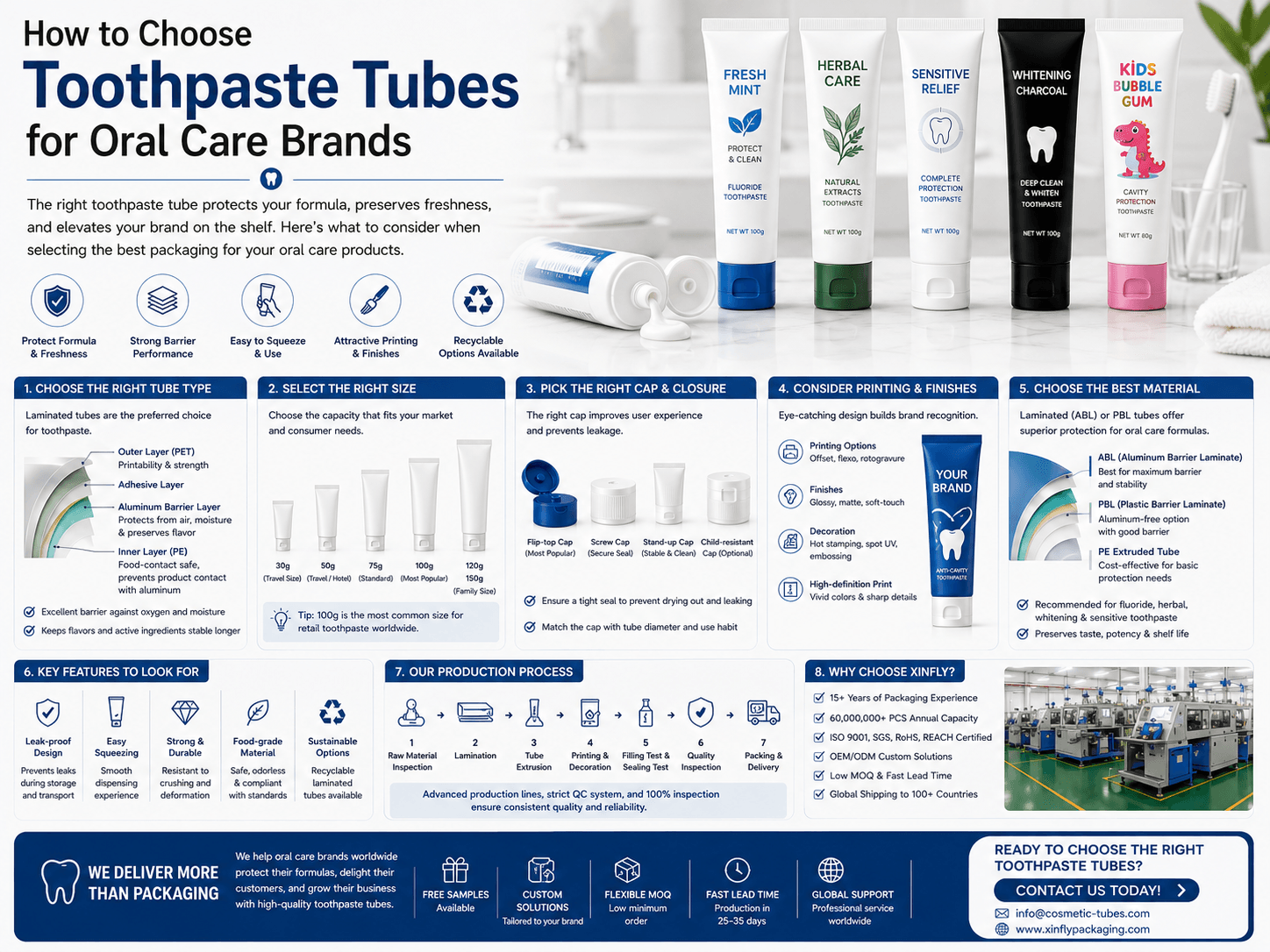
Toothpaste tube packaging must protect flavor, fluoride, whitening actives, herbal extracts and moisture balance while remaining easy to squeeze and reliable during daily bathroom use. For oral care brands, the right tube is not only about capacity and price. It must match formula stability, barrier requirements, cap sealing, filling efficiency, retail shelf appeal and export transportation. This guide helps brands choose between ABL, PBL, PE and high-barrier toothpaste tubes before sampling and mass production.
Common Purchasing Pain Points for Toothpaste Tube Packaging
Toothpaste tubes look standard from the outside, but different oral care formulas create very different packaging risks. Flavor loss, moisture change, whitening actives, filling temperature, cap leakage and tube recovery should all be reviewed before quotation confirmation.
Mint flavor may fade during storage
Toothpaste formulas often contain volatile flavors and essential oils. Poor barrier performance may cause flavor loss, odor change or weaker consumer experience after long storage.
Whitening or fluoride formulas need protection
Oral care products with fluoride, peroxide-like whitening systems, enzymes, herbal extracts or sensitive actives may require better barrier and compatibility control.
The tube should squeeze cleanly every day
Toothpaste is used repeatedly. Tube stiffness, laminate structure and shoulder design affect squeeze feel, recovery and product evacuation.
Cap residue and leakage hurt user experience
Toothpaste residue around the cap can look messy. Cap thread, flip-top hinge, orifice size and shoulder design must match formula viscosity.
The tube must stand well on shelf
Many oral care brands prefer stand-up caps for better bathroom storage and retail display. Cap base size and tube diameter affect stability.
Small warning text must remain readable
Toothpaste tubes often need active claims, usage directions, age warnings and ingredient information. Printing accuracy and artwork layout are important.
Choose Toothpaste Tube Structure Based on Oral Care Formula Type
Xinfly engineers usually review flavor level, moisture sensitivity, active ingredients, pH, viscosity, filling temperature, shelf-life target and sales channel before recommending ABL, PBL, PE or other tube structures.
| Formula Type | Main Packaging Risk | Recommended Tube Structure | Factory Engineer’s Suggestion |
|---|---|---|---|
| Standard fluoride toothpaste | Flavor retention, moisture balance, daily squeeze performance | ABL tube or PBL tube | Use laminate toothpaste tubes for reliable barrier, good shape control and mature filling compatibility. |
| Whitening toothpaste | Active stability, oxygen sensitivity, claim protection | ABL tube, PBL tube or high-barrier laminate tube | Run formula compatibility and accelerated aging tests before confirming bulk production. |
| Herbal / natural toothpaste | Essential oil migration, flavor change, natural color stability | PBL tube, ABL tube or EVOH-based barrier option | Test flavor retention and inner layer compatibility, especially for essential-oil-rich formulas. |
| Kids toothpaste | Safe dispensing, colorful printing, easy squeezing | PBL tube or soft laminate tube with flip-top cap | Use child-friendly design, controlled orifice and strong cap sealing for bathroom use. |
| Premium oral care toothpaste | High-end appearance, metallic look, shelf differentiation | ABL tube, aluminum-look laminate tube or decorated PBL tube | Use metallic effect, matte/gloss contrast, hot stamping or clean clinical artwork for premium positioning. |
ABL vs. PBL Toothpaste Tubes: Which One Should Oral Care Brands Choose?
ABL and PBL are two common toothpaste tube structures. The right choice depends on barrier level, appearance, recyclability direction, squeeze feel and brand positioning.
| Comparison Point | ABL Toothpaste Tubes | PBL Toothpaste Tubes | Recommendation |
|---|---|---|---|
| Barrier Performance | Excellent barrier with aluminum layer, strong protection for flavor and moisture | Good barrier with plastic laminate structure, suitable for many oral care formulas | Choose ABL when maximum barrier is the priority. Choose PBL for balanced performance and plastic-based structure. |
| Appearance | Can create aluminum-like, premium or clinical appearance | Clean plastic look with flexible printing and modern shelf appeal | Use ABL for metallic or pharmacy-style branding. Use PBL for clean and modern oral care branding. |
| Squeeze Feel | More structured feel, stronger dead-fold effect | More plastic-like recovery and softer consumer feel | For family toothpaste, PBL may feel more flexible. For premium barrier toothpaste, ABL is strong. |
| Sustainability Direction | Mixed aluminum-plastic structure may be harder for some recycling systems | Plastic-based structure may better support recyclable design direction depending on local systems | For eco-focused oral care brands, discuss PBL or mono-material direction early. |
| Cost & MOQ | Suitable for mature toothpaste projects with strong barrier demand | Suitable for many private label, modern and retail oral care projects | Final cost depends on tube size, material thickness, printing colors, cap type and order quantity. |
Factory Engineer + Packaging Designer Solutions
A good toothpaste tube should protect flavor and active ingredients, support stable filling and sealing, squeeze comfortably, stand well on shelf and communicate oral care benefits clearly.
Engineer’s Solution for Toothpaste Tube Selection
From a factory engineering view, toothpaste tube selection should focus on barrier performance, formula compatibility, cap sealing and filling line stability.
- Use ABL or PBL laminate tubes for most toothpaste and oral care cream formulas.
- Use higher barrier structures when mint flavor, essential oils or sensitive actives must be protected.
- Choose stand-up flip-top caps for retail toothpaste and screw caps for traditional or travel-size tubes.
- Confirm shoulder structure, cap torque, orifice size and tail sealing before filling.
- Run compatibility, flavor retention, leakage, drop, compression and heat storage tests before bulk production.
Designer’s Solution for Toothpaste Tube Packaging
Toothpaste packaging should look clean, trustworthy and benefit-driven. Consumers need to quickly understand whitening, cavity protection, sensitivity care, kids use or natural positioning.
- For whitening toothpaste: white, silver or blue layout with bright clean visual contrast.
- For sensitive toothpaste: calm blue or soft green color system with clinical typography.
- For kids toothpaste: colorful artwork, easy product name and friendly cap design.
- For natural toothpaste: matte or kraft-style color, botanical elements and recyclable message.
- For premium oral care: metallic effect, hot stamping, aluminum-look tube or minimal luxury layout.
How to Choose Toothpaste Tube Capacity, Diameter and Cap
Toothpaste tube size should match daily use, travel use, kids use, family use or premium oral care positioning. Cap selection affects both retail display and bathroom convenience.
| Product Positioning | Common Capacity | Suggested Diameter | Recommended Cap | Best For |
|---|---|---|---|---|
| Travel toothpaste | 10ml, 15ml, 20ml, 30ml | Ø16mm – Ø25mm | Small screw cap | Travel kits, hotel amenities, airline kits, sample packs |
| Kids toothpaste | 30ml, 50ml, 60ml | Ø25mm – Ø35mm | Flip-top cap or screw cap | Children’s oral care, fruity flavor toothpaste, family retail packs |
| Daily adult toothpaste | 75ml, 90ml, 100ml, 120ml | Ø35mm – Ø40mm | Stand-up flip-top cap | Retail toothpaste, whitening toothpaste, fluoride toothpaste, private label oral care |
| Family size toothpaste | 150ml, 180ml, 200ml | Ø40mm – Ø50mm | Large stand-up flip-top cap | Family oral care, value packs, large retail toothpaste |
| Premium oral care cream | 50ml, 75ml, 100ml | Ø30mm – Ø40mm | Special screw cap, flip-top cap or aluminum-look cap | Luxury oral care, whitening cream, sensitivity care, pharmacy-style toothpaste |
Quick Recommendation: Which Tube Material Is Best for Toothpaste?
The best toothpaste tube material depends on flavor strength, active ingredients, shelf-life target, brand image and sustainability direction.
You need maximum barrier protection
ABL toothpaste tubes are suitable for formulas that require strong protection against flavor loss, moisture change, oxygen exposure and long storage conditions.
You need a modern plastic-based laminate tube
PBL tubes are suitable for many oral care brands that want good barrier performance, clean appearance, comfortable squeezing and a plastic-based packaging direction.
You need special structure or sustainability options
PE or EVOH-based tube structures may be considered for specific oral care projects, especially when brands want custom barrier performance or recyclable structure discussion.
6-Step Process to Choose Toothpaste Tubes
This process helps oral care brands reduce sampling mistakes, avoid wrong barrier structure and prepare artwork correctly before mass production.
Check Formula
Confirm flavor level, fluoride or active system, viscosity, moisture sensitivity and shelf-life target.
Select Structure
Choose ABL, PBL, PE or high-barrier structure based on formula protection and brand positioning.
Match Size
Select travel, kids, daily, family or premium size according to sales channel.
Choose Cap
Use screw caps, flip-top caps or stand-up caps based on retail display and bathroom use.
Confirm Artwork
Prepare AI/PDF files, active claims, warning text, color system, printing method and finish.
Test Samples
Run compatibility, flavor retention, leakage, cap sealing, drop and printing adhesion tests.
Mass Production
Xinfly controls laminate tube making, printing, cap matching, inspection and export packing.
Final Inspection
Check tube size, barrier structure, printing quality, cap fit, sealing area and carton protection.
Build Your How to Choose Packaging Knowledge Cluster
Continue reading related Xinfly guides to compare laminate tubes, barrier materials, PE squeeze tubes, surface finishes and private label customization options.
FAQ: Choosing Toothpaste Tubes for Oral Care Brands
These questions help oral care brands quickly confirm material, barrier structure, cap, size, decoration and testing before requesting samples.
What is the best tube material for toothpaste?
ABL and PBL laminate tubes are commonly recommended for toothpaste because they provide good barrier performance, stable tube structure and mature filling compatibility. The final choice depends on formula, flavor, active ingredients and sustainability direction.
Should toothpaste brands choose ABL or PBL tubes?
ABL tubes are better when maximum barrier protection and aluminum-like appearance are required. PBL tubes are suitable when brands want a plastic-based laminate structure with good barrier performance and modern appearance.
What size is common for toothpaste tubes?
30ml, 50ml, 75ml, 90ml, 100ml and 120ml are common toothpaste tube sizes. Travel packs use smaller sizes, while daily adult toothpaste often uses 75ml to 120ml tubes.
Which cap is best for toothpaste tubes?
Stand-up flip-top caps are popular for retail toothpaste because they improve bathroom storage and shelf display. Screw caps are often used for travel-size, traditional or premium oral care tubes.
Can toothpaste tubes have an aluminum look?
Yes. ABL tubes and aluminum-look laminate tubes can create a metallic or pharmacy-style appearance while supporting printed branding, active claims and retail design requirements.
How do I prevent toothpaste tube leakage?
Leakage prevention depends on shoulder design, cap fit, orifice size, tail sealing strength, filling process and formula viscosity. Xinfly recommends cap sealing, leakage, drop and heat storage tests before bulk production.
Need Help Choosing Toothpaste Tubes?
Share your toothpaste formula type, flavor system, active ingredients, filling volume, cap preference, artwork style and expected order quantity. Xinfly Packaging can recommend suitable ABL, PBL, PE, EVOH or aluminum-look toothpaste tube solutions with engineering and artwork support.