
Published: .
Technical review: pending.
An aluminum hair color tube tail fold check gives the converter, filler and brand a shared picture of the finished folded end. The buyer needs to know which face receives the fold, where its edge lands and how much space the folded end takes when the filled tube is packed. An empty open-tail tube and a filled folded sample answer different specification questions. Approve the fold on a finished sample that reflects the nominated body and fill. This guide provides a drawing worksheet and a finished-sample record that cover the parts people can inspect at handoff.
Define the Filled Pack Before Drawing the Fold
Confirm the Tube Construction
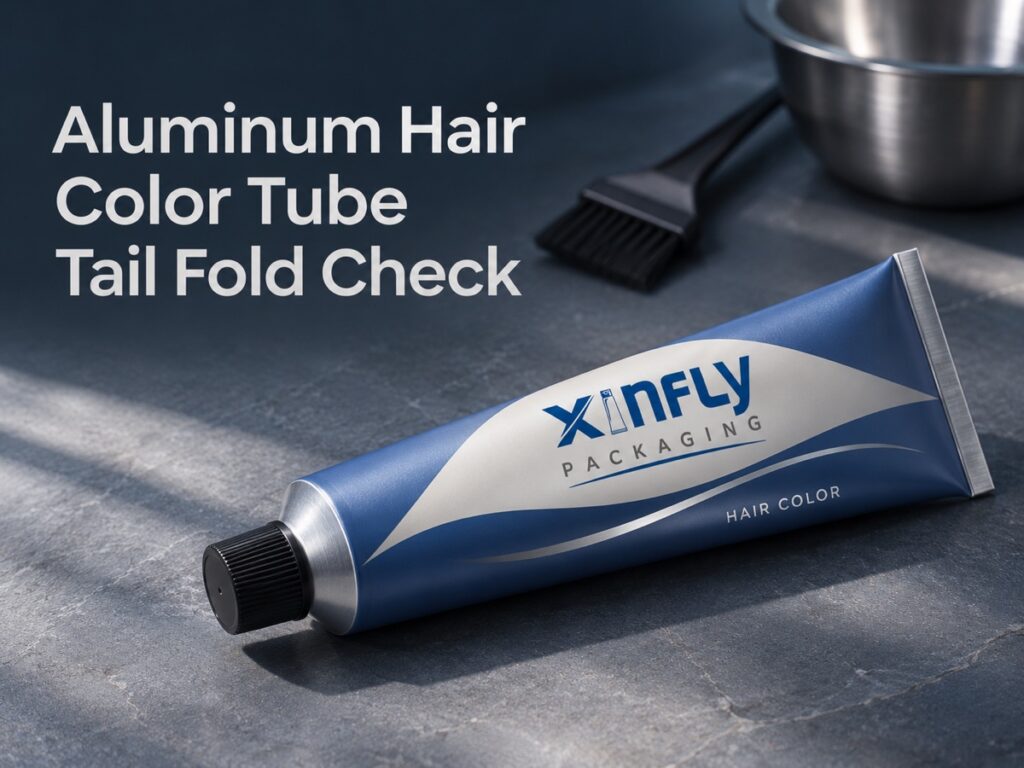
This check covers a collapsible all-metal tube with a mechanically folded tail. For aluminum cosmetic tubes, ask the supplier for the open-tail component drawing and the surface finish for the quoted build. Confirm who fills and closes the tube and which drawing that team uses for the finished part. The illustration shows a coated blue aluminum body with a shallow formed shoulder, a short black ribbed screw cap, an original silver curve and a flattened metallic folded band. The artwork is proposed for offset decoration, subject to a physical proof on the nominated coated body. Keep the actual cap and nozzle in the sample record.
Agree What the Buyer Can Inspect
The converter supplies a tube to the applicable component specification. The filler controls the filling and closing steps within its approved process. Identify which samples demonstrate the finished state and who can measure it. A package approval can name the desired fold side, outer outline and location relative to the print. Ask the filler how it will document the closing process and the checks it already uses. Include any project requirement for the fold edge, coded area and carton fit on the same sample reference.
Keep Component and Finished Dimensions Clear
Request a component length from an agreed dimension drawing and a separate finished length taken after the unit has been filled and folded. Use a named method and reference at the cap or shoulder for the finished unit. The open-tail reference can be useful for a converter and for an equipment check. The finished outer envelope is used for pack-out. Make clear whether the widest or highest part of the folded end is included in the comparison and record the shape of both corners.
Specify the Fold Direction
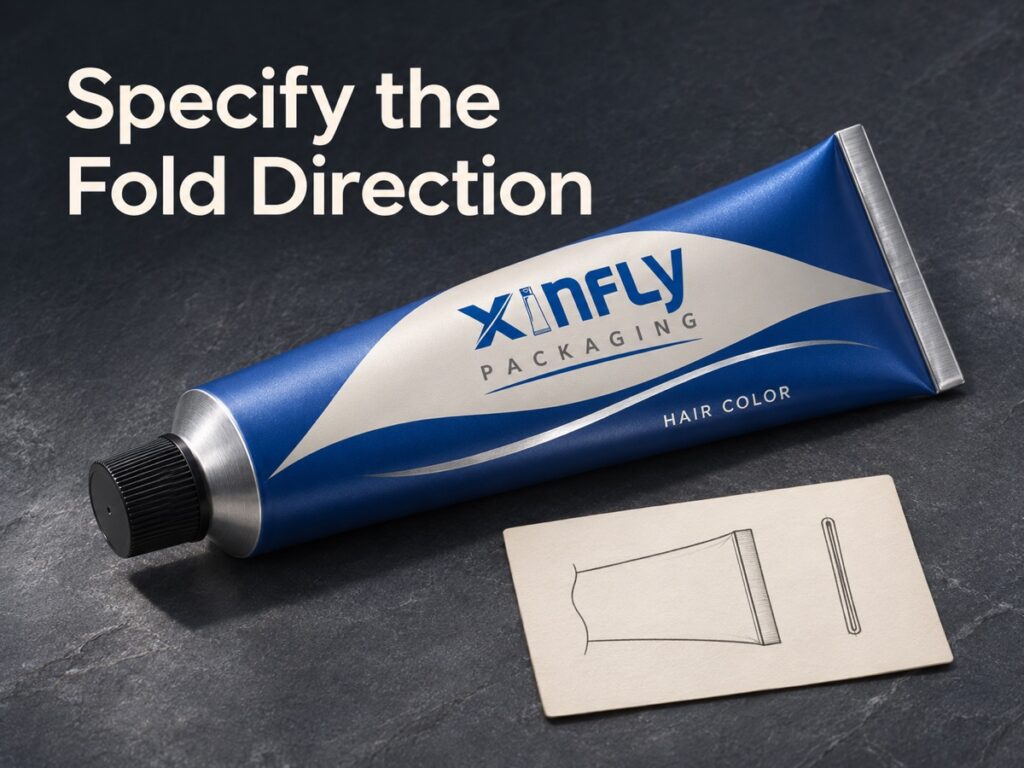
Ask for both faces of a filled sample, photographed with a clear front and back reference. Mark which surface of the body the folded end turns toward. Use a diagram or photo to make the view unambiguous, especially when the sides look similar. If the artwork is centered on the front of the tube, identify where the fold should land relative to that artwork. Ask whether the filler can maintain that orientation with the nominated artwork mark or a verified handling reference. Record the condition the project team will accept if correct direction is important to shelf presentation.
Locate the Folded Edge on the Artwork
Include the crease band, folded edge and any surface occupied by a corner or end of the fold. Ask which areas should remain clear for text or the filler-applied code. Have the artwork reviewer look at the overlap on a decorated, filled sample. When the approved code location is near the tail, record how it appears on the actual sample. Use the dry layout for typography and compare actual positions on the folded form before signing off. Check the approved direction after the unit is presented in the retail pack or kit.
| Drawing item | What must be identified | How it will be confirmed |
|---|---|---|
| Front and back | Printed face, opposite face and agreed datum | Paired views of the same filled sample |
| Fold direction | Face toward which the tail is folded | Annotated diagram and finished sample |
| Fold envelope | Width, height or depth at agreed reference points | Project measure of the finished end and corners |
| Artwork and coding area | Copy boundary and distance from the fold area | Decorated filled proof with the actual code location |
| Cap or shoulder reference | Feature used for the finished length | Sample photo showing the measurement reference |
| Set or carton fit | Direction that the tube will load and pocket shape | Finished unit checked in production-intent pack-out |
Include the Fill and Presentation Conditions
For hair dye tube packaging, include the nominated fill state, intended assembly and who will provide the filled reference sample. If the project uses a kit, confirm how the color component enters its pack and which end leads. An asymmetric tail can meet the available carton space in one direction and need review in another. Record the space available near the fold and any place a corner approaches the card or insert. A drawing can then show the actual envelope the pack-out team approved.
Inspect the Finished Fold
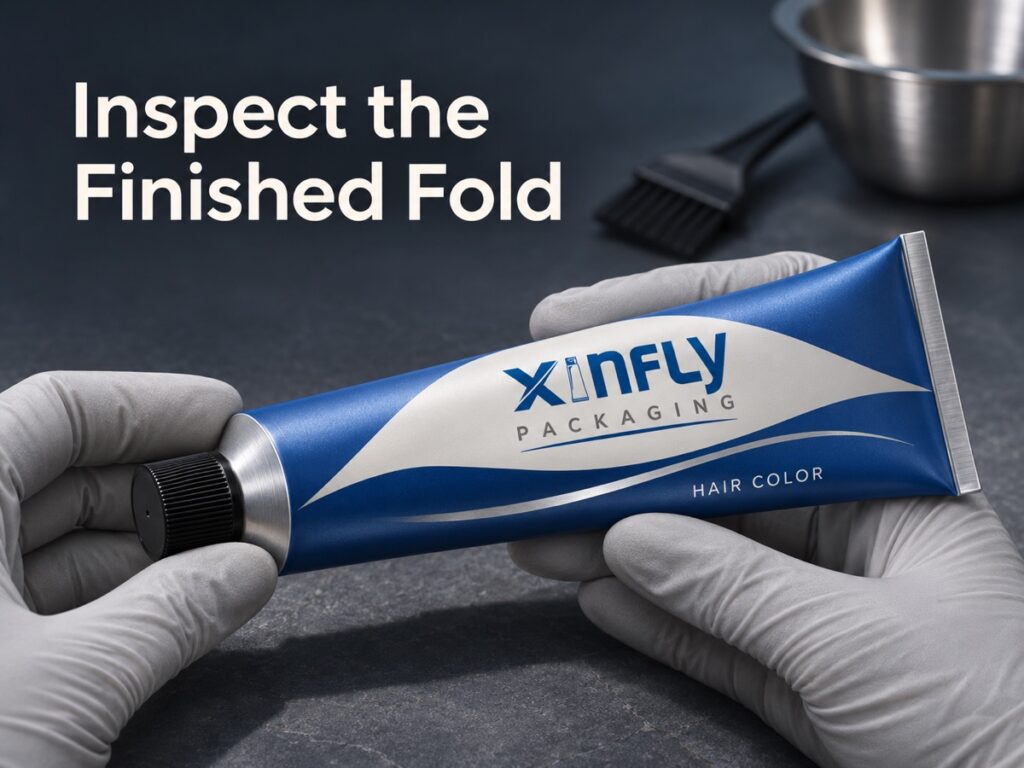
Choose identified finished samples from the proposed build and observe them as received. Take front, back and edge views with the same orientation each time. Photograph the outline and visible condition of both corners. Mark any area that may interfere with handling, code legibility or carton insertion and ask the filler to evaluate it against agreed criteria. If an edge may be sharp, isolate the sample and use the project's handling and inspection procedure. Send a photograph and the retained unit to the responsible team if local conditions allow it.
Check What the Fold Does to the Finished Envelope
Lay the unit in the position agreed for the check with the cap seated and the body supported as specified. Measure the called-out dimensions and note the location of the largest projection or visible asymmetry. The project team should set the gauge or fixture, where the measurement starts and whether a value covers both corners. A nominal finished length does not tell the pack-out team how far a folded edge projects. Include a side view when the package has a tight space on that side.
| Check | Record at the agreed sample state | What the result supports |
|---|---|---|
| Assembly identity | Body drawing, fill state, closing reference and unit ID | Links the finished sample to the proposed build |
| Orientation | Fold side, artwork views and stated direction | Confirms the direction agrees with the approved presentation |
| Outer envelope | Finished length and fold edge locations by method | Compares the project limits or available space |
| Corners and visible surface | Shape, coating or print observations and view | Flags samples that need a separate quality review |
| Pack-out observation | Actual carton or insert, loading direction and result | Identifies contact, snagging or extra handling |
| Disposition | Accepted, hold or repeat, with responsible team | Documented action before purchase or release |
Use the Same Unit at Pack-Out
Take the identified unit from inspection to the selected carton or kit pocket. Use the actual intended loading direction and note where an edge first contacts the pack. If it takes additional handling to clear the opening, record the step and the orientation. Review the alternate unit in the same configuration. Keep the conclusions scoped to the pack-out conditions observed. Validate sealing or product compatibility under the procedures separately agreed for the construction and formula.
If the supplier demonstrates a loose component and the filler demonstrates a finished pack, label the two sets of photos with the sample state and date. Ask which variation the filler expects between trial and production units, and which finished units will be supplied for the approval. If a fold is approved using a particular carton, record its revision before comparing results from any replacement. Use an ordered set of views so someone who did not perform the trial can identify the cap end, the correct side and the point of first contact.
Keep the Converter and Filler on the Same Brief
Request Evidence for the Proposed Configuration
When ordering aluminum tubes for hair dye cream, ask who provides the sample of the finished fold, what preparation it represents and how it connects to the converter's component reference. List any required decorated and undecorated samples with the approval reason. For collapsible tubes for hair color cream used in a kit, give the filler or packer the same detailed paper record used by the supplier. The hair color kit component brief can help the buyer define which packaging configuration, colorant component and carton are in scope for each party.
Set the Approval Handoff
Record the chosen example in the project drawing or specification and keep the approved pictures with the supplier quotation. If a fold direction issue is only apparent at pack-out, ask the responsible teams to trace the unit and determine whether the tube, artwork position, closing setup or carton changed. Review the same stages again when a new body length, coating or pocket is proposed. Bind the retained sample and findings to the purchase reference so the next review starts with the same build and evidence.
Frequently Asked Questions
Should I approve the fold on an empty tube?
Review drawings and empty components for dimensions as supplied. Approve the finished folded shape on a sample in the intended fill state and closed by the agreed process. Mark which evidence is for the component and which represents the completed pack.
Does the fold have to face the back?
The buyer and filler should agree which direction suits the artwork and the way the tube is packed. Request both sides on a finished sample. Record the required direction from a clear body reference and verify that the filler can reproduce it.
Where should I measure the finished length?
Ask the supplier and filler for the applicable reference on the cap or shoulder and the end of the finished fold. Agree how the unit is supported, which corners matter and which projection counts. Store the measurement view together with the result.
What if the fold contacts the carton?
Record the point of first contact and the actual loading direction. Check the same unit against the approved carton dimensions and compare a unit with the nominated fold. Assign any adjustment to the component, fold approval or carton owner after reviewing the evidence.
What do I include in an RFQ for a revised tail?
Send the tube and artwork drawings, required fold side, finished width or depth as applicable, fill state and pack-out drawing. Include photos of the existing sample and the result you need to improve. Ask who supplies the filled sample for approval.
Conclusion
Approve the aluminum hair color tube tail fold with a finished sample, a named fold side and a record of the outer envelope that fits the proposed pack. Give the converter and filler the same drawings and comparison views. When you request an aluminum hair color tube quotation from Xinfly Packaging, include the open-tail component reference and the finished sample conditions that will govern your decision.