
Published: .
Technical review: pending.
Run the face wash tube retail sticker removal check on a finished, filled sample using the retailer's actual price or promotion sticker. Place one label on the proposed spot and keep an untouched tube beside it. After the agreed time on the retail shelf, peel the sticker using the intended sequence. Photograph the tube and the adhesive side of the sticker. If ink or finish appears on the label, compare a second approved position or sticker before signing off on the print run.
An artwork proof can show the sticker clearing the main logo. It cannot show what happens when the actual adhesive is removed from a curved, printed tube after display. Decide which surface area, label version and removal sequence the retailer will approve, and connect that decision to the tube and print specification.
Define the Sticker and Its Placement
Use the Label That the Retailer Will Apply
Ask the retail partner for the removable label's exact item reference, dimensions and artwork. Record who applies it and at which stage. Photograph the label roll or sheet and name the supplier stock when that information is available. A temporary price sticker and a promotion sticker may use different stock or adhesive. Keep their trial results under separate label references.
Confirm who removes the sticker and when. A cashier may remove it at purchase, while a shopper may leave it on the tube after opening it at home. Use the scenario your buyer and retailer plan to support. List the agreed duration between application and removal as a trial condition and include the expected handling environment.
Find the Candidate Areas on a Real Tube
Start with the artwork and exact tube drawing, then compare the finished physical sample. For example, the trial could use a round PE tube with a molded shoulder, a flat sealed tail, a flip-top cap and direct spot-color screen printing. Keep the actual ink and surface finish in the test. A sticker approved on an unprinted or differently coated material has its own narrower evidence.
Explore custom facial cleanser tubes to identify the structure family and finish for your inquiry. On the sample, mark the proposed sticker zone and the space it occupies after it wraps, including any overlap with the artwork, shoulder or seal. Keep required artwork information readable at display as well as after removal, following the retailer and brand's approved artwork requirements. If the available blank area is too small, ask the two teams to assess a new position or label size.
Peel the Sticker From a Finished Tube
Record the Condition Before Application
Set aside matched good samples from the intended decoration process. Take an even-light photograph of each sticker zone and keep one untreated control sample. Annotate the front position and upper edge using an existing artwork reference, or create a marked photo with a scale. Record visible gloss and texture in the area that the label will cover, particularly if the tube has both printed and undecorated regions.
Apply the actual sticker as the retailer plans, with the same placement and handling. Use comparable samples for each option. Write down the conditions the parties agree to review, such as how long the sticker remains on the pack and how the finished sample is handled. Run a scheduled comparison rather than peeling every option as soon as it is applied.
Examine Both Surfaces After Removal
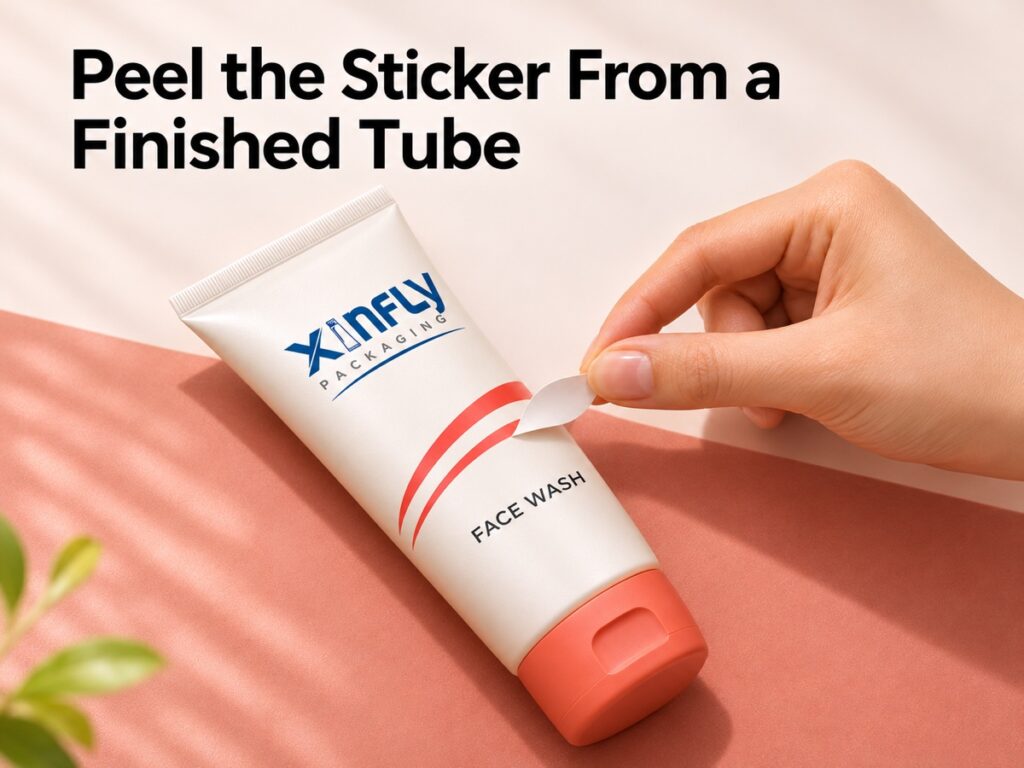
Remove the sticker using the agreed retail method and record if it releases whole, tears, leaves a residue or carries material from the surface. Photograph the tube and the removed sticker against suitable backgrounds. Compare the area with the control tube and the pre-application photo. Record the outline and location of any apparent transfer. Keep a physical sample if the supplier needs to distinguish adhesive residue, a change in surface appearance and material displaced from the original print.
Hold the affected placement if the visible evidence is unclear. The printer and label supplier can examine the parts and suggest a follow-up on identical finished samples. Clear labelled photos, the actual sticker and the tube lot reference make that investigation possible. The relevant cosmetic tube printing variables include the approved process, ink areas and finish. Send the reference for the specific decoration used on the trial.
Compare Ways to Keep the Artwork Readable
| Option | What stays the same | What the buyer reviews | What to ask the supplier for |
|---|---|---|---|
| Move the sticker to an approved quiet area | Label stock, tube, decoration and application process | Label lies flat enough for display and removal preserves the agreed appearance | Marked artwork overlay and a labelled finished sample |
| Change the removable sticker specification | Approved location and finished tube | Trial includes the exact adhesive stock and surface after removal | Label item revision, approved handling instructions and comparable labels |
| Reserve a different print zone | Tube format, retailer process and product line | Artwork still reads as intended and the label fits its space | Updated artwork proof and physical print on the intended finish |
| Change the finish in the sticker area | Layout and intended retail stock where feasible | The brand accepts the appearance and the label releases as agreed | A finished sample matching the proposed ink, coating and coverage |
Choose one change for each comparison. If a label and print finish both change, record the combination as its own new sample rather than treating either component as the sole cause. Ask the retailer whether there are restrictions on label placement or stock before requesting a changed tube. A position change is only useful if staff can apply it reproducibly and it leaves any required text visible.
Confirm the Sticker Position at Checkout
Reproduce the Retail Sequence
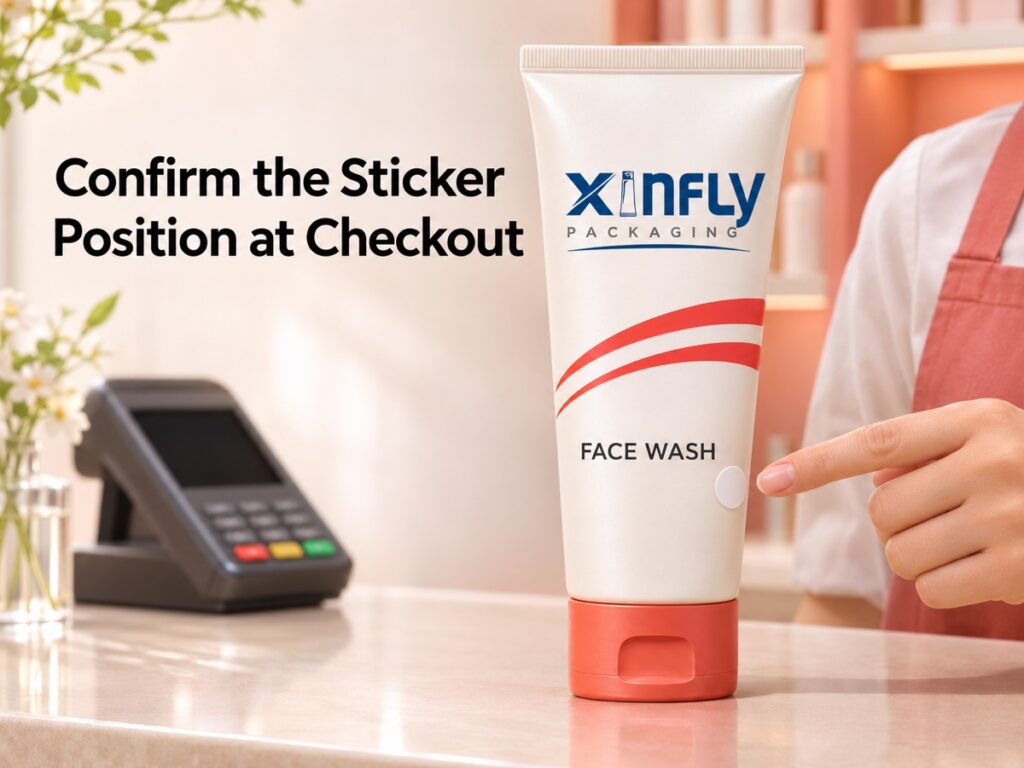
Take the trial to a checkout sample station or a comparable retail setup. Have the relevant team place the sticker using its normal access to the tube. Display or stage trial units in the intended configuration. A label near a short edge that staff can see in a top-down photo may be harder to position when they hold the tube on its side. Inspect a representative sequence through removal, then compare the peeled area to the visual reference under the viewing conditions you agreed.
If the store plans to apply the sticker over a filled tube after delivery, repeat on that filled state. Measure and photograph positions in relation to stable printed features. Check what a small normal variation in position covers. Set the permissible sticker zone on the marked artwork once the brand and retailer have confirmed both placement and appearance.
Document the Result as a Buying Decision
Describe the acceptance in terms of visible findings. One project might require that the label remain legible at display, come off intact in the agreed removal sequence and leave the approved print legible with no visible transfer under the nominated light. The brand may also specify what residual footprint or gloss change it can accept. Make those decisions on the physical reference, then name who will approve any deviation.
Tag the accepted tube, sticker and artwork revisions in the record. Repeat the affected check if the retailer changes label stock or if the printer changes the decoration at the sticker position. A new reference sample can keep subsequent approval tied to the component combination that was evaluated.
Include Each Decoration the Sticker Will Meet
A face wash line may use the same drawing for several scents or formulas while changing the ink laydown on the side panel. Use a small placement map to identify which artwork revisions put the sticker on a printed patch, a transition or an undecorated band. Include one representative sample of each relevant surface combination in the buyer's plan. Keep the observed result with the variant, even when the retailer buys all variants under one program.
If the roll position is hard to reproduce by eye, agree an artwork feature that operators can use as a location reference. Mark that reference on the sample and include a photo of what an off-position label looks like. The retail team can then show whether the label boundary is realistic in use before the printer reserves the area on every SKU.
Build a Handoff the Retailer and Printer Can Use
| Record field | Capture for each sample | If the review raises a concern |
|---|---|---|
| Tube and print identity | Shape, body material, fill state, artwork revision and exact finish | Match a sample to the desired production process |
| Retail label identity | Sticker item, proposed location, application stage and date | Obtain the retailer's actual stock and repack representative samples |
| Conditioning and removal | Agreed shelf duration, handling and removal method | Run the comparison again under the intended conditions |
| Visual findings | Before and after images, sticker adhesive surface and retained reference | Separate finish or ink transfer from residue and refer the evidence |
| Approval | Accepted label zone and stock, sample ID and responsible teams | Hold print approval for a defined change and repeat request |
Connect the Sample to the Quotation
When ordering facial cleanser tube packaging, split the artwork, finish and sample costs in the quote if the proposed options change them. Ask which option can be produced on the target line and what proof is needed to confirm the appearance at the sticker zone. Share a sticker supplied by the retailer and plan finished packaging sample development with both the tube printer and retail partner.
Frequently Asked Questions
Can We Use Empty Face Wash Tubes for the First Trial?
Yes, for a preliminary screen of print and sticker placement. Finish the approval with representative filled, sealed and decorated tubes when the sticker will be applied to finished stock. Record each stage so a workable mockup is traceable to the production trial.
Should We Put the Sticker Only on an Unprinted Area?
An approved quiet zone may reduce the risk to important graphics. Trial its surface finish and curvature with the exact label. Check it against the required artwork and ease of application before specifying the zone.
What If the Tube Looks Clean but the Removed Label Shows Color?
Keep the label and match the location of the color to the tube surface and untreated reference. Share them with the printer and label supplier to identify the material before deciding whether to change the finish or the sticker location.
Can the Retailer Use a Different Sticker After Approval?
Run the relevant comparison when the sticker stock, size or adhesive changes. The record should state the exact label and artwork combination. A new sample gives both teams evidence for the revised combination.
How Long Should the Sticker Stay in Place During Testing?
Use an interval tied to the agreed retail sequence and product display. If the label may be removed at different stages, include representative cases in the brief. Record the time for each sample so the comparisons use consistent conditions.
Conclusion
Approve the actual retail sticker on the actual printed tube. Define the position and sequence, record both surfaces after removal, and agree which result the brand will accept. Send Xinfly Packaging the tube drawing, finished print reference, actual label and marked photos with your face wash packaging inquiry so the coating, artwork or label-position change can be prepared for the next trial.