


Published: .
Technical review: pending.
To check PE tube shape recovery before filling, label round, empty tubes by their position in the delivery carton. At unpacking, measure their outside widths in two directions at the same point on the body. Repeat after the staging interval the filler can actually allow, then have the line team trial the samples in the intended loading pocket. Use the results to decide whether to approve that staging interval, change how the tubes are packed or request a different tube geometry.
A sample taken from an open display box may already have rested before inspection. The line operator may receive the same design packed tight in a delivery case and immediately try to load it. If the wall has changed shape during storage or transport, record when and where you observed it. A purchase decision needs both the geometry record and a loading check at the point where the tubes enter the process.
Define the Condition That Reaches the Filler
Request the Actual Empty Tube and Pack
Use the supplier's proposed empty round PE tube, with its molded shoulder, fitted cap and open tail in the state the filler expects. Record those details by drawing revision. In this example, the production intent is body lotion squeeze tube packaging with direct spot-color screen printing on the PE body and a fitted flip-top cap. The cap is already fitted and the tail will be sealed after filling. Specify the tube diameter, relevant wall and total length basis with the packaging supplier because an empty, open-tail component and a filled, finished reference can have different outlines.
Start the discussion with extruded PE cosmetic tubes and use the exact assembly drawing for the trial. Ask the round tube manufacturer to identify the intended section shape near the loading contact on the empty unit. A deliberately oval design needs its own acceptance dimensions. Keep the focus here on recovering the intended round geometry in the actual line setup.
Map the Case Before Selecting Samples
Request the delivery case, liner, row separators, orientation and count planned for the order. Photograph the pattern as received. Separate the top, middle and bottom layers if more than one is present. Capture specimens near the case wall and near its center, or agree a smaller sample map that still includes the positions where the filler sees problems.
Record the moment a tube was released from its packing. A tube measured at unpacking and another measured later after a long walk to the test bench have different elapsed times. If the failure appears on units from one layer, preserve the case position and leave some comparable tubes in their original arrangement for a repeat.
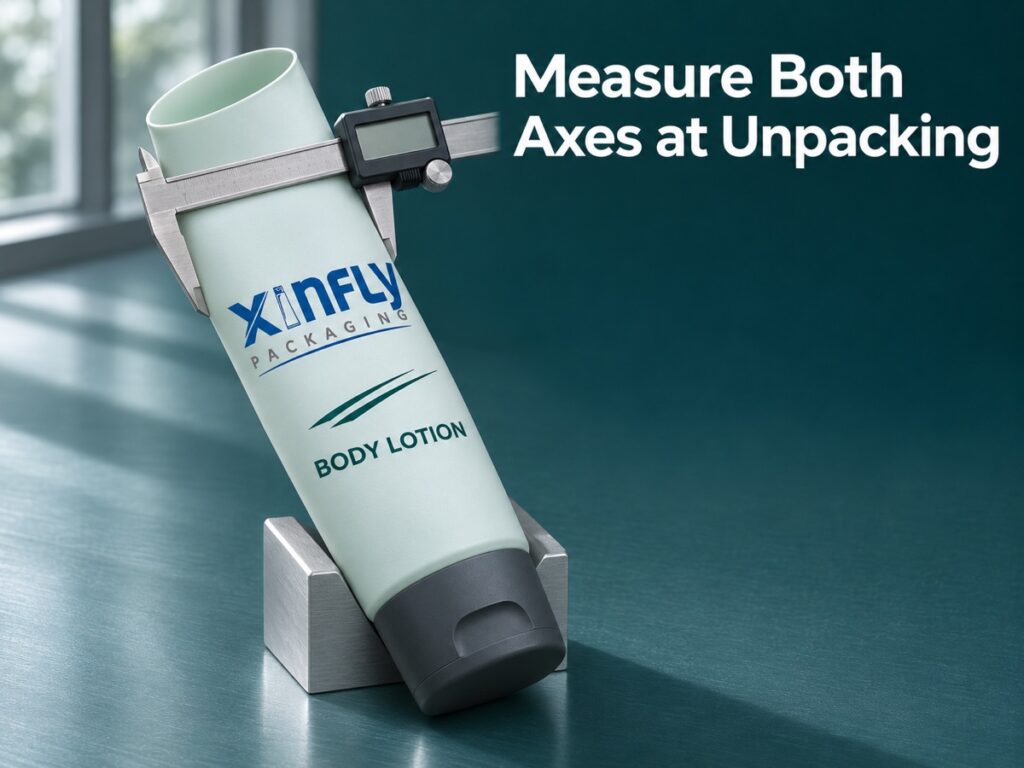
Measure Both Axes at Unpacking
Choose the Same Location and Orientation
Agree the body height along the tube where it meets the pocket or holder. Mark that height in a photo or use an agreed fixture reference. With the cap and shoulder facing the same way, record two perpendicular outside widths at that height. Use a repeatable method with low contact force or the non-contact method the filler and supplier agree. The measuring tool should avoid squeezing a flexible body into a different shape.
If the tube has a marked wider direction, identify it in the sample orientation. Record the actual axes and specimen ID rather than copying a single nominal diameter from the drawing. The difference between the two recorded widths describes that measurement. A buyer can ask for an agreed tolerance or loading criterion for the proposed tube and pocket, based on the finished trial evidence.
Recheck After the Time You Can Allow
Keep the specimens in the same unpacked position and under the staging conditions agreed with the filler. Record the timestamps at opening, at initial measurement and after the waiting interval. A second reading can show whether the observed shape changed within that interval. Evaluate the time the operation actually has available. If the line needs the tubes immediately, include an immediate loading group and compare its result with the staged group.
Group the evidence by case location, not just by supplier lot. If widths differ by row or case edge while comparable reference tubes load normally, investigate how the cases restrain the tubes. If the same shape appears throughout the cases and in a separately supplied reference, ask the supplier to compare the actual part with the approved drawing and confirm the target geometry.
Keep the Width Readings Tied to the Fixture
Name the axes on the worksheet and keep the tube oriented as the filler sees it. If the packer loads the tubes with the printed panel in a known direction, use that art registration as a reference. If the orientation varies, add a photograph of the wide direction and record how the operator placed each tube in the holder. Two tubes can have the same pair of widths and still enter differently when their wider dimension approaches a narrow opening from different angles.
Where a rounded sample is already available, include it alongside the delivered batch. Use its measurements and seating behavior as a reference for the method. Keep the supplier's drawing tolerance and the filler's functional pocket requirement in their own fields. If they describe different regions of the tube, mark both locations in one handoff image to give the teams a common basis for discussion.
Compare Changes Before Releasing the Order
| Trial option | What to hold constant | Evidence to review | Procurement action |
|---|---|---|---|
| Unpack and stage before use | Tube construction, case pattern and pocket geometry | Two widths at unpacking, after the available time and at loading, plus pocket results | Approve the documented staging interval if it fits line planning |
| Modify row pattern or separator | Tube, case outside dimensions where feasible and filler setup | Tube widths by row at receipt and loading after the same wait | Request the revised packing drawing and an actual dispatch sample |
| Change case count or size | Tube and line contact areas, with equivalent receipt conditions | Shape distribution by case location and impact on the receiving setup | Compare quotes by the complete pack-out and repeat the loading trial |
| Sample a revised tube geometry | Intended pack and agreed filling operation | Actual empty tube shape and loading results matched to a marked drawing | Release only the approved geometry and case specification |
For polyethylene squeeze tubes, ask which changes affect the tube purchase and which belong to the co-packer's work instruction. A new carton pattern may require a different case count or protection method. A staging change can consume space and time at the filler. Record those changes next to the fit results so the quote and the release evidence cover the same configuration.
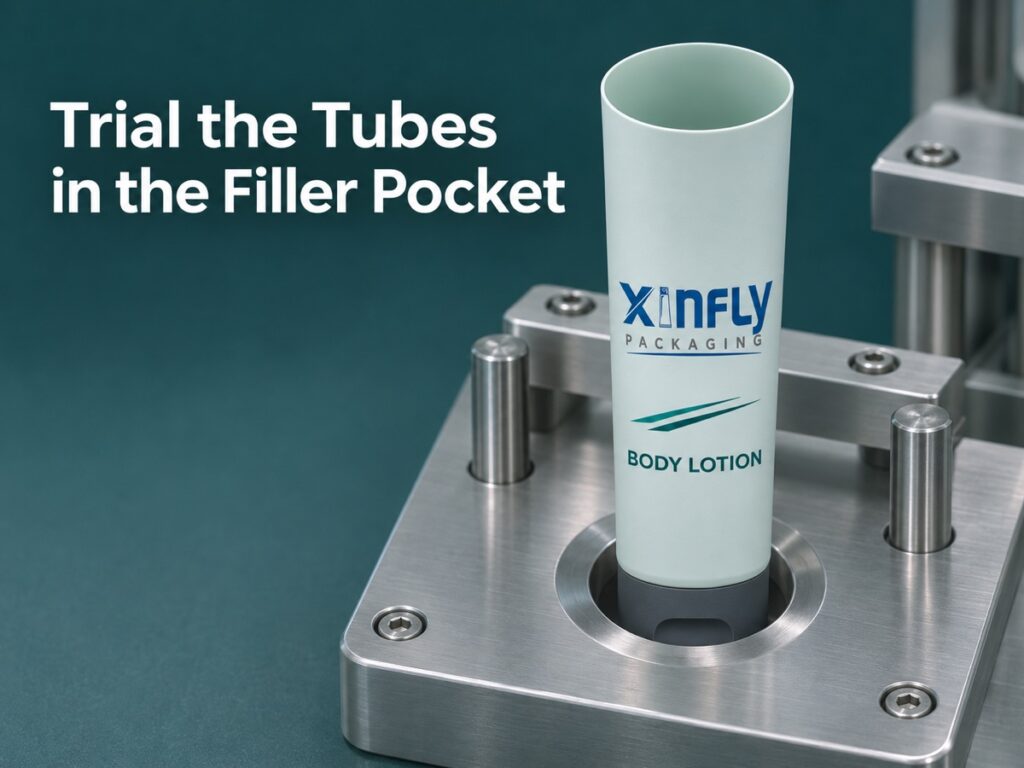
Trial the Tubes in the Filler Pocket
Give the Filler the Sample Map and Timing
Ask the line team to use the planned pocket or fixture, its current revision and the standard loading sequence. The operator should record whether a tube enters, seats to its normal position and stays aligned for the intended operation. Capture which part contacts first if insertion stops. Name the sample, time since unpacking and pocket number. Keep a photograph or a quick sketch of any recurring contact so the supplier can compare it with the width measurements.
Use a known loading reference when available. Observe the reference and the delivery samples under the same setup. A body that has returned to the agreed widths can still hang up on a shoulder or cap feature. If interference is outside the measured body section, document that location and recheck the part interfaces with the filler. The pattern of loading results tells you whether the next drawing change should address body shape, another component or the fixture.
Decide What to Approve
Set the acceptance before using the delivery trial for release. The parties can agree a width range at the specified body height, a staging interval the warehouse can provide, and an observable seating criterion confirmed by the operator. Include the exact method and relevant fit points. If a pattern passes only after a wait the line cannot support, send that fact and the measurements to the supplier when asking for another pack-out.
Keep an unpacking photo and the line record with the final specification. In particular, retain the case layer diagram and the associated pocket reference. Ask for a representative receipt sample again after a packing change if the approved case configuration is part of the result.
Use One Record for Receiving and Filling
| Field | Enter for each sample or group | How it affects approval |
|---|---|---|
| Receipt position | Tube lot, case ID, packaging revision, layer and row | Helps isolate where distortion appears |
| Width check | Time, section height, axis orientation and actual readings | Provides comparable shape data before and after staging |
| Staging condition | Time since unpacking, support position and environment agreed for the trial | Identifies the conditions under which the result can be repeated |
| Pocket check | Fixture revision, first contact, normal seat and orientation | Connects the geometry to actual use on the filler |
| Release decision | Approved pack pattern or staging interval, and the responsible parties | Controls what should be purchased and when to repeat the trial |
Include the tube and case drawings in a production-representative sample request. When the receiving and line teams work at different sites, use labeled groups with the handling record attached. The sample report should make it possible to tell whether the tube was still packed for transfer or had already been staged before the check.
Frequently Asked Questions
Can We Check Roundness by Measuring Only One Width?
One width helps explain a particular contact. Compare two perpendicular widths at the agreed location so a change in one direction can be seen alongside the other. Have the filler confirm any axis orientation that relates to how tubes enter the holder.
How Long Should Tubes Rest Before Trying Them?
Set the trial against the actual wait your operation can provide. Take readings on unpacking and after the nominated interval, and compare the matching pocket results. Approve a staging interval tied to a reproducible outcome in your line setup.
What if We Cannot Reproduce the Problem at the Supplier?
Share the actual delivery packaging, case-position map and time from unpacking to loading. Trial at the filler with a representative delivery case and its actual pocket. A loose sample bag may omit the packing conditions that the team needs to check.
What if Tubes Are in Range and Still Stop at the Pocket?
Ask the operator to identify the first contact point. Review the cap, shoulder, body section or orientation at that point against the component drawings and fixture. Test a known reference in the same setup to support the comparison.
When Does a Repeat Check Make Sense?
Recheck after changing tube dimensions, body construction, closure fit, case configuration or the loading holder. Retain the approved record for side-by-side review with the new sample. Repeat the steps affected by the change under the expected receipt and staging conditions.
Conclusion
Specify how the round PE tube should arrive, how long the filler can stage it and how it should seat in the holder before releasing the order. Let the paired measurements and the loading record decide whether to change the case or the tube. Send Xinfly Packaging the section drawing, case-position photos and the filler’s observations with a PE tube sample request. Give the supplier a clear configuration to reproduce and a focused question for the next trial.