Published: .
The lip balm mockup looks gold in all the right places. Then the decoration quote arrives, and one supplier has priced gold-colored ink while another has allowed for a separate foil operation. The visual file was shared, but the intended process was never attached to each graphic.
A lip balm tube foil artwork separation brief gives the quotation a clearer foundation. Start with the proposed lip balm squeeze tubes, identify the artwork revision, and label which elements belong to ink, foil or another agreed treatment. This guide provides a separation schedule and quotation-clarification sheet. It supplies no universal file standard, decoration limit, price or qualified finish result.
Describe the Decoration Beyond Its Color
Give Each Graphic an Intended Process
A color in a rendered mockup communicates appearance. Ask the designer to identify the intended production treatment for each relevant feature as well. If the gold oval is intended for hot stamping, mark that intention explicitly rather than expecting a supplier to infer it from a yellow or metallic-looking preview.
Use simple feature names, such as front wordmark, oval emblem or capacity line. Carry those names into the quotation request and sample review. This makes it easier to ask whether a particular element is included without describing it differently in every email.
Keep the Body Color Separate from Printed Elements
Ask how the proposed body color is represented in the component and decoration proposal. It may be described separately from the artwork treatment. Do not count a colored tube body as an ink operation, or exclude a printed background from the decoration scope, without the supplier's explanation of the actual proposal.
Likewise, identify the closure's proposed color and appearance independently. A coordinated cap does not make it part of the tube artwork file. Keeping component appearance and printed features distinguishable helps a buyer compare the same deliverable across proposals.
Build an Artwork Separation Schedule
Assign the Artwork Features Before Requesting a Quote
The schedule below is a purchasing template. Replace its illustrative feature names with those in your approved design. Ask the decorator which file organization and formats it needs rather than presenting this table as a universal prepress standard.
| Feature or area | Intended treatment to identify | File or reference to connect |
|---|---|---|
| Body color | Proposed component color or specified decoration treatment | Component reference and agreed color description |
| Product lettering | Intended ink process and color identification | Current artwork layer or file reference |
| Decorative emblem | Foil, ink or another explicitly proposed treatment | Identified feature and corresponding production-art reference |
| Fine supporting copy | Intended process and applicable artwork | Current approved text and layout reference |
| Any additional background | Treatment included or expressly excluded | Marked design area and scope note |
| Closure appearance | Separate component proposal | Cap reference and relevant appearance description |
Keep the Preview Connected to the Production Files
A composite preview is useful because it shows how the elements belong together. Ask the designer and decorator how that preview connects to the actual supplied files. If the foil feature changes, update the relevant production-art reference as well as the presentation image.
Do not let the preview become the only record of what was intended. A supplier may need a separate representation of the feature for the proposed process. Record that requirement and the delivered file revision so the purchasing team can identify which files the quote and sample actually use.
Ask the Decorator to Confirm File Requirements
Confirm Formats and Editable Information
Ask what file type and feature representation the decorator requires. It may request information about paths, text treatment, colors or separated artwork. Keep the actual instruction with the project file. This guide does not prescribe one format or claim that a particular export is suitable for every production system.
If a file is revised to meet the requested format, have the responsible designer confirm that the intended graphics and approved copy remain correct. A file-preparation change should not quietly introduce different wording, missing elements or an outdated version of the emblem.
Identify Open Detail Questions Before Sampling
Ask whether the proposed foil feature raises any detail or positioning questions for the actual process and tube. Request the decorator's project-specific answer. Do not copy a generic minimum line width, spacing figure or coverage limit into the accepted artwork without confirmation.
Keep a Proposed Adjustment Visible
If the decorator recommends changing a feature, identify the element, reason for review and proposed revised file. Let the responsible designer approve the design change. Avoid allowing a technical file-preparation conversation to become an undocumented artwork revision.
Clarify the Quoted Operations
Ask What the Decoration Line Includes
Request an explicit description of the included ink and foil treatments, relevant feature references and any separately identified preparation work. A quotation labeled “custom printing” may need more explanation before it can be compared with a proposal that lists several decoration operations.
The hot-stamping decoration page can help frame the process discussion, while the actual quotation should identify your proposed features and scope. A general process description does not establish which artwork elements a provider has priced or what project-specific preparation is included.
Compare Like-for-Like Feature Treatments
When two proposals differ, compare the intended treatment of each named feature before comparing their totals. Keep the product, quantity and component proposal identifiable too. Do not treat a difference in commercial totals as evidence that one provider has priced the same decoration more efficiently when the scope itself differs.
| Quotation question | Answer to request | Where the answer belongs |
|---|---|---|
| Which wording is printed? | Identified ink features and current artwork reference | Decoration scope |
| Which element receives foil? | Named feature and applicable production-art reference | Foil scope |
| What color or finish is proposed? | Applicable supplier reference or confirmation process | Appearance proposal |
| What preparation is included? | Identified deliverables or separately stated work | Commercial clarification |
| What will the sample represent? | Component, artwork and treatment scope | Sample request |
| What remains provisional? | Open feature, file or process question | Outstanding-items record |
Identify the Foil Appearance Reference
Ask What “Gold” Means in the Proposal
Request the applicable supplier reference or agreed method for reviewing the proposed foil appearance. A gold-colored render can begin that conversation without establishing the actual finish. Keep the appearance reference attached to the named feature so it does not become a general statement about every gold-colored element on the pack.
Where the carton and tube use coordinated metallic details, identify each component's proposal separately. Visual coordination does not automatically mean the same material or production treatment applies to both. Ask how the relevant references will be reviewed together for the intended design.
Preserve the Actual Reference Used for Approval
Record whether the review used a supplier reference, an identified decorated specimen or another agreed basis. A photograph can support a discussion, but ask the responsible parties whether it is sufficient for the particular appearance decision. Avoid turning an unexplained image into the accepted physical finish reference.
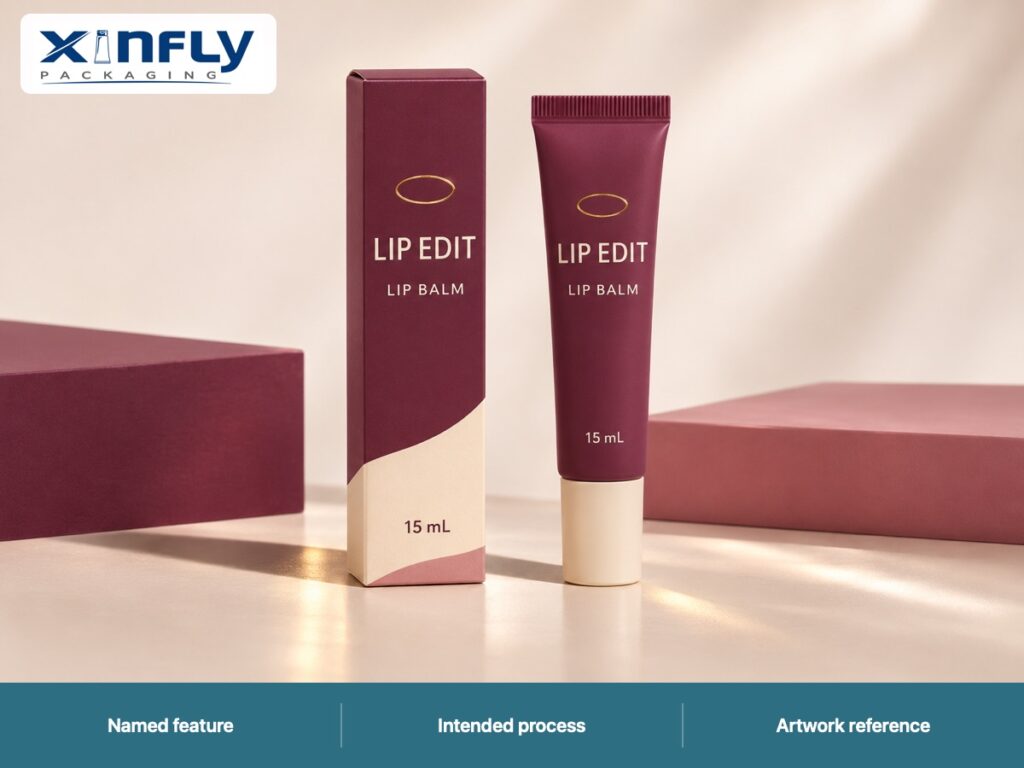
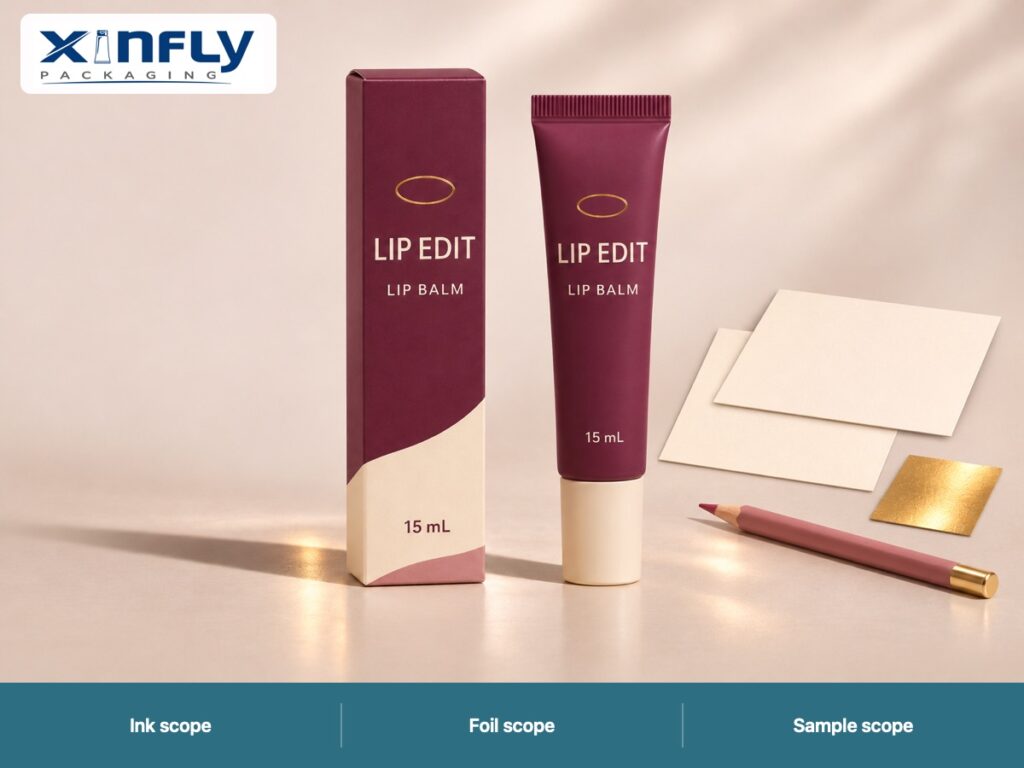
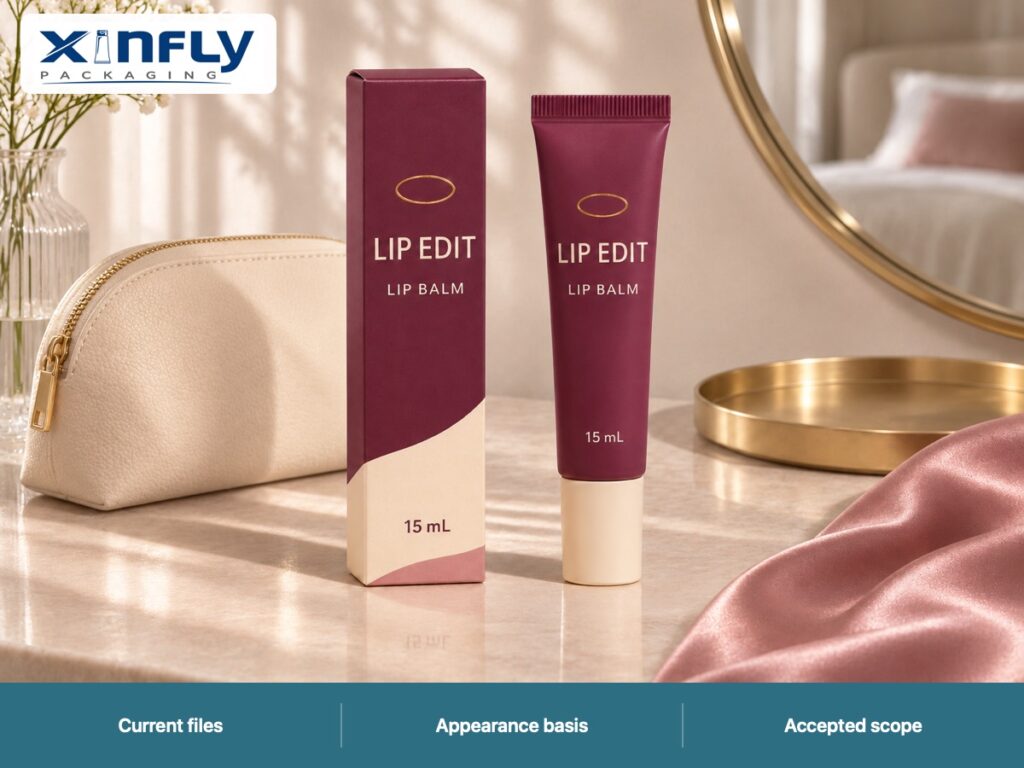
The LIP EDIT concept shows a plum PE body, molded shoulder, straight crimped display tail and cream cylindrical screw cap covering the proposed tip. Cream screen-printed wording and a small gold-colored foil-style oval coordinate with a plum/cream/gold printed carton. The illustration is not an adhesion result, production proof or approved foil-material reference.
Review the Combined Artwork on the Proposed Pack
Keep Graphic Position and Process Identity Together
Review how the named features relate on the proposed tube, using the current layout and applicable component references. If an element moves, keep that change connected to the relevant production artwork. An updated composite picture alone may leave the separated file in an earlier position.
Use the tube printing and design information for the wider decoration conversation. Retain the project-specific files, proposed processes and accepted references together. This makes the purchasing record useful to someone who did not attend the original design meeting.
Separate Appearance Acceptance from Other Requirements
If the project requires physical evaluation of the decoration, ask the responsible reviewers to define the activity, specimen state and acceptance basis. This article does not specify a rubbing procedure, durability limit or qualified combination. Keep any observation tied to the specimens and conditions actually represented.
An approval of the emblem's visual appearance should identify that scope. It should not silently become acceptance of every component or performance requirement. Clear scope lets the team complete the remaining work without later arguing about what the original “approved” message meant.
Keep the Separation Brief with Samples and Reorders
Identify the Specimen's Decoration Scope
When requesting development samples, state which features and processes the specimen must represent. Ask the supplier to identify differences from the intended proposal. A stock appearance reference can be useful without demonstrating your exact ink, foil and artwork combination.
For empty lip balm squeeze tubes, keep decoration approval distinct from any required filling or formula evaluation. If the inquiry also specifies lip balm squeeze tubes with slanted tips, identify that component option in the sample request. The decoration file should not obscure which actual tube and tip are being proposed.
Carry the Accepted Files into the Commercial Request
List the current artwork and separation references, accepted appearance basis, component identity and unresolved items. Ask the supplier to identify any proposed difference at reorder. A product name and a familiar mockup are less useful than an identifiable set of accepted files and treatment references.
You can send Xinfly Packaging your lip balm decoration brief with the separation schedule and clarification sheet. Confirm process availability, file requirements, sample scope and commercial conditions for the actual project rather than assuming them from an illustration or another order.
Frequently Asked Questions
Does a Gold-Colored Mockup Specify Hot Stamping?
Identify the intended treatment explicitly for the relevant feature. The rendered color or effect does not by itself tell a provider which process to quote. Connect the named feature to the production-art reference and ask the decorator to confirm the proposed scope.
Should Foil and Ink Use Separate Artwork Files?
Ask the decorator which file organization its proposed process requires. A separated file or layer may be part of that instruction, but this guide does not impose a universal format. Keep the actual requirement, delivered files and current revisions connected to the composite preview.
Can the Tube and Carton Share One Finish Approval?
Identify what each component's proposed treatment and reference represent. A coordinated visual family does not automatically establish the same production method or material. Record the scope of any combined review and preserve separate component references where the project requires them.
Is Appearance Approval the Same as Durability Approval?
Record the feature and requirement actually accepted. If physical evaluation is needed, have the responsible team define the activity and acceptance basis. An attractive image or an approved visual sample should not be presented as a durability result without applicable supporting work.
What Should a Decoration Reorder Identify?
Carry forward the component proposal, artwork and separation revisions, named feature treatments and accepted appearance references. Ask the supplier to disclose any proposed change. Keep unresolved questions visible rather than assuming that unchanged branding means every production-art and finish detail is unchanged.
Conclusion
A clear foil artwork brief connects each graphic to its intended process, file and appearance reference. Use a composite preview for coordination, preserve the production-art identities, and compare quotes against the same named features. Xinfly Packaging can review that scope with you so a gold detail in the design becomes an identifiable proposal rather than an assumption hidden inside the word “printing.”