

Quick Answer
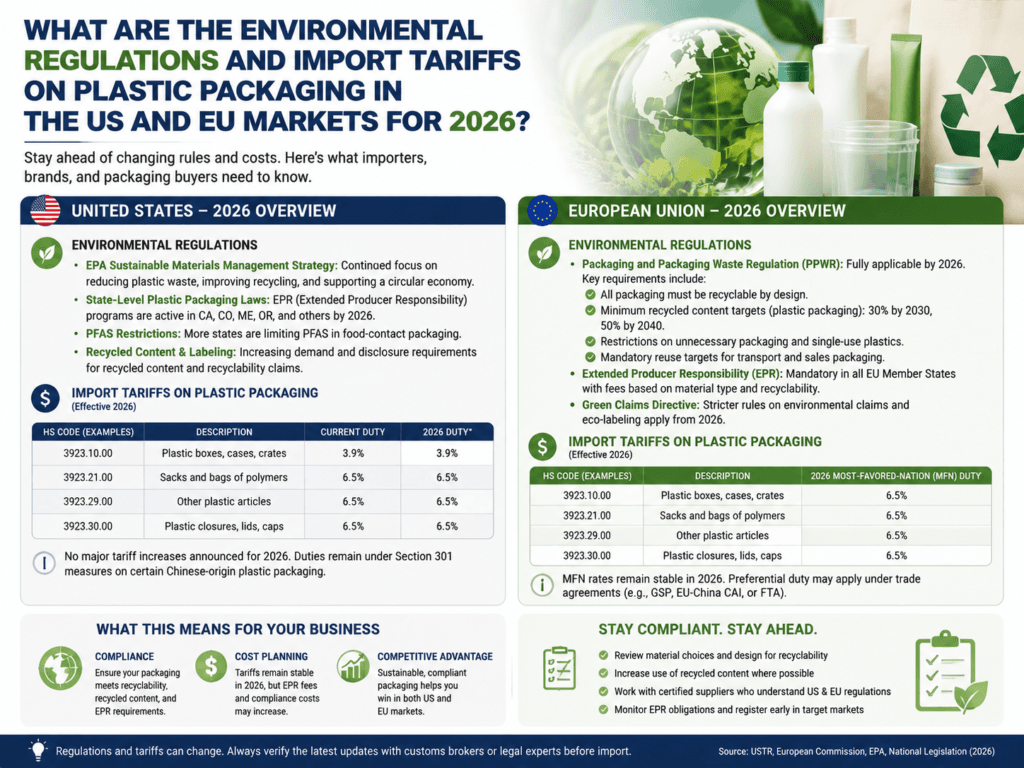
In 2026, cosmetic plastic packaging suppliers exporting to the US and EU markets must consider increasing environmental requirements, including recycled content expectations, packaging waste regulations, Extended Producer Responsibility (EPR), recyclability requirements and import compliance documentation.
For cosmetic tube packaging, the main impact comes from material selection, PCR content, recyclability design, documentation and country-specific import requirements.
Plastic cosmetic tubes exported internationally are affected not only by product quality requirements but also by environmental regulations in destination markets.
For brands sourcing PE cosmetic tubes, PCR tubes, EVOH barrier tubes, ABL tubes or PBL tubes, understanding regulatory trends helps avoid customs delays, compliance risks and future packaging redesign costs.
What Are the Main Environmental Packaging Regulations Affecting Cosmetic Tubes in 2026?
| Market | Key Regulation Area | Impact on Cosmetic Packaging Buyers |
|---|---|---|
| European Union | Packaging and Packaging Waste Regulation (PPWR), recycling targets, EPR requirements | Brands need to evaluate recyclability, recycled content and packaging documentation. |
| United States | State-level packaging laws, recycled content initiatives and waste reduction programs | Requirements vary by state and may affect packaging material decisions. |
| Global Export Markets | Material declarations, chemical compliance and sustainability documentation | Suppliers need supporting documents for international customers. |
How Does EU PPWR Affect Cosmetic Tube Packaging?
The European Union Packaging and Packaging Waste Regulation (PPWR) is one of the most important packaging regulations affecting companies selling cosmetic products in Europe.
The regulation focuses on reducing packaging waste, improving recyclability and encouraging more sustainable packaging systems.
Recyclability
Packaging designs are expected to improve compatibility with existing recycling systems.
PCR Content
Recycled plastic content requirements may encourage brands to evaluate PCR PE solutions.
Packaging Reduction
Companies may review unnecessary material usage and packaging efficiency.
EPR Responsibility
Brands may need to participate in packaging waste management systems.
Documentation
Material information and compliance records become increasingly important.
Sustainable Materials
PCR, mono-material and recyclable structures receive greater attention.
What Environmental Requirements Should Cosmetic Tube Buyers Consider in Europe?
- Material Selection: Evaluate PE, PCR PE, mono-material and barrier structures based on recycling goals.
- Recycled Content: Consider whether PCR materials are required for specific markets or brand commitments.
- Packaging Documentation: Maintain material declarations and compliance records.
- Supplier Transparency: Work with manufacturers that can provide sustainability information.
- Future Compatibility: Avoid packaging choices that may create future regulatory challenges.
Important: Environmental regulations continue to evolve. Brands should confirm specific requirements according to their destination country, product category and selling channel before final packaging approval.
How Do US Environmental Packaging Regulations Affect Cosmetic Tubes?
Unlike the EU, the United States does not currently have one single nationwide packaging regulation covering all plastic packaging. Instead, requirements are developing through federal guidance, state legislation and brand sustainability commitments.
Common US Packaging Considerations
- State-level Extended Producer Responsibility (EPR) programs.
- Recycled content requirements in certain jurisdictions.
- Plastic waste reduction initiatives.
- Customer requirements for sustainable packaging documentation.
- Increasing demand for PCR and recyclable materials.
How Does PPWR Influence the Future Design of Cosmetic Tubes?
For cosmetic packaging suppliers serving European brands, PPWR encourages companies to consider packaging design from the entire lifecycle perspective: material selection, recyclability, recycled content, waste management and environmental impact.
| Design Factor | Traditional Packaging Approach | More Sustainable Direction |
|---|---|---|
| Material Structure | Multiple materials without recycling consideration. | Mono-material PE or optimized recyclable structures. |
| Recycled Content | 100% virgin plastic materials. | PCR PE options where technically suitable. |
| Barrier Performance | Maximum barrier without considering recyclability. | Balance formula protection and environmental goals. |
| Decoration | Complex finishes without recycling evaluation. | Optimize printing and surface treatments. |
| Supplier Documentation | Limited material information. | Complete compliance and sustainability records. |
Are PCR Cosmetic Tubes Becoming More Important in the EU Market?
Yes. Many European cosmetic brands are increasing their use of PCR (Post-Consumer Recycled) materials as part of sustainability strategies.
For cosmetic tubes, PCR PE can help brands reduce the use of virgin plastic while maintaining the functional advantages of squeeze tube packaging.
PCR PE Tubes
Use recycled polyethylene content while maintaining tube flexibility and appearance requirements.
Mono-Material Design
Simplified material structures may improve recycling compatibility.
Barrier Optimization
Select EVOH or barrier layers only when formula protection requires them.
Recyclable Components
Consider tube body, cap and decoration as a complete packaging system.
Material Transparency
Brands increasingly require supplier documentation.
Future Compliance
Early planning reduces the risk of future packaging changes.
How Do US Packaging Regulations Differ From EU Requirements?
The European Union generally applies broader regional packaging rules, while the United States currently relies more on a combination of federal guidance, state regulations and brand sustainability commitments.
| Area | EU Market | US Market |
|---|---|---|
| Regulatory Approach | Regional packaging framework with common requirements. | Combination of federal and state-level programs. |
| Recycled Content | Increasing focus through packaging sustainability policies. | Depends on state regulations and brand requirements. |
| Producer Responsibility | Established EPR systems in many countries. | Growing state-level EPR programs. |
| Supplier Documentation | Increasingly important for compliance verification. | Often required by brands and retailers. |
What Is Extended Producer Responsibility (EPR) for Cosmetic Packaging?
Extended Producer Responsibility means that companies placing packaging on the market may have responsibilities related to packaging waste management.
For cosmetic brands, EPR requirements may involve registration, reporting, fees or participation in approved recycling systems depending on the market.
What Cosmetic Brands Should Prepare
- Packaging material information.
- Weight and composition data.
- Supplier documentation.
- Recycling classification information.
- Market-specific compliance records.
What Import Tariffs Apply to Plastic Cosmetic Packaging in 2026?
Import tariffs on plastic cosmetic packaging depend on several factors including destination country, HS code classification, product type, origin country and trade policies in effect at the time of import.
Important: There is no single universal tariff rate for all cosmetic tubes. Buyers should confirm the exact HS classification and applicable duty rate with their customs broker before importing.
What Factors Affect Import Duties for Empty Cosmetic Tubes?
| Factor | Why It Matters |
|---|---|
| HS Code Classification | Different plastic packaging categories may have different tariff treatments. |
| Country of Origin | Trade agreements and additional duties may vary by origin. |
| Material Type | PE tubes, laminated tubes and other packaging formats may be classified differently. |
| Customs Documentation | Correct descriptions reduce customs delays. |
| Declared Value | Import duties are often calculated based on customs value. |
What Documents Are Commonly Required When Importing Cosmetic Tubes?
- Commercial invoice.
- Packing list.
- Certificate of analysis when required.
- Material declaration.
- Compliance documents such as REACH/RoHS where applicable.
- Recycled content certificates for PCR materials when required.
- Shipping and customs documents.
How Can Brands Reduce Compliance Risks When Importing Plastic Packaging?
Buyer Compliance Checklist
- Confirm destination market requirements before selecting materials.
- Choose suppliers with documented material information.
- Request PCR certification when using recycled materials.
- Verify packaging recyclability considerations.
- Maintain supplier compliance records.
- Review customs classification before shipment.
How Does Xinfly Packaging Support Environmental Compliance?
For cosmetic brands exporting to the US and EU markets, packaging compliance is becoming an important part of supplier selection.
Xinfly Packaging supports customers by providing material options, technical documentation and packaging solutions designed for global cosmetic markets.
PCR Cosmetic Tubes
Provide recycled PE tube solutions for brands with sustainability targets.
Material Documentation
Support customers with material information and compliance-related documents.
Recyclable Solutions
Recommend suitable structures according to product requirements and market goals.
Barrier Material Guidance
Help brands balance formula protection and sustainability requirements.
Global Export Experience
Support cosmetic brands importing packaging to international markets.
Quality Control
Provide production inspection and batch control procedures.
What Should Cosmetic Brands Confirm Before Importing Plastic Tubes in 2026?
| Compliance Item | Buyer Action |
|---|---|
| Material Structure | Confirm PE, PCR PE, EVOH, ABL or PBL structure before production. |
| Sustainability Requirement | Check whether the market or retailer requires recycled content. |
| Documentation | Prepare material declarations and compliance records. |
| Customs Classification | Verify HS code and import requirements with customs professionals. |
| Supplier Capability | Select manufacturers with export experience and quality systems. |
| Future Regulations | Consider whether packaging choices remain suitable for future requirements. |
Common Mistakes When Importing Cosmetic Plastic Packaging
- Choosing materials only by price: The cheapest material may not meet future sustainability expectations.
- Ignoring documentation: Missing compliance records can delay customs clearance.
- Selecting complex structures unnecessarily: Over-designed packaging may create recycling challenges.
- Not checking destination requirements: US and EU markets have different regulatory approaches.
- Waiting until production: Compliance decisions should be made before tooling and mass production.
Packaging Engineer Recommendation
Choose Packaging Based on Formula, Market and Future Compliance
For cosmetic brands planning international sales, packaging selection should consider three factors:
- Formula Protection: Select barrier performance according to product sensitivity.
- Market Requirements: Understand regulations in target countries before production.
- Sustainability Goals: Evaluate PCR, mono-material and recyclable options.
The best packaging solution is not always the most expensive option. It is the solution that balances product protection, compliance, cost efficiency and long-term market acceptance.
Summary
In 2026, cosmetic plastic packaging suppliers serving the US and EU markets need to pay increasing attention to environmental regulations, recycled content expectations, recyclability requirements, EPR systems and import documentation.
For European markets, PPWR is driving stronger attention toward sustainable packaging design, recycled materials and packaging waste reduction. In the United States, requirements are developing through state-level programs and brand sustainability initiatives.
Import tariffs are determined by factors such as HS classification, country of origin, material type and customs policies. Cosmetic brands should confirm import requirements with qualified customs professionals before shipment.
Working with an experienced cosmetic tube manufacturer helps brands reduce compliance risks and prepare packaging solutions suitable for global markets.
Related Questions
| Topic | Related Resource |
|---|---|
| EU PPWR Compliance | Navigating EU PPWR Compliance: What Cosmetic Brands Need to Know |
| PCR Sustainable Tubes | PCR Cosmetic Tubes: Sustainable Packaging Solutions |
| EVOH Barrier Tubes | What Is EVOH Barrier Material? |
| EVOH vs ABL | EVOH vs ABL Tubes: Which Barrier Solution Is Better? |
| Import Documentation | What Documents Are Required for Importing Plastic Tubes? |
| Quality Standards | Cosmetic Tube QC Standards AQL 2.5/4.0 |
Final Compliance Checklist for Cosmetic Brands
- ✔ Confirm target market regulations before selecting packaging.
- ✔ Choose appropriate recyclable or PCR materials.
- ✔ Prepare material and compliance documents.
- ✔ Verify customs requirements before shipment.
- ✔ Work with experienced packaging manufacturers.
- ✔ Plan packaging strategy for future regulations.
Need Compliant Cosmetic Tubes for US & EU Markets?
Xinfly Packaging supplies PE, PCR, EVOH barrier, ABL and PBL cosmetic tubes with global export experience and compliance support.
Request Compliance Consultation