

How to Choose Custom Hand Cream Tubes: Aluminum vs. Plastic Materials
Hand cream is one of the most frequently carried and squeezed skincare products. The tube must feel comfortable in the hand, protect the formula, resist leakage in bags, support attractive decoration and match your brand positioning. This guide helps skincare brands compare aluminum hand cream tubes and plastic hand cream tubes before sampling, artwork design and mass production.
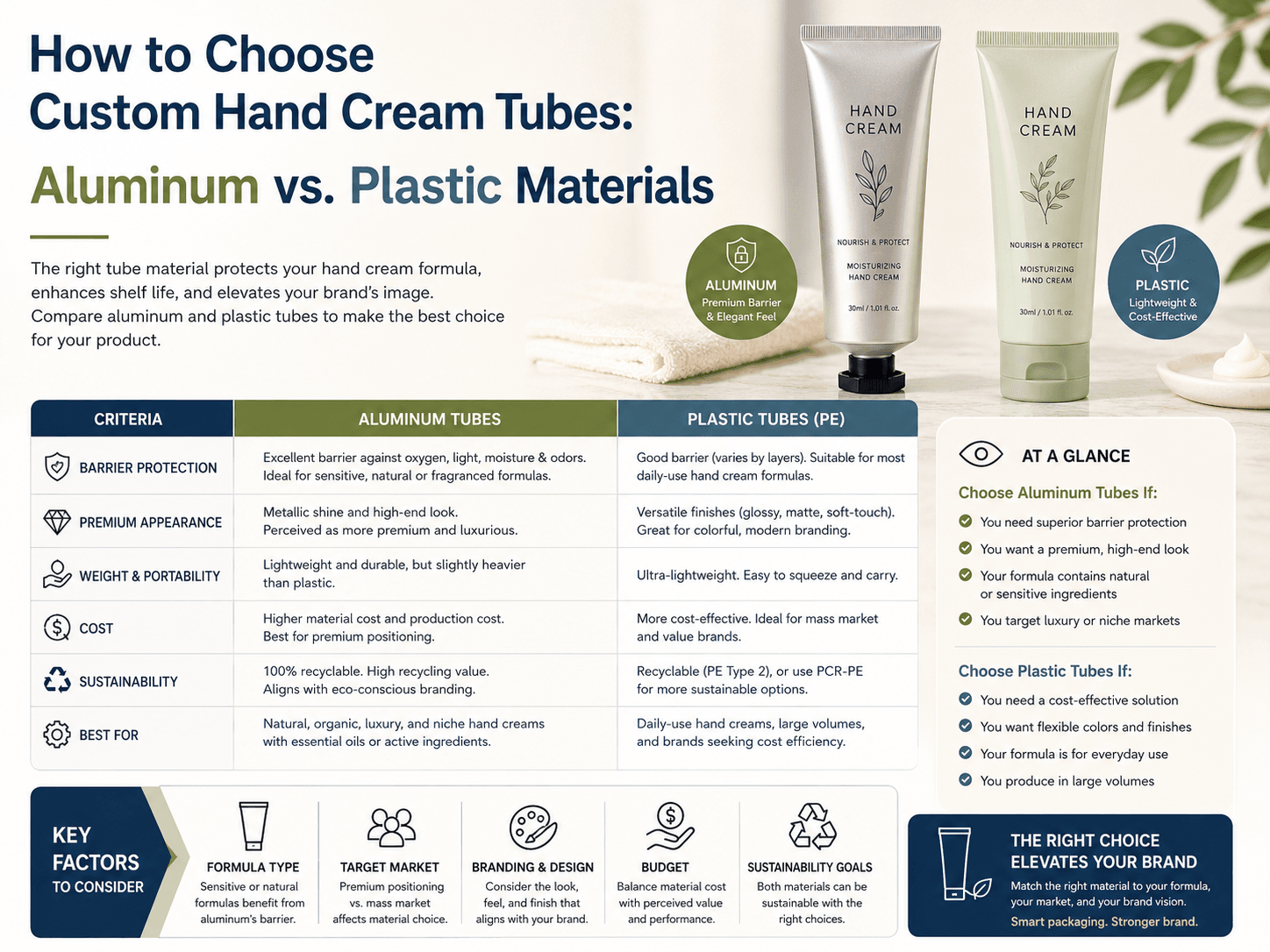
Common Purchasing Pain Points When Choosing Hand Cream Tubes
Many buyers ask whether aluminum tubes or plastic tubes are better. The real answer depends on formula compatibility, user experience, decoration requirements, filling line, sustainability target and total cost.
Aluminum looks premium, but dents easily
Aluminum tubes can create a pharmacy or luxury apothecary feeling, but they may deform after squeezing, transport or retail handling. This may not fit every hand cream brand.
Plastic tubes feel softer and cleaner
PE plastic tubes are flexible, comfortable to squeeze and more suitable for daily-use hand cream, gift sets, travel products and private label skincare lines.
Fragrance and oil may need barrier support
Rich hand cream formulas with fragrance, essential oils or active ingredients may need EVOH, ABL or PBL structures to improve barrier performance.
Cap sealing matters for portable products
Hand cream is often kept in handbags, pockets and travel kits. Poor cap fit or weak thread design may cause leakage and customer complaints.
Artwork must survive friction
Hand cream tubes are frequently touched, squeezed and carried. Printing, varnish, hot stamping and coating must resist scratches and hand contact.
Premium look must match budget
Aluminum, PE, ABL, PBL and soft-touch tubes each have different MOQ, tooling, printing and unit cost. The best choice should match the product price level.
Aluminum vs. Plastic Hand Cream Tubes: Which Material Should You Choose?
Aluminum and plastic tubes both have value, but they solve different packaging problems. For most modern skincare brands, plastic PE tubes offer better flexibility, decoration options and production efficiency, while aluminum tubes are mainly chosen for vintage, pharmacy or specific premium positioning.
| Comparison Point | Aluminum Hand Cream Tubes | Plastic PE Hand Cream Tubes | Factory Recommendation |
|---|---|---|---|
| Appearance | Metallic, pharmacy-style, vintage, premium but easy to dent | Clean, modern, soft, colorful and highly customizable | Use aluminum for apothecary style. Use plastic for broader skincare branding and retail appeal. |
| Squeeze Feel | Can crease and stay deformed after squeezing | Soft, flexible and returns better after use | For daily hand cream, plastic PE tubes usually provide better consumer experience. |
| Formula Compatibility | Good barrier, but inner coating compatibility must be checked | Good for most formulas; EVOH, ABL or PBL can improve barrier | For fragrance-rich or active formulas, run compatibility testing before production. |
| Decoration | Limited color and printing flexibility compared with plastic | Offset printing, silk screen, hot stamping, matte, glossy, soft-touch, pearlized options | Choose plastic if your brand needs rich colors, gradients or strong shelf differentiation. |
| Transportation | More likely to dent under pressure | More resistant to daily handling and e-commerce shipping | For online sales and gift sets, plastic tubes are usually safer and cleaner in appearance. |
| Cost & MOQ | May have higher handling and decoration limitations | Flexible for OEM/ODM customization and mass production | For private label brands, plastic PE tubes are usually easier to scale. |
| Sustainability | Metal recycling story, but depends on local recycling system and coating | PCR PE, mono-material PE, sugarcane PE and recyclable structures available | For eco-positioned skincare, compare PCR PE, sugarcane PE and mono-material tube options. |
Factory Engineer + Packaging Designer Solutions
A successful hand cream tube should combine formula safety, squeeze comfort, portable sealing, artwork durability and strong shelf presence.
Engineer’s Solution for Hand Cream Tube Materials
From a factory engineering view, hand cream tube material should be selected based on formula, filling method, usage frequency and shipment conditions.
- Use soft PE tubes for daily-use hand cream and private label skincare products.
- Use ABL, PBL or EVOH structures when fragrance retention and barrier performance are important.
- Use aluminum tubes only when the brand accepts crease marks and a vintage hand-squeezed appearance.
- Choose screw caps for premium travel hand cream and flip-top caps for convenient daily use.
- Run compatibility, leakage, drop, compression and printing adhesion tests before mass production.
Designer’s Solution for Premium Hand Cream Packaging
Hand cream is a highly visual product. Consumers often choose it as a self-care item, gift product or handbag essential. Packaging design should match the product’s emotional value.
- For luxury hand cream: soft-touch tube, pearlized finish, hot stamping and elegant typography.
- For natural hand cream: matte finish, soft earth colors, botanical graphics and recyclable message.
- For pharmacy-style hand cream: aluminum-look design, clean label layout and medical-inspired typography.
- For gift sets: coordinated colors, clear scent names and consistent logo placement.
- For e-commerce: bold front panel, readable benefits and scratch-resistant varnish.
How to Choose Hand Cream Tube Size, Diameter and Cap
Hand cream tubes are often small to medium size because consumers carry them daily. The tube diameter should balance portability, squeeze comfort and shelf appearance.
| Product Positioning | Common Capacity | Suggested Diameter | Recommended Cap | Best For |
|---|---|---|---|---|
| Travel hand cream | 10ml, 15ml, 20ml, 30ml | Ø16mm – Ø25mm | Small screw cap | Travel kits, hotel amenities, promotional samples, gift sets |
| Daily portable hand cream | 30ml, 50ml, 60ml | Ø25mm – Ø35mm | Screw cap or flip-top cap | Retail skincare, handbag hand cream, private label products |
| Premium hand cream | 50ml, 75ml, 100ml | Ø30mm – Ø40mm | Decorative screw cap or special cap | Luxury skincare, fragrance hand cream, spa brands |
| Family or professional hand cream | 100ml, 120ml, 150ml | Ø40mm – Ø45mm | Flip-top cap | Salon, professional skincare, dry skin repair cream, body care brands |
Quick Recommendation: When to Choose Aluminum, PE, ABL or PBL Tubes
Instead of asking “Which material is best?”, purchasing teams should ask “Which material best matches my formula, brand positioning and sales channel?”
You want a vintage pharmacy feeling
Aluminum tubes are suitable when the brand intentionally wants a creased, apothecary or medical-style look. They are less suitable when a clean appearance after squeezing is required.
You need soft squeeze and flexible design
PE plastic tubes are suitable for most hand cream products because they support custom colors, good squeeze feel, flip-top or screw caps and multiple printing methods.
You need stronger barrier protection
ABL and PBL tubes are suitable for fragrance-rich, oil-based or active hand cream formulas that need better protection against oxygen, aroma loss and formula migration.
6-Step Process to Choose Custom Hand Cream Tubes
This process helps brands reduce sampling mistakes and choose the correct tube material before mass production.
Check Formula
Confirm oil level, fragrance, active ingredients, viscosity, filling temperature and shelf-life target.
Define Brand Look
Decide whether your product needs luxury, natural, pharmacy, gift, travel or mass retail positioning.
Select Material
Compare aluminum, PE, PCR PE, EVOH, ABL or PBL based on formula and brand needs.
Choose Size & Cap
Match capacity, diameter, screw cap, flip-top cap or special cap with usage scenario.
Confirm Artwork
Prepare AI/PDF files, printing method, finish, logo position and tail sealing allowance.
Test Samples
Run squeeze, leakage, compatibility, drop, compression and printing adhesion tests before bulk order.
Mass Production
Xinfly controls extrusion, printing, cap matching, inspection and export packing.
Final Inspection
Check tube size, wall thickness, printing quality, cap fit, sealing area and carton protection.
Build Your How to Choose Packaging Knowledge Cluster
Continue reading related Xinfly guides to compare PE squeeze tubes, barrier tubes, sustainable materials, printing finishes and private label customization options.
FAQ: Choosing Aluminum vs. Plastic Hand Cream Tubes
These questions help buyers quickly confirm material, cap, size, decoration and testing before requesting samples.
Are aluminum tubes better than plastic tubes for hand cream?
Aluminum tubes are suitable for vintage, pharmacy or apothecary-style brands, but they can dent and crease easily. Plastic PE tubes are usually better for daily-use hand cream because they are softer, cleaner after squeezing and easier to customize.
What is the best material for custom hand cream tubes?
Soft PE plastic tubes are the most common choice for hand cream packaging. For fragrance-rich or active formulas, EVOH, ABL or PBL tube structures can be considered for better barrier performance.
Which tube size is common for hand cream?
30ml, 50ml, 60ml, 75ml and 100ml are common hand cream tube sizes. Smaller tubes are suitable for travel and gift sets, while larger tubes are suitable for retail, spa and professional skincare products.
Should hand cream tubes use screw caps or flip-top caps?
Screw caps are suitable for premium and travel hand cream tubes, while flip-top caps are convenient for daily-use products. The best choice depends on brand style, tube size and consumer usage habits.
Can PCR plastic be used for hand cream tubes?
Yes, PCR PE can be used for hand cream tubes, especially for sustainable skincare brands. However, color consistency, odor, strength and formula compatibility should be tested before bulk production.
How do I prevent hand cream tube leakage in bags?
Leakage prevention depends on cap fit, thread design, orifice size, shoulder structure, tail sealing and formula viscosity. Xinfly recommends leakage, drop and compression testing before mass production.
Need Help Choosing Custom Hand Cream Tubes?
Share your hand cream formula, filling volume, target market, artwork style and expected order quantity. Xinfly Packaging can recommend suitable PE, PCR, EVOH, ABL, PBL or aluminum-look hand cream tube solutions with engineering and artwork support.