
You want your skincare product to stand out and last. Choosing the right cosmetic tube materials helps protect your formula and match your brand’s values. The material you select can keep your product fresh, safe, and appealing. Think about how your choice affects cost, sustainability, and the way customers see your brand. Start by weighing both technical needs and your marketing goals.
Know Your Product Formula
When you pick a cosmetic tube, you need to know your product formula. Every formula is different and needs special care. You have to match your formula’s needs with the right tube and features.
Sensitivity and Compatibility
Light, Air, and Moisture Sensitivity
Some skincare products stop working well if they touch light, air, or moisture. You should check if your formula is sensitive to these things. For example, vitamin C serums can go bad fast in tubes that let in air or light. If your formula does not have preservatives, it needs a tube that keeps out air. Products with active ingredients need tubes that block air and light.
| Product Formula Type | Interaction with Packaging Material |
|---|---|
| Vitamin C serums | Oxidize in permeable plastics |
| AHAs | React with certain metals or label adhesives |
| Oils | May soften low-grade plastics over time |
| Preservative-free formulas | Require airtight packaging to maintain integrity |
Tip: If your formula is sensitive, pick tubes that block air and light, like laminate or aluminum.
Ingredient Reactivity
Some ingredients can react with the tube material. For example, AHAs can react with metals. Oils can hurt weak plastics. You should always check if your formula will stay safe in the tube. Tubes with strong barriers help keep ingredients from breaking down. Aluminum tubes need a special lining for water-based products so they do not react.
- Some tube materials can react with skincare ingredients and make them less stable.
- Tubes with strong barriers keep vitamin C and retinol safe.
- Aluminum tubes need a lining for water-based products so they do not react.
Viscosity and Dispensing Needs
How thick your product is changes what tube you need. Thin liquids and gels need tubes that are easy to squeeze. Thick creams and ointments need stronger tubes that do not squish. Thick products work best in tubes with small diameters and big openings.
| Viscosity Range | Tube Material Recommendation |
|---|---|
| Thin liquids and gels | Standard single-layer polyethylene (PE) tubes with moderate wall thickness |
| Thick creams and ointments | Thicker walls, smaller diameters, or more rigid structures to avoid collapse |
| High-viscosity systems | Slightly smaller diameter tube with a larger orifice and stiffer wall for controlled dispensing |
- Plastic tubes bend easily and are good for lotions and sunscreens.
- Laminated tubes protect medicated creams from air and light.
Shelf Life Considerations
You want your product to last a long time. The tube material you pick helps your product stay fresh. Aluminum tubes keep out air and light, so active ingredients stay strong. Laminate tubes also give good protection. Plastic tubes bend but may not protect as well as aluminum or laminate. If your product needs a long shelf life, use tubes with strong barriers like aluminum or laminate. These tubes keep out oxygen and help your product stay good, even when shipped far away.
Types of Cosmetic Tube Materials
Picking the right cosmetic tube material keeps your product safe. It also helps your brand reach its goals. Each tube type has special features for different skincare formulas. Here are the main materials you can use for good skincare tubes.
PE Tubes
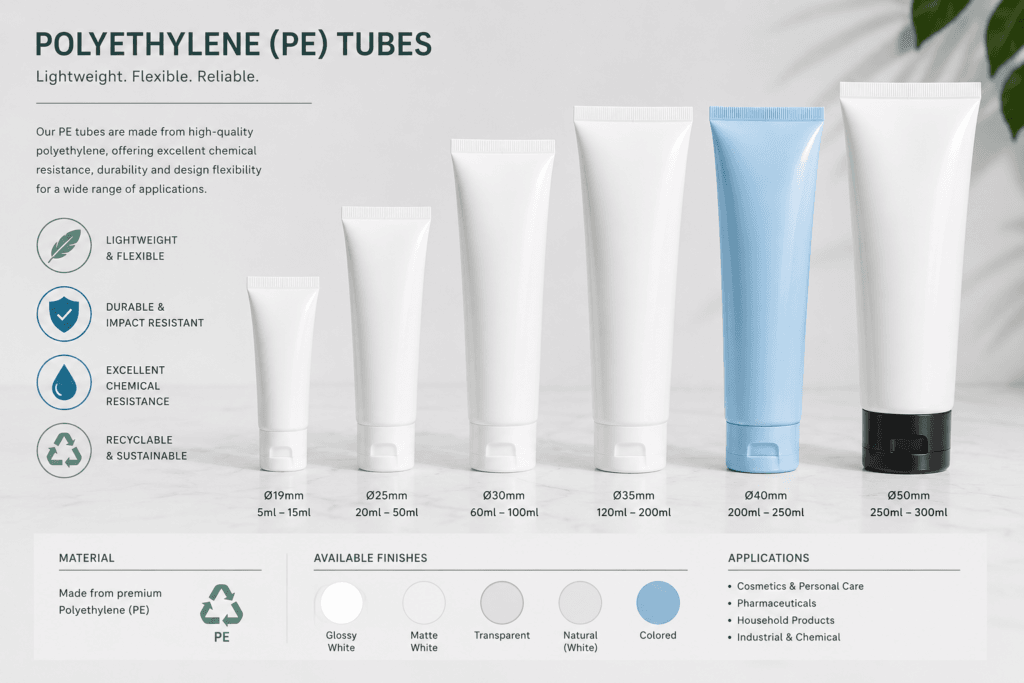
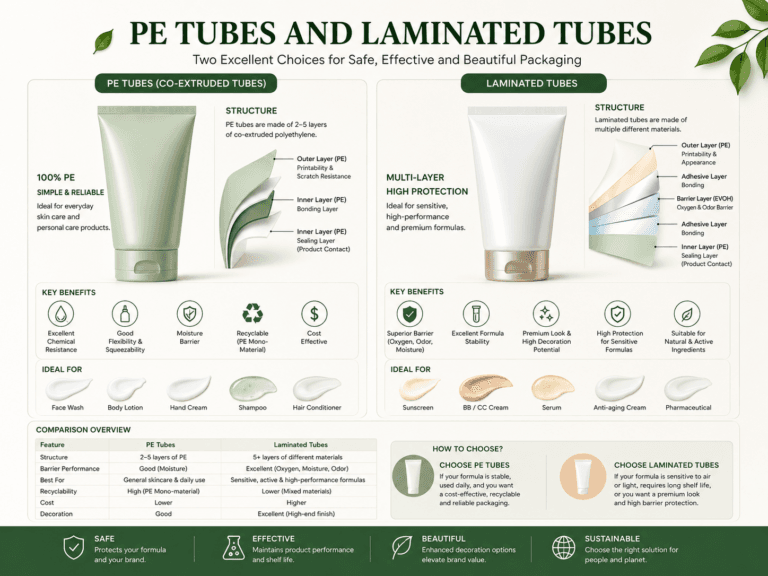
PE tubes are used a lot for cosmetics. There are two main types: Low-Density Polyethylene (LDPE) and High-Density Polyethylene (HDPE). Each one works best for certain products.
| Feature/Application | Description |
|---|---|
| Types | Low-Density (LDPE) and High-Density (HDPE) |
| LDPE Tubes | Soft and flexible, ideal for hand creams and body lotions |
| HDPE Tubes | Rigid, provides better protection, used for sunscreens |
| Key Benefits | Cost-effective, lightweight, good chemical resistance, easy to squeeze, recyclable |
LDPE tubes are soft and bendy. They are great for hand creams and lotions. You can squeeze them easily to get the product out. HDPE tubes are harder and stronger. They work well for sunscreens and products that need more protection. Both types do not react with many chemicals. This keeps your formula safe. PE tubes are also easy to recycle. This helps your brand be more eco-friendly.
Tip: If you want a cheap and useful tube, PE tubes work for most skincare products.
Laminate Tubes
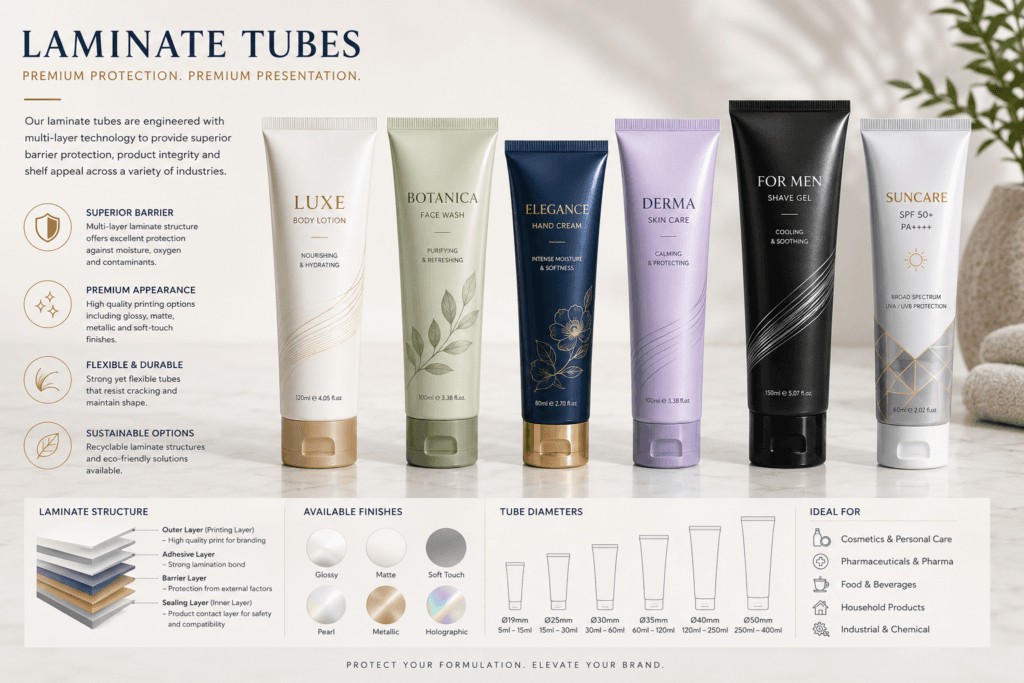
Laminate tubes have layers of different materials. These layers give strong protection. You can pick ABL (Aluminum Barrier Laminate) or PBL (Plastic Barrier Laminate) tubes. Each one gives a different level of safety for your skincare formulas.
| Feature | ABL Laminate Tubes | PBL Laminate Tubes |
|---|---|---|
| Oxygen Barrier | Excellent – Blocks 99%+ oxygen | Very good – EVOH barrier resists oxygen |
| Light Protection | Superior – strong aluminum foil | Moderate – EVOH offers less UV defense |
| Chemical Resistance | High – great for aggressive formulas | Moderate – ideal for gentle products |
| Water Vapor Barrier | Strong – low WVTR values | Good – slightly higher WVTR |
ABL tubes have an aluminum layer. This layer blocks air and light. They are good for products with sensitive ingredients like vitamin C or retinol. PBL tubes use a plastic barrier. They are better for gentle formulas. Both types let you use bright colors and cool designs. This helps your product look special.
Note: Laminate tubes protect sensitive formulas and let you make pretty packaging.
Aluminum Tubes
Aluminum tubes give very strong protection for skincare products. They are good for formulas that need to stay away from air, light, and water. These tubes keep your product fresh for a long time.
- Aluminum packaging keeps out water. This is important for products with water.
- It stops oxidation and keeps oils and smells safe.
- Aluminum tubes block things like light and air.
You can recycle aluminum tubes many times. They do not lose quality. Most aluminum ever made is still being used today. This makes aluminum a smart choice for eco-friendly brands.
Tip: Pick aluminum tubes for products that need strong protection and for brands that care about the planet.
When you know about these tube materials, you can pick the right one for your formula. This keeps your product safe, follows rules, and helps customers trust your brand.
PCR and Eco-Friendly Tubes
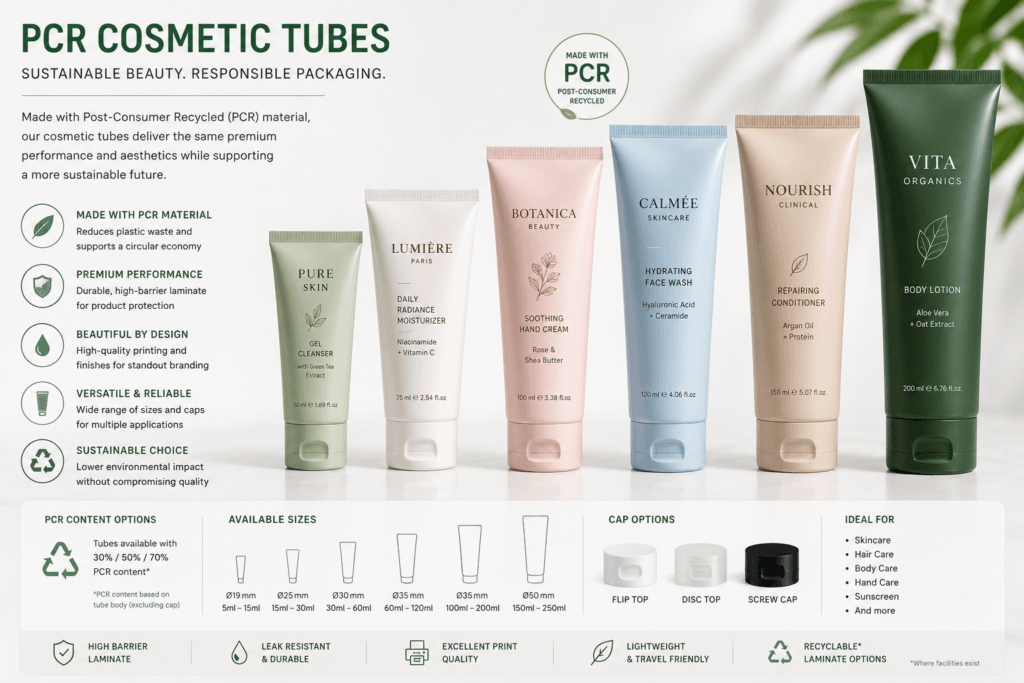
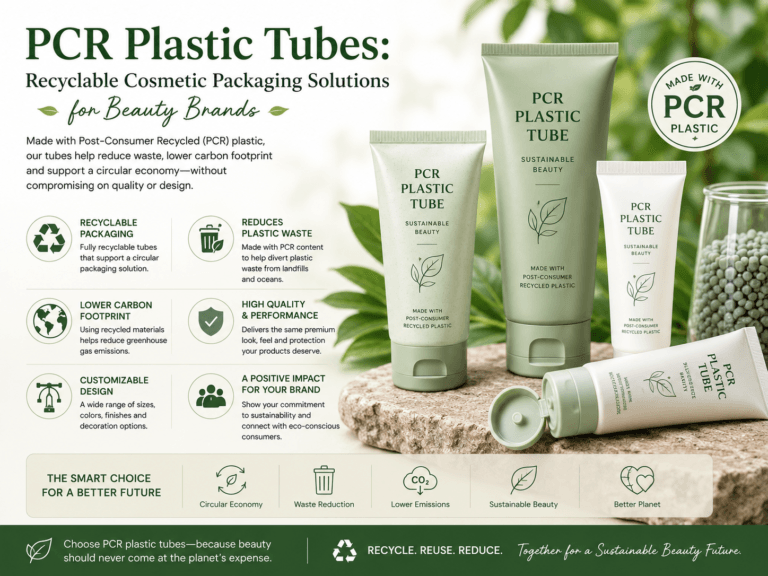
You want your skincare brand to help the planet. PCR and eco-friendly tubes are good for this. PCR means Post-Consumer Recycled. These tubes use plastic from old bottles and jugs. Using PCR tubes helps cut down on waste. It also lowers your carbon footprint.
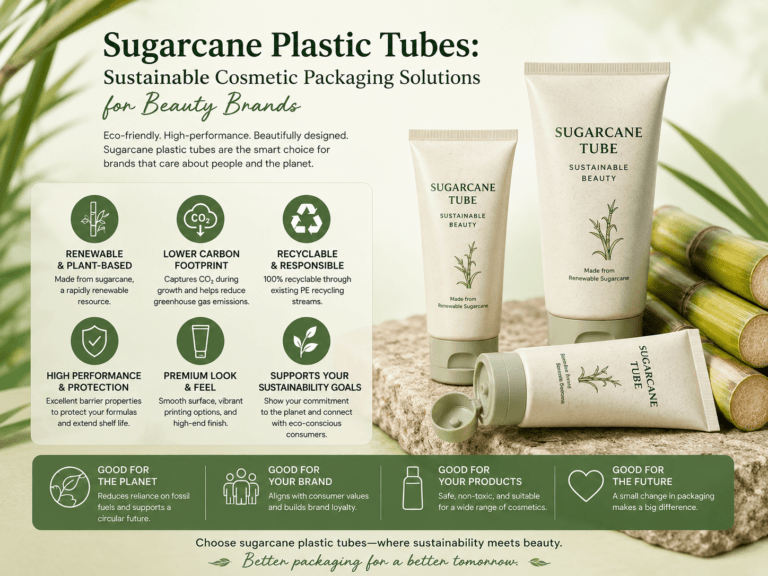
Eco-friendly cosmetic tube materials include PCR, bio-based plastics, and biodegradable choices. Each one helps you support the environment. PCR tubes look and feel like normal plastic tubes. You can use them for creams, gels, and lotions. Bio-based tubes are made from plants like sugarcane. These tubes help you use less oil. Biodegradable tubes break down faster in landfills.
| Tube Type | Eco Benefit | Common Uses |
|---|---|---|
| PCR Plastic | Reduces landfill waste | Lotions, creams |
| Bio-based Plastic | Uses renewable resources | Gels, moisturizers |
| Biodegradable | Breaks down in environment | Sample sizes, masks |
You can put your logo and designs on these tubes. This makes your brand easy to spot. People notice brands that use green packaging. You show you care about the earth. You also attract buyers who want to help the planet.
Tip: If you want your brand to be greener, pick PCR or eco-friendly tubes. You help nature and get more eco-friendly customers.
Airless Tubes
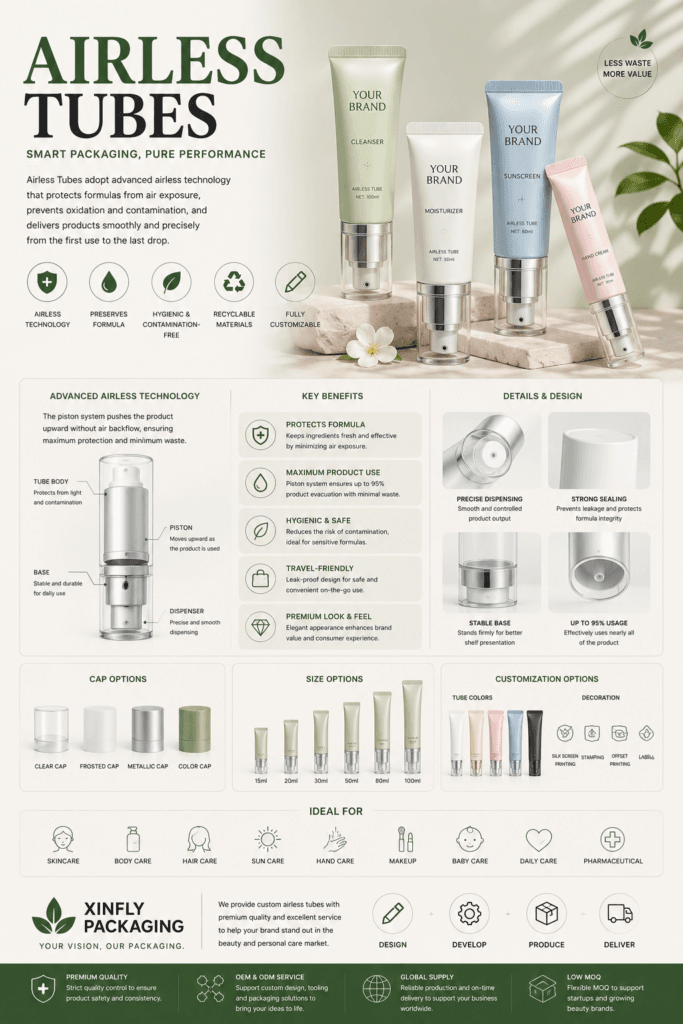
Airless tubes keep skincare formulas safe from air. You use these tubes for products that go bad with air. Airless tubes stop oxygen from touching your formula. This keeps your ingredients strong.
You press the tube, and the product comes out. Air does not go back in. This keeps germs out. Your product stays clean and safe. Airless tubes make your product last longer by blocking air and light. You can use them for serums, eye creams, and products with active ingredients.
Airless tubes are good for formulas with no preservatives. Your product stays fresh for more time. You also waste less because you can use almost all the product.
| Feature | Benefit |
|---|---|
| No air exposure | Stops oxidation |
| Prevents contamination | Keeps formula clean |
| Controlled dispensing | Reduces waste |
| Strong barrier | Extends shelf life |
You can get airless tubes in many shapes and sizes. You can pick the right one for your product. Airless tubes make your brand look modern. People trust products that stay fresh and safe.
Note: If you want to keep formulas safe and make them last longer, airless tubes are a good pick.
Comparing Cosmetic Tube Materials
Barrier Properties
You need to think about how well tubes protect your product. Each tube type blocks air and light in different ways. Some tubes keep your skincare fresh for longer. Here is how the main types are different:
- PE tubes are soft and easy to squeeze. They work for many creams and lotions. But they do not block air and light as well as other tubes.
- Aluminum tubes block air and light the best. Use them if your formula has ingredients that need strong protection.
- Laminate tubes feel like plastic but have extra layers. These layers help keep out air and water.
If you want your product to last longer, pick a tube with strong barriers. This also keeps germs and dirt away, so your product stays clean and safe.
Sustainability Factors
Sustainability is important for skincare packaging. You want to show customers you care about the earth. Some tubes are easier to recycle or reuse. PE tubes are light and can be recycled in many places. PCR tubes use old plastic, so they help cut down on waste. Aluminum tubes can be recycled many times and still stay strong. Laminate tubes are harder to recycle because they mix materials. But some new designs make recycling easier. Airless tubes have more parts, so they are harder to recycle. But they help you use almost all of your product, so there is less waste.
When you pick packaging, think about your brand’s green goals. Eco-friendly tubes can help you stand out and get customers who care about nature.
Cost and Value
You need to think about cost and quality. Some tubes cost more but give better protection or look fancier. Here is a quick guide to average costs:
| Material Type | Cost Range | Notes |
|---|---|---|
| PE Tubes | Lowest cost | Good for recycling; lightweight and strong |
| Laminated Tubes | Higher cost | Great for sensitive products; better protection |
| Aluminum Tubes | Higher cost | Heavy and costly to ship; excellent protection |
| PCR Tubes | Varies | Eco-friendly; supports recycling initiatives |
| Airless Pumps | Premium | Stops oxidation; higher cost due to special technology |
If you want to save money, PE tubes are a good pick. If you need more protection or want a fancy look, you may pay more for laminate, aluminum, or airless tubes. Always match your budget with your product’s needs and your brand’s style.
Picking the right cosmetic tube helps keep your formula safe, supports the planet, and shows you care about good packaging. This choice also changes how people see your brand and how safe your product stays.
Perceived Quality
When you pick a cosmetic tube, you affect how people see your product. Customers judge your brand before they use it. The tube material shows your brand’s standards and care. It also shows if you care about safety and cleanliness. People connect the look and feel of packaging to the product’s value.
Let’s see how tube materials change what people think:
| Tube Material | Benefits |
|---|---|
| Aluminum Tubes | Great at blocking light and air, keeps formulas safe. |
| Laminated Tubes | Strong barriers, makes products safer. |
| Squeeze Tubes | Good for cleansers, easy to use. |
| Brush Applicator | Best for lip gloss or concealer, feels fancy. |
Aluminum tubes feel strong and fancy. Customers think these tubes are high-quality and safe. They block air and light, so ingredients stay fresh. Laminated tubes also feel safe. Their layers show strong protection and help people trust your product.
Squeeze tubes are best for cleansers and daily products. They are easy to use and feel familiar. Many people like how simple they are. Brush applicators make products feel special. They are good for lip gloss or concealer and improve how people use them.
Customers notice small things. A tube that feels strong and looks neat shows you care about packaging. This helps people trust your brand and buy again.
Here are ways tube material changes how people see your brand:
- The right tube keeps your formula safe and fresh.
- Good packaging makes your brand look better and stand out.
- Picking the right tube helps keep things clean and safe.
- High-quality tubes help your product work well and stay safe.
If you want your brand to look professional, pick materials that fit your product and brand. Think about how the tube feels, how it works, and how it looks. These choices matter and change how customers see your brand.
Tube Packaging Design Choices
Size and Shape Options
You want your skincare products to look good and feel right in your customer’s hand. The size and shape of your tube packaging can change how people use and view your product. Small tubes work well for travel or samples. Large tubes give a sense of value and are great for family-size products. If you want your brand to feel exclusive, choose a smaller tube for luxury creams.
Here is a quick guide to popular tube sizes and their uses:
| Tube Size (ml) | Common Use |
|---|---|
| 10–20 | Travel, samples |
| 30–50 | Daily skincare |
| 75–150 | Value packs |
You can also match tube shapes to your product. Slim tubes fit well in bags and are easy to carry. Wide tubes hold more product and stand out on shelves. You can use 10–30ml tubes for eye creams or spot treatments. Choose 50ml tubes for face moisturizers and sunscreens. For body lotions and masks, 75–200ml tubes work best.
Tip: Pick a tube size that matches how often people use your product. This helps your packaging feel practical and special.
Tube Diameter and Product Viscosity
The thickness of your skincare formula matters when you pick tube diameter. Thin liquids flow easily, so you can use a narrow tube. Thick creams need a wider opening to come out smoothly. If you use a small diameter for a thick product, customers may struggle to get it out. For thin gels, a wide tube can cause spills and waste.
- Use narrow tubes for serums and light lotions.
- Choose wider tubes for rich creams and scrubs.
- Match the tube opening to your product’s texture for easy use.
You improve the user experience when you match tube diameter to product viscosity. Customers notice when packaging makes their routine easier.
Closures and Dispensing Features
Closures keep your skincare safe and easy to use. You have many options, and each one affects product integrity and customer trust.
- Tamper-evident seals protect your formula from unwanted interference. Over 68% of buyers prefer skincare with visible safety features.
- Screw-top lids lock in moisture and keep air out. These closures help creams last longer.
- Induction heat seals create a strong barrier against moisture, oxygen, and bacteria. This keeps your product shelf-stable.
You can also choose flip-top caps for quick use or pump dispensers for controlled dosing. Each closure style changes how people use your product and how safe they feel.
Note: Good closures show you care about safety and quality. They help your tube packaging stand out and build trust with your customers.
Decoration and Branding
You want your skincare brand to stand out on the shelf. Decoration and branding on your tube packaging help you do this. The way you decorate your tubes tells your brand story and attracts buyers. In the beauty industry, packaging is more than just a container. It shows your brand’s values and makes your product special.
You can choose from many decoration methods for your tubes. Here are some popular options:
- Silk screen printing gives bright colors and sharp lines. It works well for logos and bold designs.
- Hot stamping adds shiny gold or silver details. This makes your tube look fancy and high-end.
- Labeling lets you use detailed images and lots of colors. It works for small batches or special editions.
- Embossing or debossing creates raised or pressed patterns. This adds texture and makes your tube easy to recognize by touch.
Tip: Pick a decoration style that matches your brand’s message. If you want a luxury look, use metallic finishes or embossing.
The design of your tube packaging changes how people see your brand. If you use luxury designs, you can attract buyers who want premium products. Many shoppers make their decision right at the shelf. Research shows that 70% of purchase decisions happen in the store. Eye-catching packaging helps your product get noticed first.
You can use colors, patterns, and finishes to show what your brand stands for. Bright colors can make your product look fun and fresh. Soft colors can give a calm and gentle feeling. Clear and simple designs help your product look clean and safe. You can also add your logo, product name, and key benefits right on the tube. This helps shoppers know what your product does at a glance.
Here is a quick table of decoration choices and their effects:
| Decoration Type | Effect on Brand Image |
|---|---|
| Silk Screen Printing | Bold, modern, easy to read |
| Hot Stamping | Luxury, premium, eye-catching |
| Labeling | Flexible, colorful, detailed |
| Embossing/Debossing | Tactile, unique, memorable |
You should always test your tube packaging design with real customers. Ask them what they think and see which designs they like best. Good decoration and branding make your product easy to spot and remember. This helps you build trust and grow your skincare brand.
Choosing the Right Cosmetic Tube
Decision Checklist
You need a simple checklist to help pick the best tube. This checklist shows the most important steps. It helps you avoid mistakes and keeps your product safe.
- Match tube material with your product formula. Make sure the tube does not react with your ingredients.
- Pick tubes that are good for the planet. Look for tubes made from recycled or plant-based materials.
- Think about how customers use your product. Choose tubes that are easy to squeeze and use.
- Make sure your tube looks nice and shows your brand. Pick tubes that let you add clear labels and cool designs.
- Check if the tube fits your budget and production needs. Make sure it works with your supply chain.
Many brands make mistakes when picking cosmetic tubes. Sometimes they choose materials that do not work with their formula. They forget to check if the cap fits or ignore barrier layers. Some brands do not test tubes with filling machines. Others forget about shipping and order size rules. Do not pick tube size just because it looks good. Always test if the inside coating works with your formula. Do not forget rules or focus only on decoration. Ignoring how the tube works, skipping brand style, and not thinking about the planet can hurt your brand. Not testing and making samples can cause problems later.
Tip: Use this checklist to help you decide. It stops costly mistakes and keeps your product safe.
Supplier Consultation
You should talk to your supplier before you choose a tube. Suppliers know a lot about tube materials. They can help you find the best tube for your skincare product. They can show you samples and explain the benefits of each material.
| Tube Material | Characteristics | Suitable Products |
|---|---|---|
| PE Tube | Cheap, soft feel, strong | Facial cleansers, body lotions |
| ABL Composite Tube | Aluminum layer blocks light, air, and moisture | Sunscreens, ointments, sensitive products |
| PBL Composite Tube | High barrier, eco-friendly, all-plastic design | Products with environmental focus |
| Plant-based Materials | Made from sugarcane and recycled plastic, lowers carbon footprint | Eco-friendly skincare products |
You can ask your supplier about plastic tube cosmetic packaging choices. They can help you compare PE tubes, laminate tubes, and plant-based materials. Suppliers know which tubes work best for your formula and brand goals. They help you avoid mistakes like picking the wrong material or forgetting cap fit.
Note: Talking to your supplier helps you make smart choices. It saves time and stops problems during production.
Case Study: GreenGlow Skincare
GreenGlow wanted eco-friendly packaging for their new moisturizer. They talked to their supplier and learned about plant-based plastic tube cosmetic packaging. The supplier showed them tubes made from sugarcane. GreenGlow tested the tubes and saw they matched their formula and brand values. The new packaging brought in eco-conscious customers and helped their market position.
Case Study: PureRadiance
PureRadiance launched a vitamin C serum. They needed strong barrier protection. Their supplier suggested ABL composite tubes. PureRadiance tested the tubes and saw the aluminum layer kept the serum fresh. The supplier also helped them pick the right cap and decoration. PureRadiance avoided mistakes and gained customer trust.
Testing and Prototyping
You need to test and make samples of your cosmetic tube before full production. Testing helps you check if the tube works with your formula and filling machines. You can find problems early and fix them before selling your product.
- Test the tube with your real formula. Make sure the material does not react or break down.
- Check if the cap fits well. Make sure the closure keeps your product safe and easy to use.
- Test barrier layers. See if the tube protects your formula from air, light, and moisture.
- Try filling the tube with your machines. Make sure the tube works with your production equipment.
- Check shipping and order size rules. Make sure you can handle the supply chain.
You should also test decoration and branding. Make sure your logo and colors look good on the tube. Ask customers what they think about the sample. This helps you improve the design and user experience.
Tip: Testing and making samples stop expensive mistakes. They help you launch a safe and attractive product.
Case Study: FreshFace Beauty
FreshFace Beauty wanted to use plastic tube cosmetic packaging for their new cleanser. They made samples and tested them with their formula. The team found the tube worked well with their filling machines. They also tried different caps and decorations. Customer feedback showed the tube was easy to use and looked nice. FreshFace Beauty avoided problems and launched a successful product.
You need to remember that picking the right cosmetic tube material helps your brand win. Tubes are liked because they are easy to use. They keep products clean when applied. Their small size makes them easy to carry. When you use plastic tube cosmetic packaging, you can match your formula, brand, and customer needs. You can also help the planet and improve your market position.
You can pick the best cosmetic tube by thinking about protection, being eco-friendly, price, and how your brand looks. Check this table to help you choose:
| Aspect | Benefit |
|---|---|
| Product Protection | Keeps your skincare safe from air, water, and sunlight. |
| Sustainability | Uses green materials and makes recycling easier. |
| Cost and Branding | Lets you use bright designs that make your brand pop. |
- Packaging changes how people feel about your brand.
- The right tube keeps your product safe and makes it look good.
- Lots of buyers like brands with eco-friendly packaging.
- Good packaging choices help your brand grow and earn trust.
The right cosmetic tube can make your skincare brand special and help you do well in a busy market.
Frequently Asked Questions About Cosmetic Tube Materials
Learn how to choose cosmetic tube materials for skincare and beauty packaging, including PE cosmetic tubes, laminated cosmetic tubes, PCR plastic tubes, sugarcane plastic tubes, aluminum cosmetic tubes, sustainable cosmetic packaging and OEM cosmetic tube manufacturing solutions.
What are the most common cosmetic tube materials?
How do I choose the right cosmetic tube material?
What are PE cosmetic tubes?
What are laminated cosmetic tubes?
What are PCR plastic cosmetic tubes?
What are sugarcane plastic cosmetic tubes?
Are aluminum cosmetic tubes suitable for skincare packaging?
Which cosmetic tube material is best for sustainable packaging?
Which tube material has the best barrier performance?
Can different cosmetic tube materials be customized?
What printing options are available for cosmetic tube materials?
Why choose Xinfly Packaging for cosmetic tube materials?
Need Help Choosing Cosmetic Tube Materials?
Xinfly Packaging helps skincare and beauty brands select the right cosmetic tube materials based on formula compatibility, barrier performance, sustainability goals, custom printing, product positioning and OEM cosmetic packaging requirements.