

How to Choose Eye Cream Tubes with Zinc Alloy Metal Applicators and Long Nozzles
Eye cream packaging requires more precision than ordinary skincare tubes. The formula is usually high-value, sensitive, small-volume and applied around delicate skin. Brands must choose between zinc alloy cooling metal applicators, long nozzles, airless pump tubes or standard squeeze tubes based on formula texture, hygiene, dosage control, massage experience and premium shelf appeal.
Common Purchasing Pain Points for Eye Cream Tube Packaging
Eye cream tubes are small, but the packaging requirements are high. The wrong applicator, nozzle, cap or material can affect hygiene, formula protection, dosage control and premium brand perception.
The tube does not feel premium during use
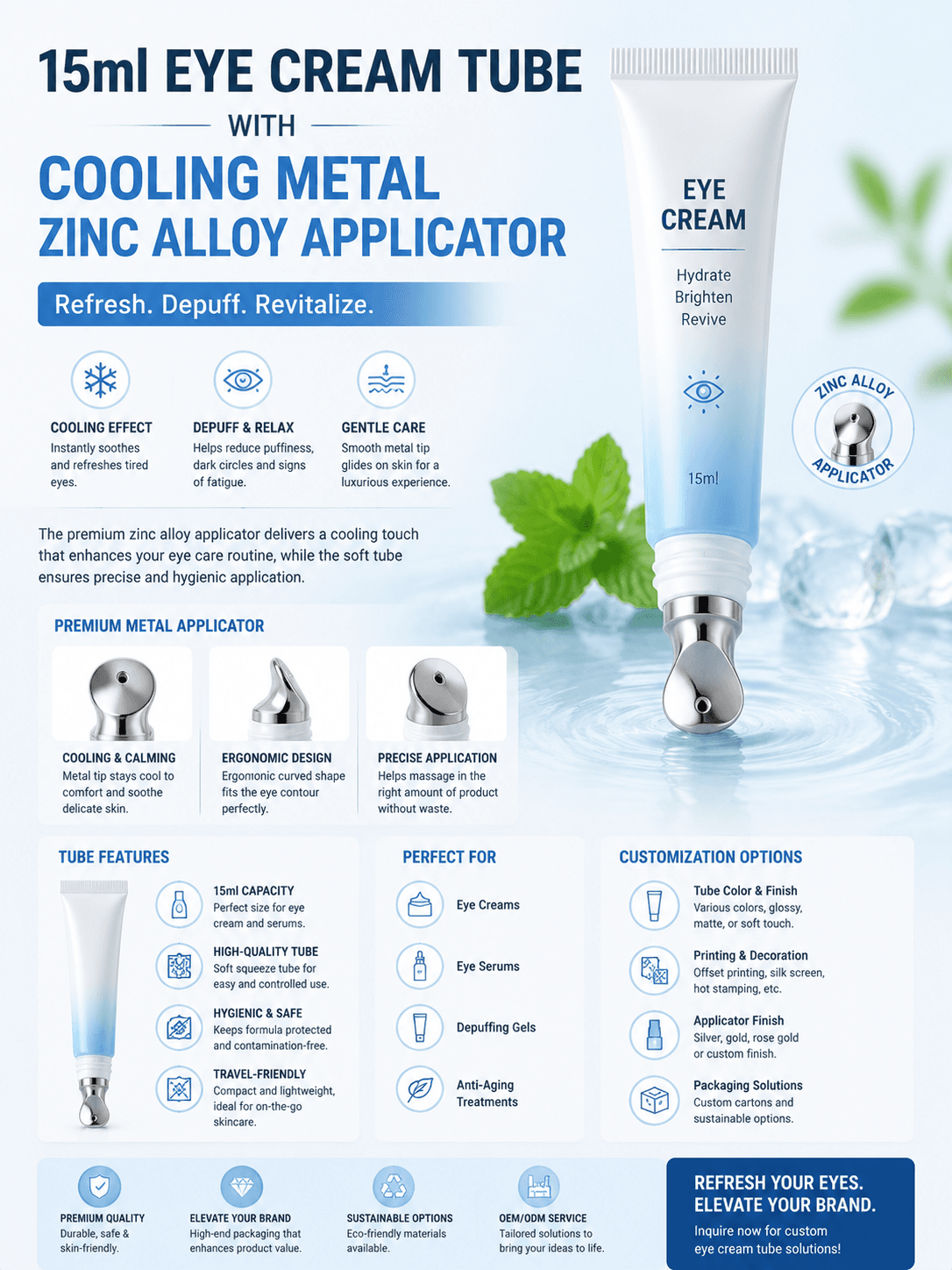
Eye cream consumers expect a gentle and precise application experience. A zinc alloy metal applicator can create a cooling massage feeling and improve perceived value.
Too much formula comes out at once
Eye cream is usually expensive and used in small amounts. Long nozzles and narrow orifices help control output and reduce product waste.
Active ingredients need better stability
Retinol, peptides, caffeine, vitamin C derivatives and anti-aging actives may require better material compatibility, barrier protection or airless dispensing options.
Finger contact can reduce clean application
Metal applicators and long nozzles reduce direct finger contact with the formula, supporting a cleaner and more controlled eye-area application.
Small tubes can leak around the head
Eye cream tubes often use special heads, small caps and narrow nozzles. Poor fitting can cause leakage, residue buildup or cap contamination.
Small tube area makes branding difficult
Eye cream tubes have limited printing space. Artwork must be clean, readable and premium, with correct logo placement and clear active benefit claims.
Zinc Alloy Metal Applicator vs. Long Nozzle: Which One Should You Choose?
Zinc alloy metal applicators and long nozzles solve different problems. The metal applicator focuses on cooling massage and premium user experience, while the long nozzle focuses on precise dispensing and clean point application.
| Comparison Point | Zinc Alloy Metal Applicator | Long Nozzle Eye Cream Tube | Factory Recommendation |
|---|---|---|---|
| User Experience | Cooling touch, massage feeling, premium skincare experience | Precise point application, simple and clean dispensing | Choose zinc alloy for premium anti-aging or depuffing eye cream. Choose long nozzle for precise daily use. |
| Dosage Control | Good control when applicator head and outlet are well matched | Excellent control for small-dose output | For expensive formulas, test output amount per squeeze before production. |
| Formula Compatibility | Metal contact area must be checked with formula pH and active ingredients | Mostly plastic contact, easier for many standard eye cream formulas | Run compatibility testing when formula contains acids, salts, retinol or active complexes. |
| Brand Positioning | Luxury, clinical, spa, anti-aging, cooling eye care | Clean, functional, travel-friendly, dermatology-style eye cream | Match applicator choice with product price level and marketing message. |
| Cost & Assembly | Higher component cost and more assembly control required | Lower cost, simpler structure and easier mass production | Use zinc alloy for premium SKUs and long nozzle for standard or low-MOQ eye cream projects. |
| Retail Visual Impact | Strong premium look, metallic head attracts attention | Simple professional look, compact and practical | For luxury shelf appeal, the metal applicator provides stronger differentiation. |
Choose Eye Cream Tube Structure Based on Formula Type
Xinfly engineers usually review formula viscosity, active ingredient system, pH, sensitivity to oxygen, filling temperature, applicator contact area and shelf-life target before recommending a tube structure.
| Formula Type | Main Packaging Risk | Recommended Tube Structure | Factory Engineer’s Suggestion |
|---|---|---|---|
| Anti-aging eye cream Retinol, peptides, firming actives | Active stability, oxygen exposure, premium positioning | EVOH PE tube, airless pump tube or metal applicator tube | Use barrier or airless options when the formula is oxygen-sensitive or positioned as premium skincare. |
| Depuffing eye gel Caffeine, cooling formula | Application experience, cooling claim, clean dosage | Zinc alloy metal applicator tube | Metal applicator supports cooling massage positioning and improves user experience around the eye area. |
| Light eye serum | Low viscosity, leakage, over-dispensing | Long nozzle tube or airless pump tube | Use small outlet control and leakage testing to avoid excessive flow. |
| Rich eye cream | High viscosity, hard squeezing, residue around applicator | Soft PE tube with metal applicator or short nozzle | Test squeeze force and outlet size with the real formula before confirming tooling. |
| Natural / sensitive eye cream | Formula compatibility, hygiene, premium clean beauty look | PE tube, PCR PE tube, long nozzle tube or metal applicator tube | Confirm compatibility, odor, color and applicator contact safety before bulk order. |
Factory Engineer + Packaging Designer Solutions
A successful eye cream tube should protect the formula, control small-dose output, feel premium during application and communicate skincare benefits clearly in limited printing space.
Engineer’s Solution for Eye Cream Tubes
From a production engineering view, eye cream tube selection should focus on applicator matching, formula compatibility, outlet control and leakage prevention.
- Use zinc alloy metal applicators for cooling, massage and premium eye care positioning.
- Use long nozzles for precise dispensing, point application and lower-cost eye cream projects.
- Use EVOH or airless pump structures when active ingredients need better protection.
- Test metal applicator compatibility with formula pH, salts, acids and active ingredients.
- Run leakage, dosage, squeeze force, drop, compatibility and printing adhesion tests before mass production.
Designer’s Solution for Eye Cream Packaging
Eye cream tubes are small, so the design must look premium without becoming crowded. The applicator itself can become a visual selling point.
- For anti-aging eye cream: silver, white, champagne or deep blue design with clinical typography.
- For cooling depuffing gel: metallic applicator, light blue accents and clear cooling benefit claims.
- For luxury eye care: soft-touch tube, hot stamping, pearlized body and minimal logo layout.
- For natural eye cream: soft green, beige or botanical color system with clean ingredient message.
- For e-commerce: large product name, visible applicator benefit and clear before-sampling value proposition.
How to Choose Eye Cream Tube Capacity, Diameter and Applicator
Eye cream tubes are usually small-volume packaging. The capacity, diameter and applicator should match formula value, usage amount and brand positioning.
| Product Positioning | Common Capacity | Suggested Diameter | Recommended Applicator | Best For |
|---|---|---|---|---|
| Trial eye cream | 5ml, 8ml, 10ml | Ø13mm – Ø19mm | Small nozzle or screw cap | Sample kits, travel eye care, promotional skincare sets |
| Daily eye cream | 10ml, 15ml, 20ml | Ø16mm – Ø25mm | Long nozzle or small applicator head | Daily hydration, basic anti-aging, private label skincare |
| Cooling eye gel | 15ml, 20ml, 25ml | Ø19mm – Ø25mm | Zinc alloy metal applicator | Depuffing gel, caffeine eye serum, massage eye treatment |
| Premium anti-aging eye cream | 15ml, 20ml, 30ml | Ø19mm – Ø30mm | Zinc alloy applicator or airless pump tube | Luxury eye cream, peptide formula, retinol eye cream, firming treatment |
| Eye serum / essence | 10ml, 15ml, 20ml | Ø16mm – Ø25mm | Long nozzle or airless pump | Light texture formula, precision application, dermatology-style skincare |
Quick Recommendation: Which Eye Cream Tube Is Best?
The best eye cream tube depends on product price, formula sensitivity, usage experience and how strongly the brand wants to highlight applicator benefits.
You want cooling massage and premium value
Zinc alloy metal applicator tubes are suitable for premium eye cream, depuffing eye gel, anti-aging eye treatment and products that use applicator experience as a selling point.
You need precise and clean dispensing
Long nozzle eye cream tubes are suitable for small-dose eye serum, daily eye cream and functional skincare formulas that need controlled point application.
Your formula needs stronger protection
Airless pump tubes or EVOH barrier tubes are suitable for oxygen-sensitive eye cream formulas with retinol, peptides, vitamin derivatives or premium active systems.
6-Step Process to Choose Eye Cream Tubes
This process helps skincare brands avoid wrong applicator choice, poor dosage control, formula compatibility issues and premium packaging mismatch.
Check Formula
Confirm viscosity, active ingredients, pH, oxygen sensitivity, filling temperature and shelf-life target.
Define Experience
Decide whether your product needs cooling massage, precise nozzle dispensing or airless protection.
Select Structure
Choose zinc alloy applicator, long nozzle, PE tube, EVOH tube or airless pump tube.
Match Size
Select 10ml, 15ml, 20ml or 30ml based on price point, formula value and usage amount.
Confirm Artwork
Prepare AI/PDF files, applicator claim, active benefit, logo position and printing method.
Test Samples
Run leakage, dosage, metal compatibility, squeeze force, drop and printing adhesion tests.
Mass Production
Xinfly controls tube extrusion, printing, applicator assembly, inspection and export packing.
Final Inspection
Check tube size, applicator fit, outlet control, printing quality, cap sealing and carton protection.
Build Your How to Choose Packaging Knowledge Cluster
Continue reading related Xinfly guides to compare eye cream applicators, airless tubes, PE squeeze tubes, barrier materials and premium skincare packaging options.
FAQ: Choosing Eye Cream Tubes with Metal Applicators and Long Nozzles
These questions help skincare brands quickly confirm applicator type, tube material, size, formula compatibility and testing before requesting samples.
What is the benefit of a zinc alloy metal applicator for eye cream tubes?
A zinc alloy metal applicator provides a cooling touch and massage experience around the eye area. It helps premium eye cream, depuffing gel and anti-aging formulas stand out in the skincare market.
When should I choose a long nozzle eye cream tube?
Long nozzle tubes are suitable when the formula needs precise point application, small-dose dispensing and clean use without direct finger contact. They are practical for eye serum, essence and daily eye cream.
What size is common for eye cream tubes?
10ml, 15ml, 20ml and 30ml are common eye cream tube sizes. Trial products may use 5ml or 8ml, while premium anti-aging eye creams often use 15ml to 30ml packaging.
Do metal applicators need formula compatibility testing?
Yes. Zinc alloy metal applicators should be tested with the actual formula, especially when the eye cream contains acids, salts, retinol, active complexes or unusual pH systems.
Are airless pump tubes better for eye cream?
Airless pump tubes are useful for oxygen-sensitive or high-value eye cream formulas. However, zinc alloy applicators may be better when cooling massage and premium application experience are the main selling points.
How do I prevent leakage in eye cream applicator tubes?
Leakage prevention depends on applicator fit, outlet size, cap sealing, shoulder design, filling process and formula viscosity. Xinfly recommends leakage, dosage, drop and compatibility tests before mass production.
Need Help Choosing Eye Cream Tubes?
Share your eye cream formula, viscosity, active ingredients, target capacity, applicator preference, artwork style and expected order quantity. Xinfly Packaging can recommend suitable zinc alloy metal applicator tubes, long nozzle tubes, airless eye cream tubes, EVOH barrier tubes or premium PE eye cream tube solutions with engineering and artwork support.