

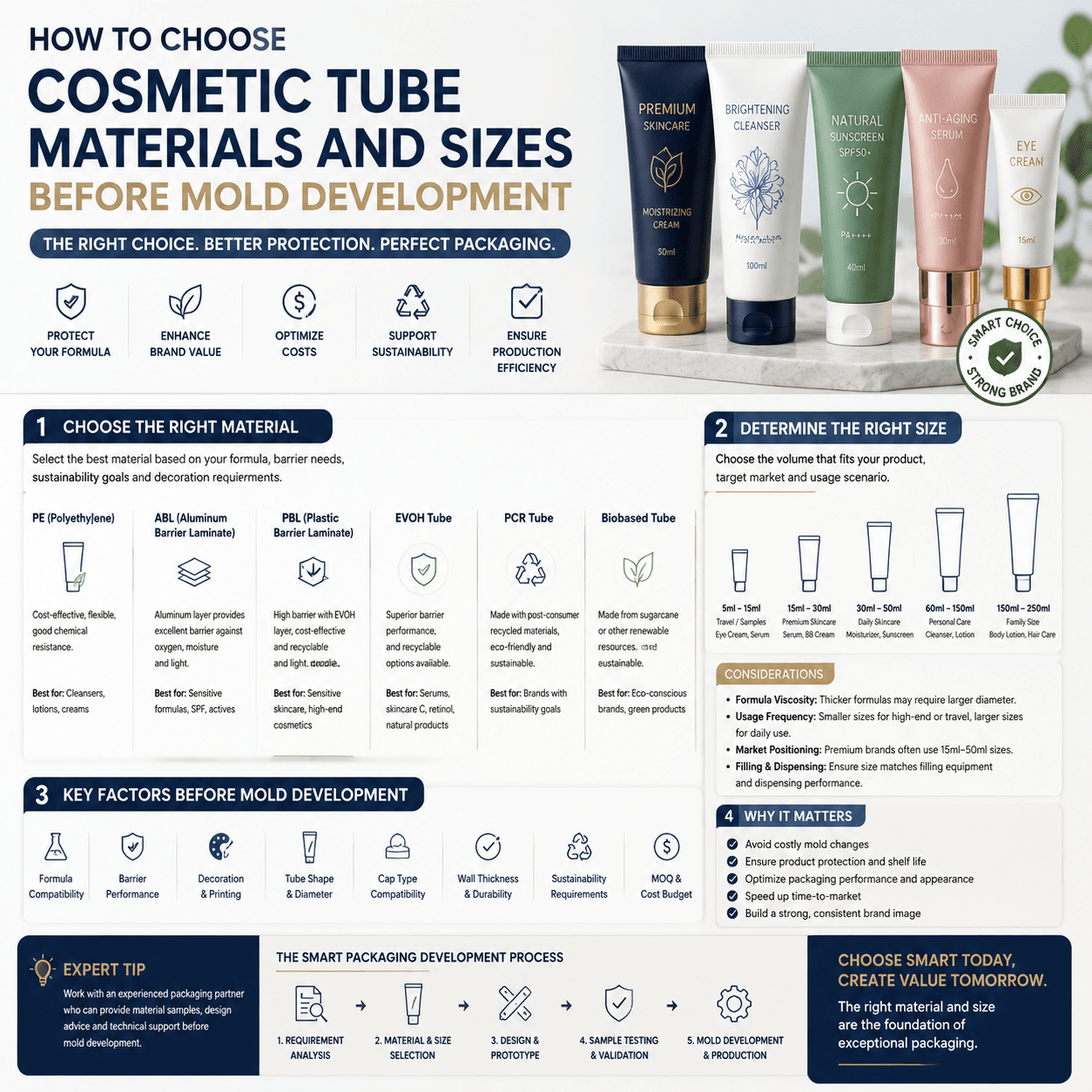
How to Choose Cosmetic Tube Materials and Sizes Before Mold Development
Selecting the correct cosmetic tube material and size before mold development is one of the most important decisions for beauty brands.
The wrong material selection, diameter, or tube capacity can increase tooling costs, cause filling problems, affect product stability, and delay product launch.
Request Engineering Consultation
15+ years experience in OEM cosmetic tube manufacturing, material engineering, mold development, and global beauty packaging solutions.
Why Material and Size Selection Must Be Confirmed Before Mold Development
Many cosmetic brands focus on artwork and appearance first, but professional packaging development starts with material compatibility, tube dimensions, and production requirements.
Before creating molds, brands need to confirm:
- Product formula compatibility
- Required barrier performance
- Tube diameter and capacity
- Filling machine requirements
- Printing area and artwork size
- Target market positioning
A cosmetic tube is not simply a container. It must protect the formula, provide the correct user experience, and work efficiently with filling and sealing equipment.
For a complete overview, see:How to Choose Cosmetic Tube Materials
Main Cosmetic Tube Materials Explained
Different cosmetic formulas require different packaging structures. The most common materials include PE, PCR, sugarcane PE, ABL, PBL, and EVOH barrier tubes.
| Material | Main Advantages | Typical Applications |
|---|---|---|
| PE Tubes | Flexible, economical, excellent squeeze feeling | Creams, lotions, cleansers, hand care |
| PCR Tubes | Recycled content, supports sustainability goals | Eco-friendly skincare products |
| Sugarcane PE Tubes | Renewable bio-based material | Natural skincare brands |
| PBL Tubes | Excellent printing performance and barrier protection | Premium skincare and cosmetics |
| ABL Tubes | Strong barrier performance with aluminum layer | Sensitive formulas and toothpaste |
| EVOH Barrier Tubes | High oxygen barrier protection | Vitamin C, retinol, SPF products |
Learn more about material selection:Cosmetic Tube Materials Guide
How to Select the Right Tube Material Based on Formula?
The formula is the first factor when choosing tube materials. Different ingredients interact differently with packaging materials.
Formula Matching Examples
- Basic moisturizer → PE tube
- Natural skincare → Sugarcane PE or PCR tube
- Vitamin C serum → EVOH barrier tube
- SPF sunscreen → EVOH / ABL / PBL structure
- Premium cream → PBL or luxury PE tube
For products requiring stronger protection, brands can evaluate:Multi-Layer Cosmetic Tubes
2-Layer vs 5-Layer Cosmetic Tubes
One of the most common engineering decisions before mold development is selecting the correct tube layer structure.
| Structure | Features | Recommended Products |
|---|---|---|
| 2-Layer PE Tube | Simple structure, flexible, cost-effective | Hand cream, lotion, cleanser |
| 5-Layer Barrier Tube | Additional EVOH barrier layer, improved protection | Serum, SPF, active skincare |
Detailed comparison:2 Layer vs 5 Layer Plastic Tubes
How to Choose the Right Cosmetic Tube Diameter Before Mold Development?
Tube diameter is one of the most important specifications before mold development. It directly affects tube capacity, appearance, squeeze feeling, filling efficiency, cap selection, and overall packaging cost.
A professional packaging supplier normally evaluates diameter together with tube length, wall thickness, formula viscosity, and filling requirements before creating tooling. Sample development before mass production also helps confirm size, material, cap compatibility, printing effect, and overall appearance.
| Tube Diameter | Typical Capacity Range | Common Applications |
|---|---|---|
| Φ13mm - Φ16mm | 3ml - 15ml | Eye serum, lip products, travel-size skincare |
| Φ19mm - Φ22mm | 10ml - 30ml | Eye cream, serum, BB cream |
| Φ25mm - Φ30mm | 20ml - 60ml | Foundation, hand cream, premium skincare |
| Φ35mm - Φ40mm | 50ml - 150ml | Sunscreen, cleanser, lotion |
| Φ45mm - Φ50mm | 150ml - 250ml | Body lotion, shampoo, conditioner |
For detailed specification matching:Cosmetic Tube Capacity, Diameter, Length & Thickness Guide
Relationship Between Tube Capacity, Diameter and Length
Many new brands assume that tube capacity only depends on diameter. However, actual filling volume is determined by the combination of:
- Tube diameter
- Tube body length
- Shoulder design
- Wall thickness
- Formula density
Example: Same Capacity, Different Tube Design
- 30ml serum tube → smaller diameter with longer body
- 30ml foundation tube → larger diameter with shorter premium appearance
- 50ml cream tube → wider diameter for better shelf presence
How to Select Tube Wall Thickness?
Wall thickness affects tube rigidity, squeeze force, appearance, and transportation durability.
A thicker tube wall generally provides stronger structure and premium feeling, while a thinner wall reduces material consumption and cost. However, excessive reduction may cause deformation, poor printing performance, or filling issues.
| Product Type | Recommended Consideration |
|---|---|
| Luxury skincare tube | Higher wall thickness for premium hand feeling |
| Travel-size tube | Balanced thickness for portability |
| Large body lotion tube | Need stronger structure to prevent deformation |
| High-speed filling production | Stable thickness consistency required |
Cosmetic tube wall thickness should also consider material behavior, stress distribution, and production process stability.
Match Cosmetic Tube Material With Filling Process
Material selection cannot be separated from the filling and sealing process. Before mold development, brands should confirm compatibility with their filling line.
| Consideration | Why It Matters |
|---|---|
| Filling Temperature | Some formulas require temperature resistance during filling |
| Sealing Method | Hot air sealing and ultrasonic sealing require different parameters |
| Formula Viscosity | Thick creams may require larger openings |
| Chemical Compatibility | Essential oils, solvents and active ingredients may require barrier materials |
For special formulas, brands should evaluate:
- Vitamin C packaging requirements
- Retinol formula protection
- SPF sunscreen barrier requirements
- Essential oil migration risks
Related:EVOH Barrier Tube Solutions
Common Mistakes When Developing Cosmetic Tube Molds
Avoid These Packaging Development Problems
- Choosing diameter before confirming product volume
- Ignoring filling machine requirements
- Selecting material only based on price
- Not considering artwork printing area
- Changing tube specifications after tooling starts
- Skipping pre-production samples
Cosmetic Tube Mold Development Checklist
Before starting mold development, brands should confirm the following specifications:
| Item | Confirmation Details |
|---|---|
| Tube Material | PE, PCR, Sugarcane PE, ABL, PBL, EVOH |
| Diameter | Φ13mm - Φ50mm depending on application |
| Capacity | ml requirement and filling weight |
| Tube Structure | 2-layer, 5-layer, laminate structure |
| Cap Type | Flip cap, screw cap, nozzle, pump |
| Decoration | Silk screen, offset, hot stamping, coating |
Why Choose an Experienced Cosmetic Tube Manufacturer Before Tooling?
Professional engineering support before mold development can help brands avoid unnecessary tooling changes and production delays.
An experienced manufacturer can evaluate:
- Material compatibility
- Tube structure design
- Mold feasibility
- Decoration limitations
- Mass production stability
Xinfly Packaging provides OEM and ODM cosmetic tube development services, from concept design and sample confirmation to mass production.
Learn more:OEM Cosmetic Tube Manufacturer
Develop Your Custom Cosmetic Tube With Xinfly Packaging
Professional material selection, tube sizing, mold development and OEM packaging support.
Get Engineering ConsultationFrequently Asked Questions About Cosmetic Tube Materials and Sizes
1. Why should cosmetic tube materials be confirmed before mold development?
Material selection affects tube performance, formula compatibility, printing quality, production process, and tooling design. Confirming materials before mold development helps avoid costly modifications after tooling begins.
2. What materials are commonly used for cosmetic tubes?
Common cosmetic tube materials include PE, PCR plastic, sugarcane PE, ABL, PBL, aluminum, and EVOH barrier structures. The best choice depends on product formula, sustainability goals, and packaging requirements.
More information:What Materials Are Used in Cosmetic Tubes?
3. How do I choose between PE tubes and laminated tubes?
PE tubes provide excellent flexibility and cost efficiency, while laminated tubes such as ABL and PBL provide stronger barrier protection and premium printing performance.
Related comparison:PE Tubes vs Laminated Tubes
4. What cosmetic tube diameter should I choose for my product?
Tube diameter depends on product volume, formula viscosity, brand positioning, and filling requirements. Common cosmetic tube diameters range from 13mm to 50mm.
5. How does tube diameter affect filling volume?
Tube volume is determined by diameter, body length, shoulder design, and wall thickness. The same capacity can have different appearances depending on tube dimensions.
6. Should I choose a 2-layer or 5-layer cosmetic tube?
Two-layer tubes are suitable for general creams and lotions, while five-layer barrier tubes are recommended for sensitive formulas requiring oxygen or aroma protection.
Comparison:2 Layer vs 5 Layer Plastic Tubes
7. What cosmetic tube material is best for sunscreen products?
Sunscreen products often require stronger barrier protection. EVOH, ABL, and PBL structures are commonly selected for SPF formulas.
Guide:SPF Sunscreen Tubes
8. Are PCR cosmetic tubes suitable for sustainable beauty brands?
Yes. PCR tubes use recycled plastic content and help brands reduce dependence on virgin plastic materials. They are commonly used for eco-friendly skincare and personal care products.
Learn more:PCR Cosmetic Tubes
9. What information does a manufacturer need before creating a tube mold?
Manufacturers usually need product volume, tube diameter, material requirements, cap type, artwork requirements, formula information, and estimated order quantity.
10. Can tube size be changed after mold development starts?
Changing tube diameter, shape, or capacity after tooling begins may require additional mold modifications and increase development costs. Specifications should be confirmed before tooling.
11. How long does cosmetic tube mold development take?
The timeline depends on tube design complexity, material structure, mold requirements, sampling approval, and production scheduling.
12. How can I choose a reliable cosmetic tube manufacturer?
A reliable manufacturer should have experience in material selection, mold development, printing technology, quality control, and international OEM production.
Learn more:Reliable Cosmetic Tube Manufacturer