

Aluminum Tubes vs PBL Tubes: Which Packaging Solution Is Better?
For skincare, toothpaste, sunscreen, pharmaceutical cream, ointment, hand cream and functional cosmetic formulas, both aluminum tubes and PBL tubes can provide barrier protection — but they are designed for very different packaging goals.
Aluminum tubes are selected when maximum barrier protection and collapsible dispensing are the top priorities. PBL tubes are selected when brands need a premium plastic laminate appearance, better shape recovery, strong printing quality and a more retail-friendly consumer experience.
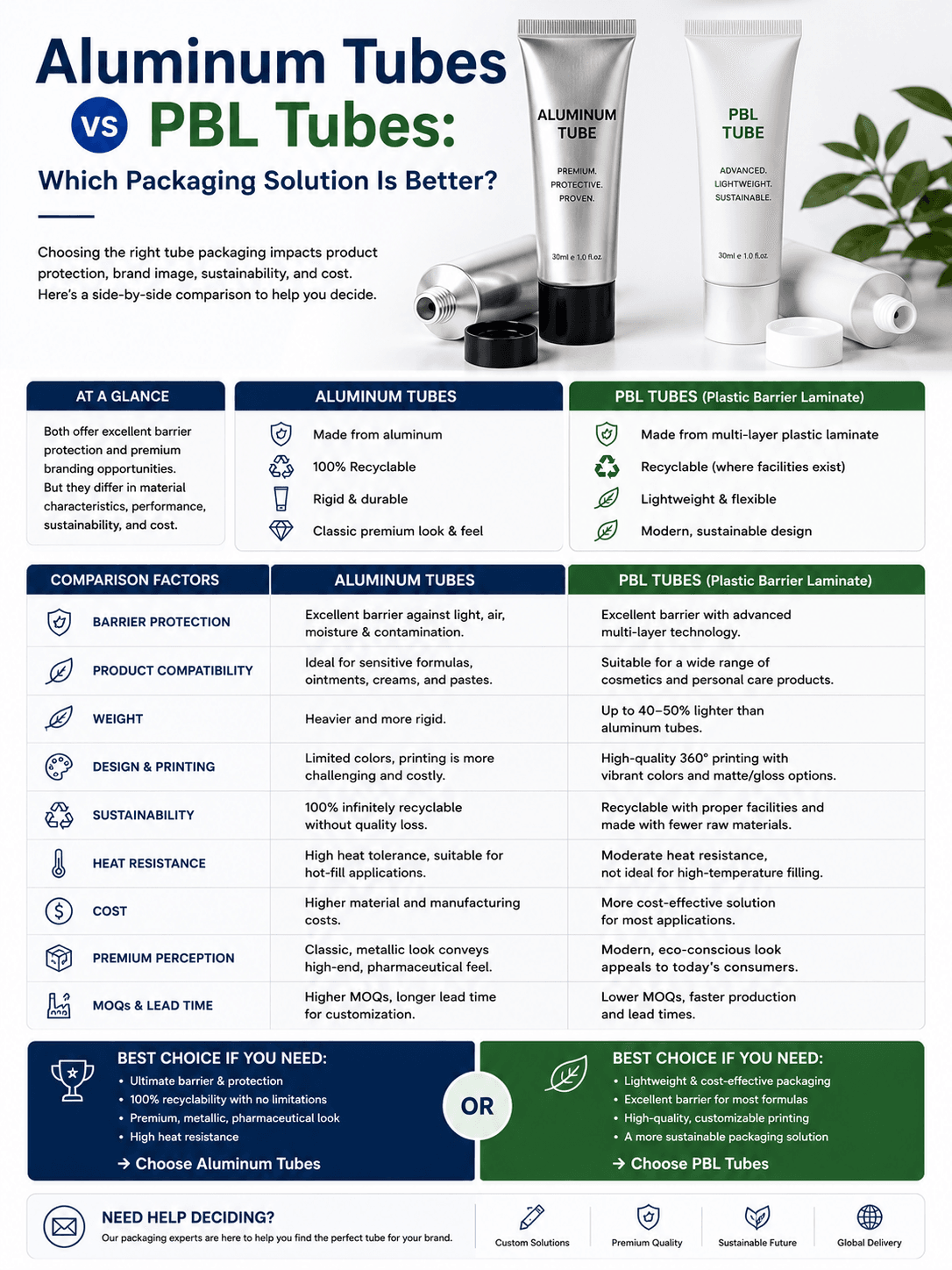
Why Buyers Compare Aluminum Tubes and PBL Tubes
Many purchasing teams are not simply comparing two materials. They are deciding between maximum protection and premium retail presentation.
The Real Purchasing Question
If your formula is highly sensitive to oxygen, moisture, light or air return after dispensing, aluminum tubes may be the safer choice. But if your brand needs better artwork presentation, smoother squeeze recovery, modern cosmetic appearance and high-volume retail consistency, PBL tubes may be more suitable.
The wrong choice can cause poor shelf appearance, formula instability, excessive packaging cost, unsuitable filling performance or weak brand perception.
Xinfly Packaging’s Recommendation Method
Jiangsu Xinfly Packaging Co.,Ltd. evaluates packaging structure based on actual formula behavior, not only material names. We help customers compare aluminum tubes, PBL tubes, ABL tubes, EVOH barrier tubes, PE tubes and PCR options according to barrier requirements, decoration goals, MOQ, sustainability direction and total project cost.
Related guide: How to Choose Cosmetic Tube Materials
What Are Aluminum Tubes?
Aluminum tubes are collapsible metal tubes designed for products that require excellent protection against oxygen, moisture, light and external contamination.
Maximum Barrier and Collapsible Protection
Aluminum tubes are widely used for ointment, pharmaceutical cream, hair color, essential oil balm, medicated skincare and specialty paste products. Their collapsible body helps reduce air return after dispensing, which is valuable for formulas that need better protection during repeated use.
- Excellent oxygen, moisture and light barrier
- Collapsible body helps reduce air backflow
- Suitable for ointments, balms, hair color and active formulas
- Strong option for products requiring maximum formula protection
When Aluminum Tubes Are More Suitable
Choose aluminum tubes when formula protection is more important than tube recovery or premium plastic appearance. Aluminum tubes may show visible creases after squeezing, but they are highly effective for sensitive formulas, pharmaceutical-style products and controlled dispensing applications.
Related page: Aluminum Cosmetic Tubes Manufacturer
What Are PBL Tubes?
PBL means Plastic Barrier Laminate. It is a plastic-based laminate tube structure designed to balance barrier performance, appearance, decoration quality and consumer-friendly squeezing.
Premium Appearance with Practical Barrier Performance
PBL tubes are commonly used for toothpaste, sunscreen, skincare, facial cleanser, hand cream, body lotion and personal care products. Compared with aluminum tubes, PBL tubes usually provide better shape recovery, cleaner surface appearance and stronger design flexibility for retail brands.
- Plastic barrier laminate structure
- Better tube recovery than collapsible aluminum tubes
- Excellent surface for offset printing, silk screen and hot stamping
- Suitable for beauty, oral care and personal care retail packaging
When PBL Tubes Are More Suitable
Choose PBL tubes when your brand needs both product protection and attractive shelf presentation. PBL is often preferred for cosmetic brands that require matte finish, glossy finish, soft-touch effects, sharp graphics, custom colors and a tube body that looks cleaner after consumer use.
Related page: PBL Tubes Manufacturer
Aluminum Tubes vs PBL Tubes: Detailed Comparison
The best packaging solution depends on formula sensitivity, brand positioning, decoration requirements, filling process, sustainability expectations and target cost.
| Comparison Point | Aluminum Tubes | PBL Tubes | Xinfly Packaging Recommendation |
|---|---|---|---|
| Structure | Full aluminum collapsible tube | Plastic Barrier Laminate tube | Choose aluminum for maximum protection; choose PBL for balanced barrier and premium appearance. |
| Barrier Performance | Excellent barrier against oxygen, moisture and light | Good to very good barrier depending on laminate structure | Aluminum is stronger for highly sensitive formulas; PBL works well for many cosmetic and personal care products. |
| Appearance After Use | Permanent creases after squeezing | Better shape recovery and cleaner retail appearance | PBL is better for beauty brands that care about consumer perception after repeated use. |
| Printing Quality | Good, but design flexibility may be more limited | Excellent surface for detailed graphics and premium decoration | PBL is usually preferred for modern cosmetic branding and high-quality retail graphics. |
| Squeeze Feel | Collapsible, controlled dispensing, no recovery | Smoother squeeze feel with better recovery | Aluminum is suitable for ointments; PBL is better for daily-use cosmetics and personal care. |
| Best Applications | Pharmaceutical cream, ointment, hair color, balm, active paste | Toothpaste, sunscreen, skincare, cleanser, hand cream, body lotion | Match the tube to product category, formula risk and brand positioning. |
| Sustainability Positioning | Metal-based packaging with recycling potential depending on market | Plastic laminate direction; structure and recyclability depend on local systems | Confirm sustainability claims based on target market and final material structure. |
| Cost & MOQ | Depends on aluminum thickness, coating, cap and decoration | Depends on laminate structure, diameter, printing, cap and order quantity | Compare total project cost including sampling, tooling, printing, caps and shipping. |
Application Scenarios: When to Choose Aluminum or PBL Tubes
Aluminum tubes and PBL tubes serve different product categories. The correct structure should match formula risk, consumer usage, retail positioning and filling requirements.
Aluminum Cosmetic Tubes
Choose aluminum tubes for balms, ointments, essential oil-based products and active formulas where strong protection and collapsible dispensing are more important than tube recovery.
PBL Tubes
Choose PBL tubes for cosmetic and personal care products that require barrier protection, excellent printing quality, cleaner appearance and better shelf presentation.
Toothpaste Tubes
PBL tubes are commonly used for toothpaste because they offer stable tube body performance, attractive decoration and reliable high-volume production.
Sunscreen Tubes
For sunscreen, PBL is often selected for premium appearance and printing, while aluminum tubes may be considered for special high-protection formulas.
Facial Cleanser Tubes
PBL tubes are suitable for facial cleanser packaging because they support clean graphics, comfortable squeezing and a premium retail look.
Hand Cream Tubes
PBL tubes work well for hand cream and body care products where softness, decoration quality and consumer-friendly appearance are key.
Custom Aluminum & PBL Tube Specifications
Xinfly Packaging supports custom tube development based on material structure, product viscosity, decoration design, filling volume and target market.
| Specification | Available Options | Project Recommendation |
|---|---|---|
| Tube Structure | Aluminum tubes, PBL tubes, ABL tubes, EVOH tubes, PE tubes, PCR tubes | Select by formula sensitivity, desired appearance and sustainability direction. |
| Capacity | 5ml, 10ml, 15ml, 30ml, 50ml, 60ml, 75ml, 100ml, 150ml, 200ml or custom volume | Match retail size, usage amount, travel format, shipment weight and pricing strategy. |
| Diameter | 19mm, 22mm, 25mm, 30mm, 35mm, 40mm, 45mm, 50mm and custom sizes | Diameter affects capacity, design area, filling speed, cap choice and consumer hand feel. |
| Decoration | Offset printing, silk screen printing, hot stamping, labeling, matte finish, glossy finish | PBL is often preferred for complex cosmetic branding; aluminum is better for protection-focused products. |
| Cap & Closure | Screw cap, flip-top cap, nozzle cap, acrylic cap, customized closure options | Choose cap style according to formula viscosity, outlet control and consumer usage habit. |
| Testing Support | Leakage test, sealing test, drop test, compatibility review, visual inspection | Testing helps avoid failure in filling, transportation, storage and end-user use. |
Why Choose Xinfly Packaging for Aluminum and PBL Tube Projects?
Jiangsu Xinfly Packaging Co.,Ltd. provides custom PE, PCR, ABL, PBL and aluminum-related tube packaging solutions for global beauty and personal care brands.
How Xinfly Helps You Reduce Packaging Development Risk
Aluminum and PBL tubes are not interchangeable in every project. Xinfly helps you evaluate protection, appearance, production feasibility and total cost before sampling.
Formula-Based Material Advice
We review formula sensitivity, viscosity, fragrance, oil content, active ingredients and shelf-life expectations before recommending aluminum, PBL, ABL or EVOH structures.
Artwork & Decoration Review
We check artwork complexity, color matching, hot stamping area, matte or glossy finish, printing method and design feasibility before production.
Production Feasibility Control
We evaluate MOQ, cap compatibility, filling method, sealing performance, packing method and export shipping risks before mass production.
How to Customize Aluminum or PBL Tubes with Xinfly
Our structured process helps brands move from material comparison to approved samples and stable mass production.
Project Review
Confirm product type, formula features, capacity, quantity, market and design direction.
Material Advice
Compare aluminum, PBL, ABL, EVOH, PE and PCR options based on real requirements.
Sample Development
Develop tube samples for structure, printing, cap matching and appearance approval.
Mass Production
Control materials, printing, tube forming, assembly, appearance and packing quality.
Inspection & Shipment
Complete leakage checks, carton verification, final QC and international shipping support.
Real Packaging Projects from Xinfly Packaging
Material selection becomes easier when connected to actual packaging projects. Below are examples showing how different barrier structures are evaluated for real products.
SPF50 Sunscreen Tube Packaging Project
For sunscreen formulas requiring strong protection and premium shelf appearance, selecting the right barrier structure is critical. This project demonstrates how packaging decisions affect formula stability and consumer experience.
View Case StudyFacial Cleanser Tube Packaging Project
Facial cleanser packaging requires a balance between appearance, decoration quality, squeeze comfort and production efficiency. This project highlights considerations when comparing laminate and other tube structures.
View Case StudyCustom Body Lotion Tubes Project
Body lotion packaging often focuses on branding, printing quality and consumer perception. This project shows how tube structure selection influences product positioning.
View Case StudyFrequently Asked Questions
Answers to common questions from skincare, pharmaceutical, oral care and personal care brands comparing Aluminum and PBL packaging solutions.
1. What is the difference between Aluminum Tubes and PBL Tubes?
Aluminum tubes are made entirely from aluminum and provide maximum protection. PBL tubes use a plastic barrier laminate structure that balances protection, appearance and printing quality.
2. Which offers stronger barrier performance?
Aluminum tubes generally provide stronger protection against oxygen, moisture and light. PBL tubes still offer very good barrier performance for many cosmetic and personal care products.
3. Which is better for toothpaste packaging?
PBL tubes are commonly used for toothpaste because they provide strong barrier properties, excellent printing quality and efficient large-scale production.
4. Which is better for pharmaceutical creams?
Aluminum tubes are often preferred for ointments and pharmaceutical creams because their collapsible body reduces air return after dispensing.
5. Are Aluminum Tubes suitable for skincare products?
Yes. Aluminum tubes can be used for active skincare products, balms and specialty formulations where maximum protection is required.
6. Are PBL Tubes suitable for sunscreen products?
Yes. PBL tubes are commonly used for sunscreen packaging due to their strong appearance, decoration quality and practical barrier performance.
7. Which option offers better printing quality?
PBL tubes generally provide better printing flexibility and cleaner graphics for cosmetic branding and retail packaging.
8. Which tube has better appearance after use?
PBL tubes typically recover their shape better after squeezing. Aluminum tubes remain creased because of their collapsible structure.
9. Can Xinfly Packaging customize both tube types?
Yes. Xinfly Packaging supports custom aluminum tubes and PBL tubes with different capacities, diameters, cap styles and decoration options.
10. What certifications does Xinfly Packaging support?
Depending on project requirements, Xinfly Packaging can support ISO, SGS, RoHS, PCR Plastic GRS and related documentation.
11. Can I request samples before production?
Yes. Sample testing is highly recommended before mass production to verify compatibility, appearance, filling performance and barrier expectations.
12. How do I choose between Aluminum and PBL Tubes?
The decision depends on formula sensitivity, barrier requirements, branding goals, appearance expectations, filling method and budget. Xinfly Packaging can help evaluate the best option.
Need Help Choosing Between Aluminum and PBL Tubes?
Whether you are developing skincare, sunscreen, toothpaste, pharmaceutical cream, ointment or personal care products, Xinfly Packaging can help you compare Aluminum Tubes, PBL Tubes, ABL Tubes and EVOH Barrier Tubes based on real packaging requirements.
Get Free Packaging Consultation View Certifications