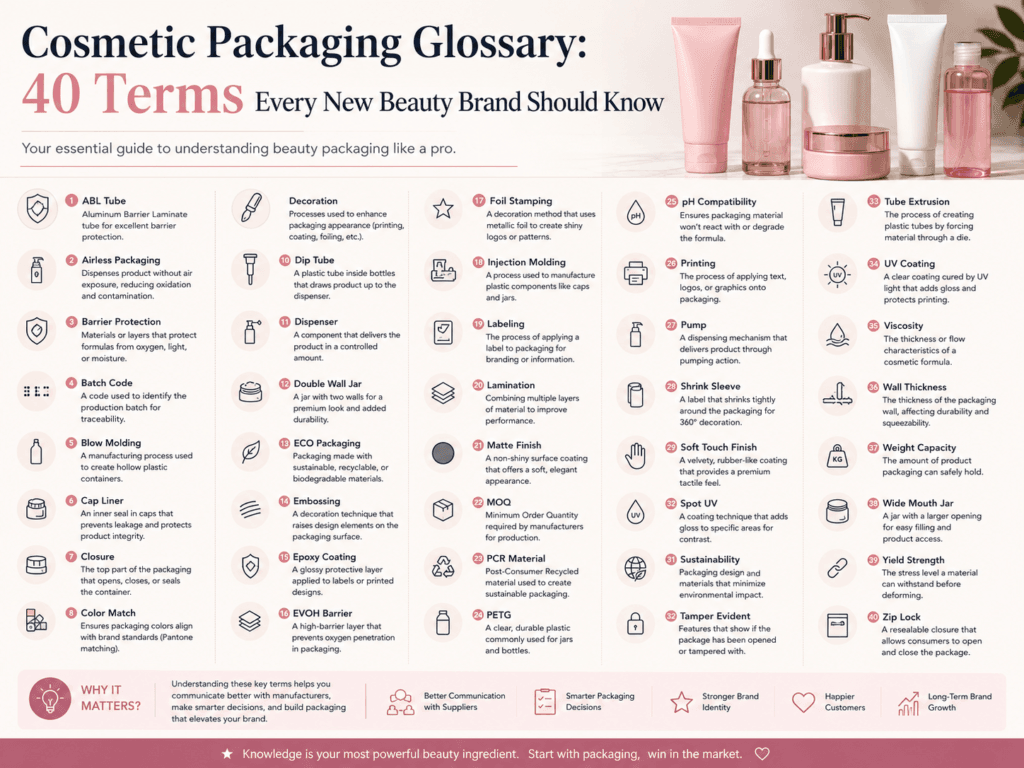
If you’re starting a beauty brand, you need a glossary that makes sense of Cosmetic Packaging terms. Knowing these words helps you choose the right materials, follow rules, and build a brand that stands out. This glossary gives you quick answers and saves you time when you face tough decisions. You can use the glossary as your go-to tool on your cosmetics journey.
Tip: Keep this glossary handy. It can help you avoid mistakes and stay confident as you grow your brand.
Key Takeaways
- Learn important cosmetic packaging words to help you make smart choices for your beauty brand.
- Pick airless pumps to keep products fresh longer and cut down on waste. This helps keep your products safe.
- Use FSC-certified materials to show you care about the environment. This can bring in customers who like eco-friendly brands.
- Use tamper-evident packaging to help people trust your brand and keep products safe for buyers.
- Keep this glossary close so you can look up words and better understand cosmetic packaging.
Cosmetic Packaging: A–E
Airless Pump
Airless pumps are common in today’s cosmetic packaging. They stop air from getting into your product. This helps your product stay fresh and last longer. The pump pushes out almost all the product, so there is less waste. Airless pumps also keep out bacteria and other germs. This makes them a good choice for sensitive or fancy cosmetics.
| Benefit | Description |
|---|---|
| Extend shelf life | Stops air from spoiling your product. |
| Reduce contamination risk | Keeps out germs and other bad things. |
| Minimize product waste | Gives you the right amount, so you waste less. |
If you want your product to be safe and work well, think about using this kind of packaging.
Ampoule
An ampoule is a tiny, sealed bottle that holds one dose. You often see ampoules used for serums or special treatments. These need to stay pure until you use them. When you open an ampoule, you get a fresh and clean dose. Ampoules are great for products that need extra protection from air and light.
Applicator
An applicator is a tool that helps you put on a cosmetic product. Brushes, sponges, wands, and built-in tips are all applicators. The right applicator makes your product easier to use. It can also make your product look better to customers. Applicators help you use just the right amount, so you do not waste any product.
Batch Code
A batch code is a special number or code on your packaging. It tells you when and where your product was made. This is important for checking quality and safety. If something goes wrong, you can find the batch and fix the problem fast.
| Requirement | Description |
|---|---|
| Batch Number | Needed for tracking; sometimes only on the outside box. |
| Lot Code | Like a batch number; helps with tracking and safety. |
You must have a batch code to follow the law and keep your customers safe.
Blister Pack
A blister pack is a package that seals your product between plastic and a backing. The backing is usually paper or foil. Blister packs are used for pills, capsules, and some single-use cosmetics. Each piece is kept apart and safe from air and water. This makes it easy for people to use one at a time.
Cap
A cap is what closes your bottle, tube, or jar. Caps come in many shapes and can be made from plastic or metal. They keep your product closed and stop leaks or spills. Some caps have special features, like flip-tops or ones that are hard for kids to open. These features make your product safer and easier to use.
Carton
A carton is a box made of paper or cardboard. It holds your product and its main packaging. Cartons protect your product during shipping. They also give you space for your brand and information. Cartons are easy to print on and recycle, so many brands use them.
- Most common carton materials:
- Paper & Cardboard: Easy to print, recycle, and carry.
Closure
A closure is anything that seals your product. This includes caps, lids, pumps, and sprayers. Closures keep your product fresh and stop leaks. They also help prevent tampering and keep your product safe until it is opened.
- Plastic caps and closures are strong, can be closed again, and show if someone tried to open them.
- Tamper-evident seals and closures do many jobs and work well.
- These are used a lot in cosmetics to keep products safe and in good shape.
Component
A component is any part of your cosmetic packaging. This could be the bottle, cap, pump, or even the label. When you design your packaging, you need to think about how each part works together. The right components keep your product safe, easy to use, and nice to look at.
Dropper
A dropper lets you use your product one drop at a time. Droppers are often used with serums, oils, or other liquids. Droppers help you use just the right amount and not waste any. They also keep the rest of the product safe from germs.
Emulsion
An emulsion is a mix of two liquids that do not blend, like oil and water. Many creams and lotions use emulsions to feel smooth. The type of emulsion you pick changes how stable your product is and how well it works.
- Emulsions can change how well preservatives work, which helps your product last longer.
- The kind of emulsion (oil-in-water or water-in-oil) changes how preservatives work.
- Smaller emulsion droplets (nanoemulsions) can help stop germs, which keeps your product safe.
Note: Emulsions are important for how your product feels and how long it lasts. Make sure you know this term when you make new cosmetics.
Common Packaging Materials (A–E):
- Glass: Strong, can be recycled, and used for fancy products.
- Plastic: Light, does not break, and includes PET and HDPE.
- Metals: Aluminum and tin are tough and look fancy.
- Paper & Cardboard: Used for boxes and extra packaging, easy to print and recycle.
Cosmetic packaging can affect the environment a lot. Old materials, like new plastics, cause more pollution and waste. Glass can be recycled but takes a lot of energy to make and move. Lighter materials like PET and HDPE are better for the earth. You can also use biodegradable or recycled materials to make your packaging greener.
If you keep this glossary close, you will make better choices for your brand and your customers.
Cosmetic Packaging: F–M
Foil Seal
A foil seal sits under the cap or closure. You see it when you open a new jar or bottle. This seal keeps your product fresh and stops leaks. It also shows if someone has opened the package before you. Many brands use foil seals to build trust with customers.
Fragrance Strip
A fragrance strip is a small piece of paper that holds a scent. You find these in magazines or sample packs. They let you try a perfume or scented product without opening the full package. Fragrance strips help you test before you buy.
FSC Certification
FSC certification means your packaging comes from forests that people manage responsibly. This label shows you care about the planet and the people who live near these forests. When you use FSC-certified cartons or boxes, you support healthy forests and fair work. Customers notice this and feel good about your brand.
FSC certification helps protect nature and supports local communities. It also gives your customers confidence in your packaging choices.
Glass
Glass is a classic material in cosmetic packaging. It looks fancy and keeps your product safe from air and light. You can recycle glass, which helps the environment. Many luxury brands use glass for creams, serums, and perfumes.
HDPE
HDPE stands for high-density polyethylene. This plastic is strong and light. You see it in bottles and tubes for lotions or shampoos. HDPE is safe for cosmetics and easy to recycle.
Inner Seal
An inner seal is a thin layer under the cap or lid. It keeps your product fresh and stops leaks. Inner seals also show if someone has tampered with your product.
Jar
A jar is a wide container with a screw-on lid. You use jars for creams, balms, and masks. Jars let you scoop out just the right amount of product.
Labeling
Labeling means all the words and pictures on your packaging. Labels tell you what the product is, how to use it, and what’s inside. Good labeling follows the rules and helps you trust the product.
| Aspect | Description |
|---|---|
| Safety | Regulations make sure materials are safe and keep the product stable. |
| Transparency | Labels must show clear information about ingredients and use. |
| Environmental Impact | Labels encourage brands to use eco-friendly materials. |
| Market Access | Labels must meet local rules so you can sell in different places. |
Laminate Tube
A laminate tube is a soft, squeezable tube made from layers of plastic and sometimes metal. You see these tubes for toothpaste, creams, or gels. Laminate tubes protect your product from air and light.
MOQ
MOQ stands for minimum order quantity. This is the smallest number of packages you can order from a supplier. MOQs can feel high for small brands, but they help keep costs down for big orders.
| Type of Packaging | MOQ Range |
|---|---|
| Plastic bottles and jars | 3,000–10,000 pcs |
| Glass containers | 1,000–5,000 pcs |
| Tubes | 5,000–20,000 pcs |
| Paperboard boxes | 500–3,000 pcs |
| Droppers and pumps | 3,000–5,000 pcs |
Low MOQs help you test your product without spending too much money.
MSDS
MSDS stands for Material Safety Data Sheet. This sheet tells you if your product is safe to ship and store. It lists any dangers and how to handle the product safely. You need an MSDS to follow the rules and keep everyone safe.
Tip: Always ask for an MSDS when you work with new ingredients or packaging.
This glossary section covers key terminology you will see often in cosmetic packaging. Knowing these words helps you make smart choices for your cosmetics brand.
Sustainable Cosmetics Packaging: N–S
Nozzle
A nozzle lets you control how much product comes out. You see nozzles on sprays, pumps, and tubes. They help you use just the right amount and keep things clean. Nozzles make your cosmetics easy to apply and help prevent waste.
Outer Packaging
Outer packaging is the layer that protects your product during shipping and on store shelves. It can be a box or wrap. This layer gives you space for branding and important info. You want outer packaging to look good and keep your product safe.
PCR Material
PCR material stands for post-consumer recycled material. Brands use PCR to make packaging from recycled plastics. This helps cut down on waste and saves resources. Many companies now use at least 50% PCR in their packaging. You show your customers you care about the planet when you use PCR.
PET
PET is a type of plastic used in cosmetic packaging. It is light and strong. PET bottles weigh much less than glass bottles, which means lower carbon emissions when you ship them. Brands often use PET with PCR material to make packaging even greener.
- PET packaging is lighter than glass.
- Using PCR in PET reduces the need for new plastics.
- Many brands use PET with at least 50% PCR content.
Primary Packaging
Primary packaging touches your product directly. This includes bottles, jars, and tubes. You want this layer to keep your product safe and fresh. Primary packaging is important for both quality and safety.
Pump
A pump lets you get the product out without touching it. Pumps work well for lotions, serums, and soaps. They help you use the right amount and keep the rest of the product clean.
Recyclable
Recyclable packaging can be reused to make new products. You help the environment when you choose recyclable materials. Many customers look for recyclable packaging because they want to make good choices.
Eco-friendly packaging aligns with growing environmental awareness. Many people want sustainable packaging, but some still care about convenience and looks. Consumer preferences can drive big changes in the industry.
Sachet
A sachet is a small packet that holds one dose. You see sachets for samples or travel sizes. They use less material and are easy to carry.
Secondary Packaging
Secondary packaging holds your primary packaging. It can be a box or sleeve. This layer protects your product and gives you more space for branding.
Shrink Wrap
Shrink wrap is a thin plastic film that wraps around your product. It keeps things clean and safe. Shrink wrap can show if someone has opened your product.
Silkscreen Printing
Silkscreen printing puts designs and words right onto your packaging. This method makes your product look sharp and lasts a long time.
Education and awareness about the environmental impact of choices can lead people to pick sustainable alternatives. You can use this glossary to make smart decisions for your cosmetics brand.
Cosmetics Packaging: T–Z
Tamper-Evident
Tamper-evident packaging shows if someone opened your product. You might see seals, shrink bands, or special closures that break. These features keep your cosmetics safe from germs and cheating. More people want safe products now. Brands use tamper-evident packaging to earn trust. If you use tamper-resistant packaging, you lower recall risks. This also keeps your brand strong and stops fake products.
Tube
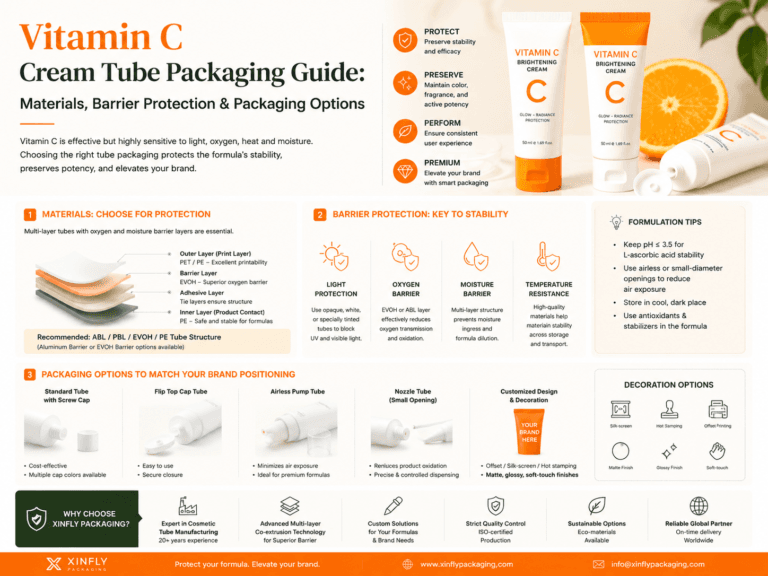
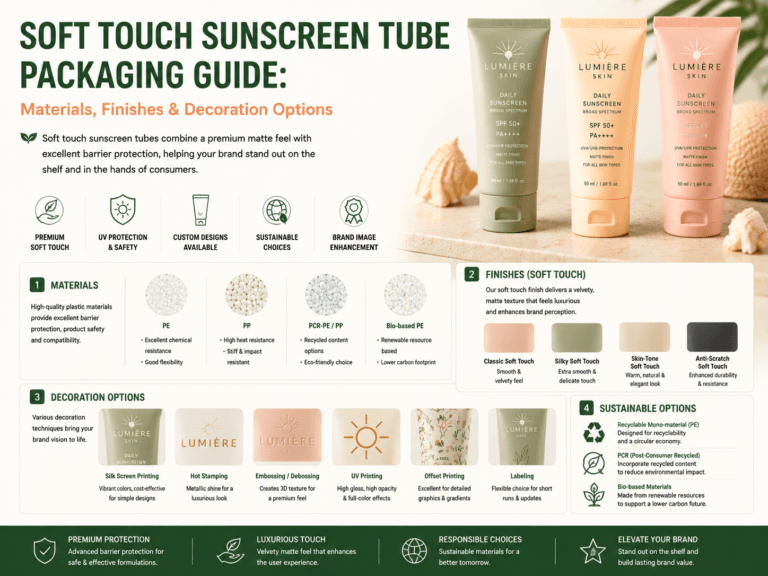
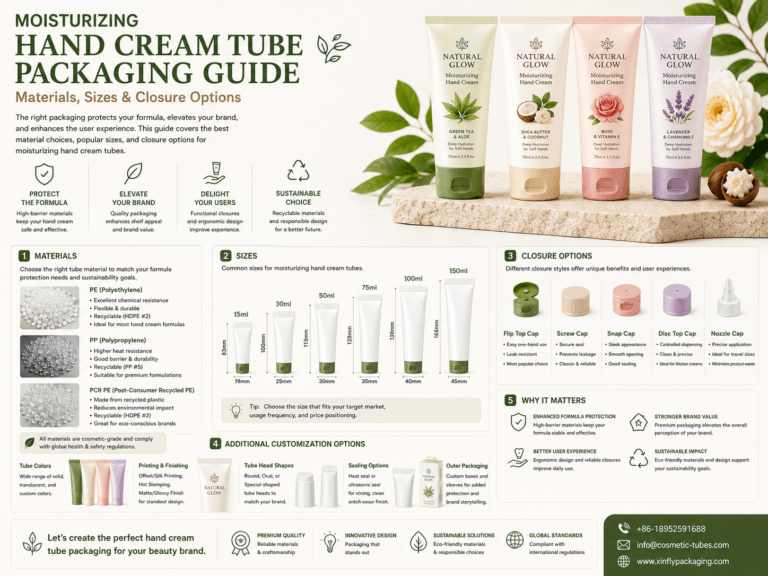
Tubes are popular because they are easy to squeeze and carry. You find tubes for creams, gels, and lotions. New trends use eco-friendly materials and cool designs. Brands use recycled plastics and monomaterial tubes to help the earth. Custom designs make your product stand out. Technology makes tubes work and look better. Jiangsu Xinfly Packaging Co.,Ltd. makes custom PE, PCR, ABL, and PBL tubes for beauty brands. They have certifications like ISO, RoHS, SGS, PCR Plastic GRS, and third-party testing. You can check their certifications here and here.
Tertiary Packaging
Tertiary packaging protects your product during shipping and storage. You use big boxes, pallets, or crates to move many items at once. This layer keeps everything safe until it gets to stores or customers.
Unit Carton
A unit carton is a box that holds one product. You use unit cartons for branding and information. They protect your cosmetics and make them look good on shelves.
UV Coating
UV coating puts a shiny layer on your packaging. It protects labels from scratches and makes colors bright. You can cover the whole label or just parts like your logo. Check out this table:
| Feature | Description |
|---|---|
| UV Varnish | Thin layer for protection |
| Application | Full or spot coverage |
| Aesthetic | Glossy look for design elements |
Vial
A vial is a small glass or plastic container. You use vials for samples, serums, or single-use products. Vials keep your product safe and easy to use.
Wadding
Wadding is a soft material inside caps or lids. It stops leaks and keeps your product fresh. You see wadding in jars and bottles.
Window
A window is a clear part of your packaging. It lets customers see your product before buying. Windows make your cosmetics look nice and help shoppers trust what’s inside.
Wrap Label
A wrap label goes all the way around your product. You use wrap labels for branding, instructions, and safety info. They give you lots of space to share your story.
Keep this glossary close. You will make smarter choices for your cosmetics brand.
When you master the glossary of packaging terms, you set your beauty brand up for success in the cosmetic industry. You make smarter choices, follow rules, and build trust with your customers.
- Effective packaging shows your product’s value and quality.
- Knowing these terms helps you create packaging that feels trustworthy and stands out.
Keep this glossary close as your brand grows. Keep learning, ask experts for advice, and explore new ideas to stay ahead.
Frequently Asked Questions About Cosmetic Packaging Glossary Terms
Learn essential cosmetic packaging glossary terms for new beauty brands, including primary packaging, secondary packaging, MOQ, OEM, ODM, PE tubes, PCR tubes, ABL tubes, PBL tubes, decoration, closures and custom cosmetic tube manufacturing.
What is cosmetic packaging?
What is primary packaging in cosmetics?
What is secondary packaging for beauty brands?
What does MOQ mean in cosmetic packaging?
What is OEM cosmetic packaging?
What is ODM cosmetic packaging?
What are PE cosmetic tubes?
What are PCR cosmetic tubes?
What are ABL and PBL tubes?
What does cosmetic tube decoration mean?
What are caps and closures in cosmetic packaging?
Why should new beauty brands learn cosmetic packaging terms?
Need Help Understanding Cosmetic Packaging Terms?
Xinfly Packaging helps new beauty brands choose custom cosmetic tubes, materials, finishes, caps and OEM packaging solutions with clear guidance, flexible MOQ, sample development and professional manufacturing support.