
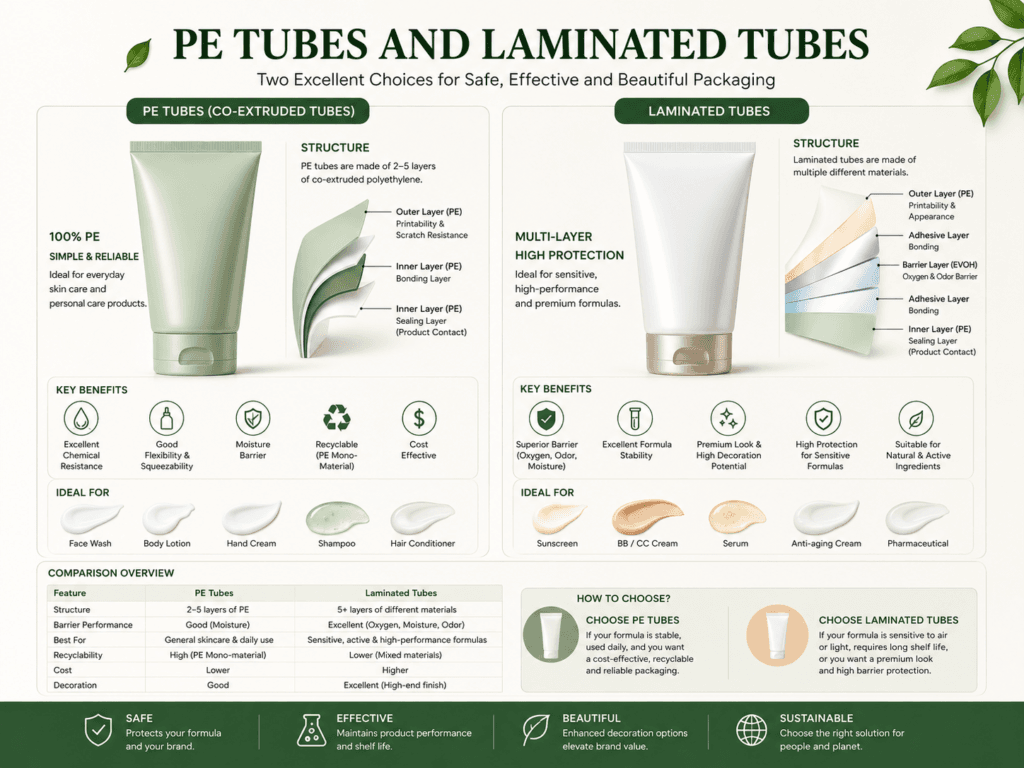
When choosing the best tube for your makeup product, it’s essential to consider your brand’s specific needs. Both PE Tubes and Laminated Tubes are excellent options, each offering unique advantages. PE Tubes are known for their flexibility and cost-effectiveness, while Laminated Tubes provide superior protection for sensitive formulas. Here’s a quick comparison of the key factors to consider:
| Decision Factor | PE Tubes | Laminated Tubes |
|---|---|---|
| Product Sensitivity | Good for stable formulas | Best for sensitive or high-value |
| Sustainability | Cost-efficient, recyclable | Supports eco-friendly branding |
| Customization | Flexible shapes and sizes | Premium look, 360° printing |
| Brand Fit | Matches value-focused brands | Ideal for premium positioning |
In summary, when weighing PE Tubes vs Laminated Tubes, think about what matters most for your product and brand identity.
Key Takeaways
- PE tubes bend easily and cost less. They work well for products used every day. These products do not need extra safety.
- Laminated tubes protect better. They are great for expensive or sensitive cosmetics. These products must stay fresh.
- Think about your brand when picking a tube. PE tubes are good for brands that focus on value. Laminated tubes are better for brands that want to look fancy.
- You can change both tube types. Laminated tubes look more fancy. They can have bright designs.
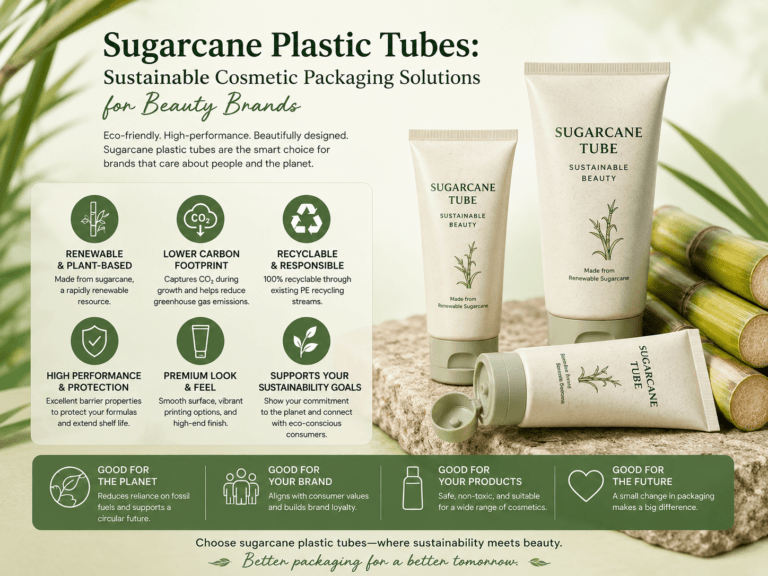
- Think about the environment. PE tubes are simple to recycle. Some laminated tubes use materials that are good for the planet.
PE Tubes vs Laminated Tubes Overview
What Are PE Tubes?
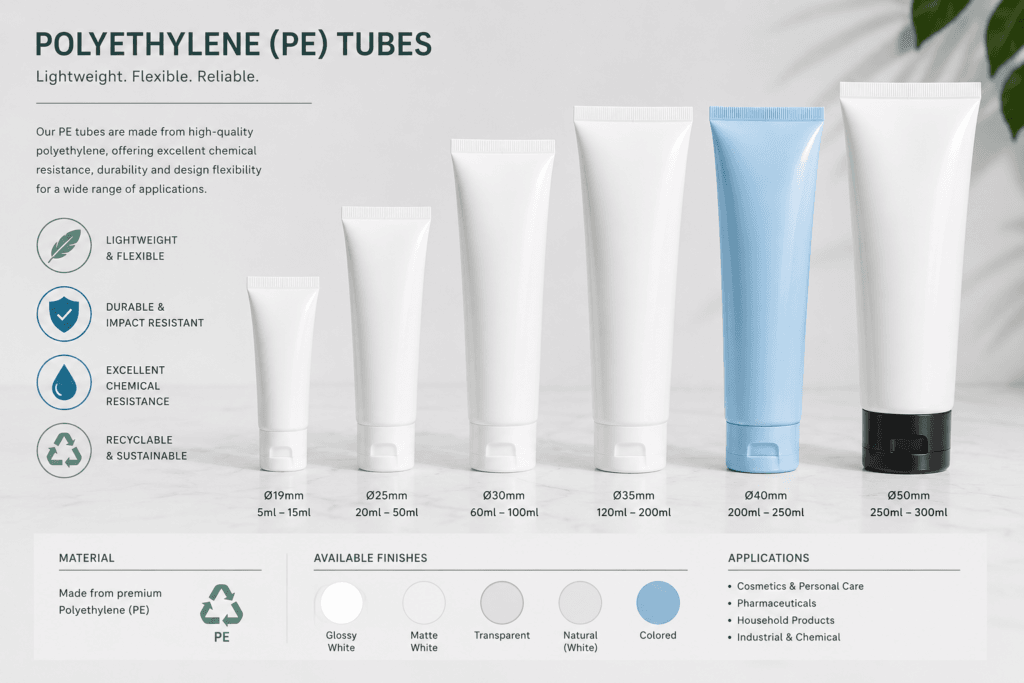
PE tubes are made from a plastic called polyethylene. This plastic feels soft and bends easily. You can squeeze these tubes without much effort. They are good for things you use every day. The material is light but also strong. It helps stop leaks and spills. PE tubes come in many shapes and sizes. This means you have lots of choices for packaging. If you want something cheap and easy to recycle, PE tubes are a good pick.
Tip: PE tubes are best for products that do not need extra protection from air or light.
What Are Laminated Tubes?
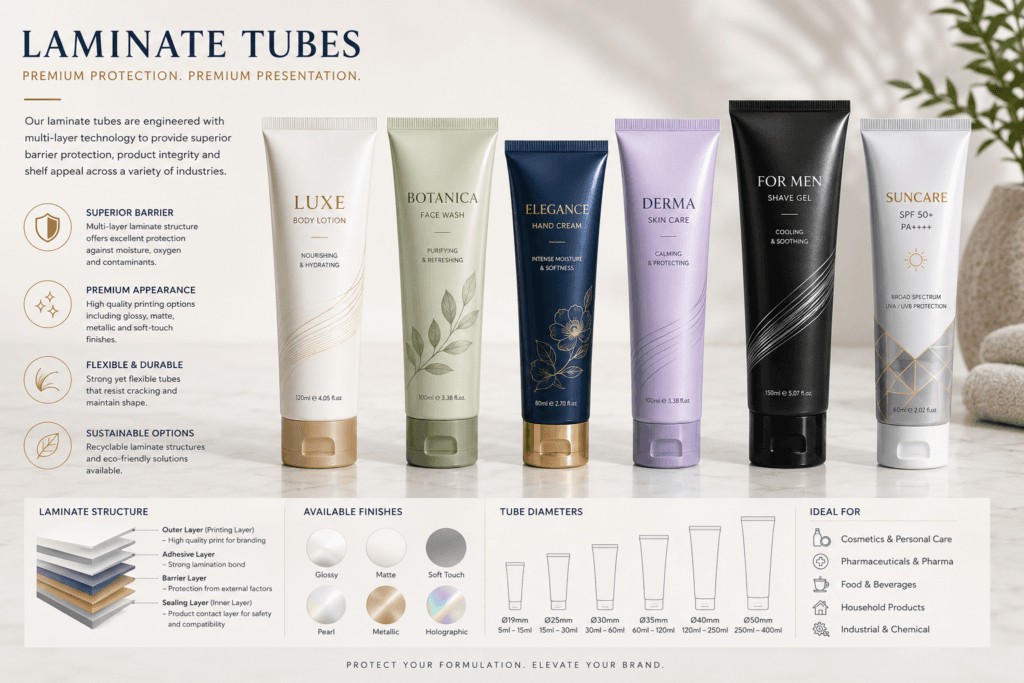
Laminated tubes are made with layers of different materials. These layers can be plastic and aluminum. The layers are pressed together tightly. This makes a strong wall against air, water, and light. If your product is sensitive, laminated tubes keep it safe and fresh. These tubes look smooth and shiny. This can help your brand get noticed in stores. You can print bright colors and designs all over the tube. This makes your packaging stand out.
Common Uses in Cosmetic Packaging
Both types of tubes are used for cosmetics you see in stores. But each one works better for certain products. Here is a quick look at how brands use them:
| Type of Tube | Common Products Packaged | Advantages | Limitations |
|---|---|---|---|
| PE Tubes | Lotions, gels, ointments | Affordable, flexible, durable | Not ideal for oxygen-sensitive products |
| Laminated Tubes | Sunscreens, ointments, pharmaceutical creams | Excellent barrier protection, customizable design | Slightly higher cost, less recyclable |
When you compare pe tubes vs laminated tubes, think about what your product needs most. If you want simple and cheap packaging, PE tubes are a good choice. If you need more protection or a fancy look, laminated tubes might be better.
Key Differences in Cosmetic Tubes
Structure and Materials
You may ask why pe tubes and laminated tubes are not the same. The main reason is how they are made and what they are made from. PE tubes use polyethylene. This plastic is soft and bends easily. Laminated tubes have layers of plastic and sometimes aluminum. These layers make a strong wall. They keep air, water, and light away from your product.
Look at this table to see how the tube’s build changes how well it protects your product and how long it lasts:
| Type of Tube | Barrier Properties | Impact on Shelf Life |
|---|---|---|
| Laminated Tubes | Great at blocking air, water, light, and germs | Makes products last 2-3 times longer, keeps them strong |
| Aluminum Laminates | Stops almost all air, water, and light | Best for very sensitive products needing top protection |
| Plastic Laminates | More bendy and easy to use | Good for most cosmetics that need better safety |
If you sell creams that spoil fast or cost a lot, laminated tubes help them stay fresh. PE tubes are good for products that do not need much extra safety. Both types are strong, but laminated tubes help your products last longer on the shelf.
Appearance and Branding
If you want your product to get noticed, how it looks is important. PE tubes come in many shapes and sizes. You can use different ways to print bright designs on them. Laminated tubes look fancy and can show off sharp, colorful pictures. They shine in stores and let you print all around the tube.
Here is a quick table to compare:
| Feature | PE Tubes | Laminated Tubes |
|---|---|---|
| Cost | Usually cheaper | Costs a bit more than PE tubes |
| Flexibility | Very bendy with lots of printing choices | Not as bendy because of the layers |
| Appearance | Can have bright, colorful designs | Looks fancy with sharp, high-quality images |
| Barrier Protection | Okay at keeping things out | Very good at keeping things out |
| Recyclability | Easier to recycle | Harder to recycle because of mixed layers |
| Ideal For | Cheaper products | Expensive products that need more safety |
You can use digital printing for clear pictures. Silk screen printing makes colors stand out. Hot stamping adds shiny metal touches. Some brands use special coatings or mix materials to use less plastic. If you want your brand to look fancy, laminated tubes are a good pick. PE tubes are great for saving money and having lots of design options.
Tip: Think about what your product needs and what your brand wants to show. Picking the right tube and printing style can make your packaging look great!
Comparing Performance for Cosmetic Packaging
Barrier Properties and Product Protection
You want your cosmetic tubes to keep products safe. PE tubes and laminated tubes protect in different ways. Laminated tubes have layers of plastic and sometimes aluminum. These layers block air, water, and light. Sensitive creams and serums stay safe for longer. PE tubes are made from plastic. They work well for daily skincare. They stop leaks and resist chemicals. But they do not block air and light as much.
Take a look at this table to see how materials work:
| Property | ABL Laminate Tubes | PBL Laminate Tubes | PE Tubes |
|---|---|---|---|
| Oxygen Barrier | >99% blockage | Effective, less than ABL | Moderate |
| Light Barrier | High | Less effective | Low |
| Moisture Barrier | High | Moderate | Moderate |
| Chemical Resistance | Strong | Good for mild formulas | Excellent |
| Recyclability | Limited | 100% recyclable | Up to 90% |
ABL laminate tubes give the best protection for sensitive products. PE tubes are good for stable formulas and daily items. Laminated tubes help keep expensive creams safe and clean.
Sustainability and Environmental Impact
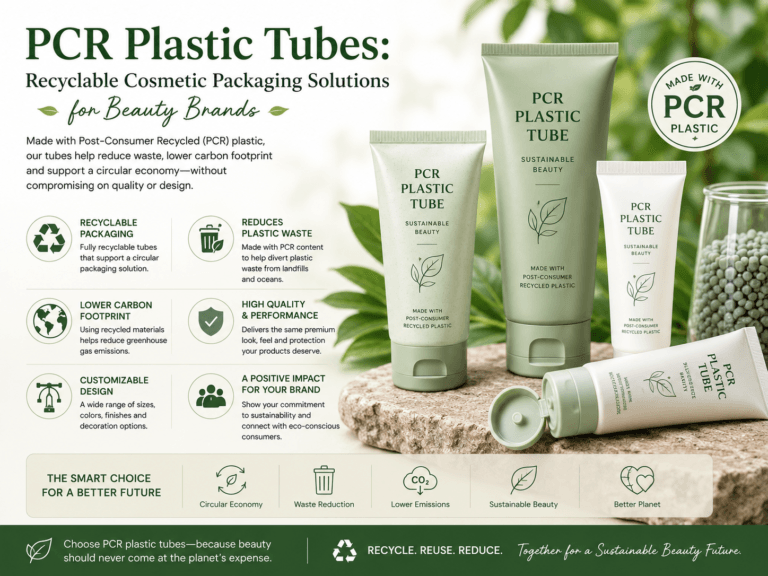
Many brands care about the environment. You may want eco-friendly packaging. PE tubes can be recycled up to 90%. PCR tubes reach about 70%. Laminated tubes with aluminum are harder to recycle. Some brands use new technology to make recycling easier.
Here is a quick table:
| Type of Tube | Recyclability Rate |
|---|---|
| PE Cosmetic Tubes | Up to 90% |
| PCR Cosmetic Tubes | Around 70% |
If your brand cares about the planet, PE tubes and PCR tubes are good picks. Laminated tubes protect well but may not fit all green goals. You can ask suppliers about new laminated tubes with eco-friendly materials.
Cost and Flexibility
Cost and flexibility matter when picking packaging. PE tubes cost less and fit many products. You can choose different shapes and sizes. Laminated tubes cost more because of their layers. They protect better but are less flexible.
Here are some points to think about:
- PE tubes are cheap and easy to change.
- Laminated tubes cost more but protect sensitive items.
- Both types come in many sizes for cosmetics.
If you want to save money and need flexible packaging, PE tubes are smart. Laminated tubes are best for fancy products needing extra safety.
Customization and Printing
You want your packaging to stand out. Laminated tubes let you use digital printing for cool graphics. You can print all around the tube. This makes your product look special and grabs attention. You can add shiny effects, textures, and labels. PE tubes also allow bright designs. Laminated tubes give more creative choices.
Check out this table:
| Feature | Description |
|---|---|
| Visual Impact | Makes your product look good and stand out on shelves |
| Creative Freedom | Lets you use detailed graphics and branding all over the tube |
| Premium Branding | Helps attract buyers and show off your brand |
You can use foil stamping, embossing, and hot stamping for a fancy look. Laminated tubes are great for brands wanting luxury packaging.
User Experience
People care about how a product feels and works. PE tubes are light and bendy. You can squeeze them easily. Laminated tubes feel strong and still squeeze well. They protect sensitive products and help them last longer.
Here is a table comparing user experience:
| Feature | PE Tubes | Laminated Tubes |
|---|---|---|
| Flexibility | Flexible and lightweight | Slightly less flexible |
| Ease of Squeezing | Easy to squeeze | Still easy to squeeze |
| Barrier Protection | Good against moisture and oxygen | Excellent against oxygen, moisture, and light |
| Ideal for Sensitive Products | Not ideal for oxygen/light sensitive products | Ideal for sensitive products, extends shelf life |
People often see laminated tubes as higher quality. They like the extra protection for luxury products. PE tubes work well for creams and gels used every day.
Tip: Think about what your product needs and what your buyers want. Pick the tube that fits your brand’s style and function.
Pros and Cons of PE and Laminated Tubes
PE Tubes: Pros and Cons
PE tubes are plastic squeeze tubes. They are easy to bend and cheap to buy. You can squeeze them, and they go back to their shape. These tubes are good for lotions, gels, and things you use every day. If you want to save money, PE tubes are a smart choice.
Pros:
- They are light and bendy.
- You can buy a lot for less money.
- They are easy to recycle, which helps the planet.
- You can pick from many shapes and sizes.
Cons:
- They do not protect products from air or water very well.
- They do not look as fancy as some other tubes.
- They may not keep special creams fresh for a long time.
Tip: If your product does not need strong protection, PE tubes are a good and useful choice.
Laminated Tubes: Pros and Cons
Laminated tubes look fancy and keep products safe. They have layers that block air, water, and light. If you sell expensive creams or serums, these tubes give extra safety. You can also print bright and cool designs all over the tube.
Pros:
- They protect sensitive or costly products very well.
- You can print colorful designs all around the tube.
- They feel smooth and strong when you hold them.
Cons:
- They cost more than PE tubes.
- They are harder to recycle, which is not as good for the earth.
- They do not bend as much as PE tubes.
| Tube Type | Best For | Main Drawback |
|---|---|---|
| PE Tubes | Everyday cosmetics | Not as strong at blocking air and water |
| Laminated Tubes | Fancy, sensitive items | Cost more and are less eco-friendly |
When you look at pe tubes vs laminated tubes, think about what is most important for your brand. Do you want the best protection, or do you care more about price and helping the earth? Your choice will change how your packaging looks and works for everyone who buys it.
Choosing the Right Cosmetic Tube for Your Brand
When to Choose PE Tubes
You want packaging that fits your product and budget. PE tubes work well for many cosmetics. They are flexible and affordable. These tubes are made of plastic. There are different types of PE tubes. Each type has its own strengths. Look at this table to see which PE tube is best for your product:
| PE Type | Flexibility | Barrier Protection | Cost | Best Use |
|---|---|---|---|---|
| LDPE | High | Low | Low | Soft creams, travel tubes |
| MDPE | Medium | Medium | Medium | Ointments, richer creams |
| HDPE | Low | Medium-High | Higher | Thick gels, durable tubes |
PE tubes are strong and light. They are good for lotions, gels, and daily creams. You can pick different shapes and sizes. PE tubes are easy to recycle. This helps the environment. If you want to save money and use good materials, PE tubes are a smart choice.
Tip: PE tubes are best for stable formulas. They do not need extra protection from air or light.
When to Choose Laminated Tubes
Sometimes your product needs more safety. Laminated tubes have layers that keep out air, water, and light. They are great for sensitive or expensive cosmetics. You might use laminated tubes for vitamin C serums, liquid lipsticks, or creams that spoil fast.
Here’s why brands pick laminated tubes:
- They protect sensitive products very well.
- You can print bright designs on the tube.
- They help your product stand out in stores.
- They give good protection and cost less than full aluminum.
If you want your packaging to look fancy and keep products fresh, laminated tubes are a good choice. Some laminated tubes use eco-friendly materials. This helps your brand be more green.
Note: Laminated tubes are best when you need both strong protection and cool branding.
Decision Factors for Cosmetic Brands
You have a lot to think about when picking pe tubes or laminated tubes. Here’s a quick checklist to help you decide:
- Is your formula sensitive to air, light, or water? Laminated tubes protect better.
- Do you want creative designs for your brand? Both tube types allow custom printing.
- Are you focused on helping the planet? PE tubes and some laminated tubes are recyclable and use eco-friendly materials.
- Do you need to save money? PE tubes are cheaper for big orders.
- Does your brand want a fancy look? Laminated tubes look high-end and catch attention.
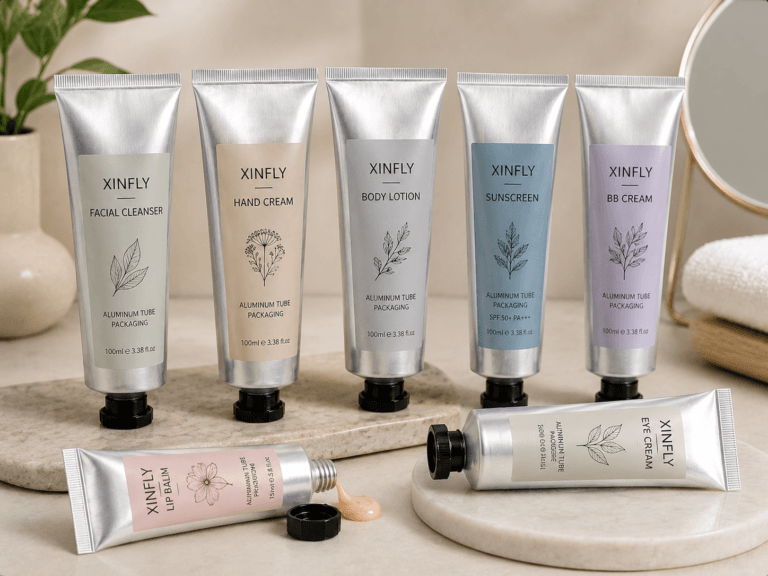
Your packaging should match your brand’s values and what buyers want. Think about how it works, how much it costs, and how it looks in stores. If you need help, Xinfly Packaging can guide you. They offer both types of cosmetic tubes. They give expert advice to help you choose the right packaging. They help you find good materials for your product, your brand, and your green goals.
Tip: Talk to your packaging supplier about your formula, your brand story, and your budget. They can help you make a tube that fits your needs and your buyers.
You want your cosmetic tube to fit your product and brand. Think about how green the materials are. Also, think about how well the tube protects your product. Cost matters too, so check if it fits your budget. Make sure the tube looks nice and matches your brand style.
| Factor | What to Consider |
|---|---|
| Sustainability | Uses eco-friendly stuff |
| Functionality | Keeps products safe |
| Cost | Price and quality |
| Aesthetics | Looks good on shelves |
If you want to start, do these steps:
- Tell suppliers like Xinfly Packaging what you need. Xinfly Packaging is a professional cosmetic tubes supplier providing custom PE, PCR, ABL, and PBL tube packaging solutions for global beauty brands with certifications, such as ISO , RoHS (RoHS No.: NTS2405005R), SGS (Test Report No.: GZHL24050181970T .you can check online at https://www.sgsonline.com.cn/DocCheck ), PCR Plastic GRS (GRS-Certificate No.: ITS-TE-00059997-GRS-G) and third-party testing.You can find more Certifications at https://xinflypackaging.com/certifications/
- Ask for samples to see how soft the tube is, how good the printing looks, and if the cap fits well.
- Make sure you like your choice before making lots of tubes.
Tip: Trying samples helps you pick the right tube and avoid problems.
Frequently Asked Questions About PE Tubes vs Laminated Tubes
Learn the differences between PE cosmetic tubes and laminated cosmetic tubes for skincare, beauty and personal care packaging, including barrier protection, sustainable cosmetic packaging, OEM cosmetic tube manufacturing, custom cosmetic tube packaging and private label cosmetic packaging solutions.
What is the difference between PE tubes and laminated tubes?
What are PE cosmetic tubes used for?
What are laminated cosmetic tubes?
Which has better barrier protection, PE tubes or laminated tubes?
Are PE cosmetic tubes more sustainable than laminated tubes?
What products are suitable for laminated cosmetic tubes?
Can PE tubes and laminated tubes be customized?
What printing options are available for cosmetic tube packaging?
Which cosmetic tube packaging solution is more cost-effective?
Can laminated tubes improve cosmetic product shelf life?
Why are PE cosmetic tubes popular for skincare packaging?
Why choose Xinfly Packaging for cosmetic tube manufacturing?
Need Help Choosing PE Tubes or Laminated Tubes?
Xinfly Packaging helps skincare and beauty brands compare PE cosmetic tubes, ABL laminate tubes and PBL cosmetic tubes based on barrier performance, formula compatibility, sustainability goals, custom printing and OEM cosmetic packaging requirements.