

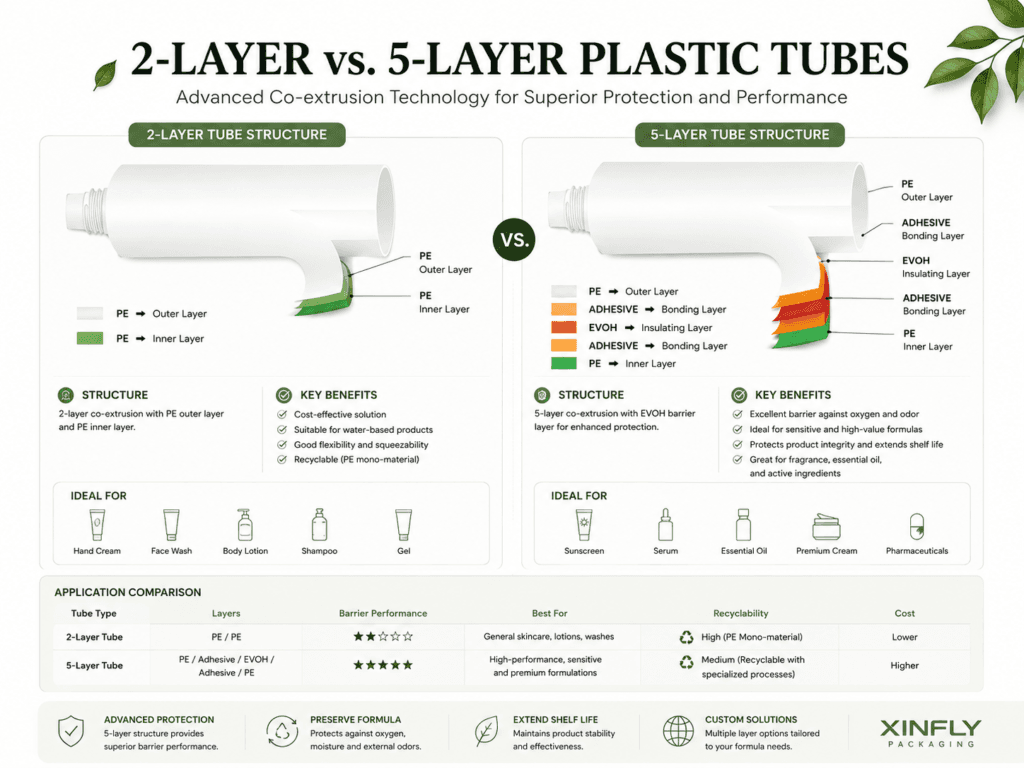
When you pick between 2-layer tubes and 5-layer plastic tubes, it depends on what your product needs. If you want something cheap for simple protection, 2-layer tubes are good. These tubes use only PE. They are great for things like toothpaste or body creams. For fancy products that need more protection from air and water, 5-layer plastic tubes are better. These tubes add EVOH for extra safety. The table below shows the main differences:
| Tube Type | Application Examples | Cost Implications |
|---|---|---|
| 2-layer | Toothpaste, body creams, food condiments | Needs only basic barrier, saves money, is the main goal, and has 26% of the market. |
| 5-layer | Sunscreen, toothpaste, skincare formulations | Gives stronger barrier, good for products that are more sensitive. |
Think about how sensitive your product is, how long it lasts, and your budget. Xinfly Packaging has both types to help you choose what works best.
Key Takeaways
- Pick 2-layer tubes if you want to save money. These work well for things like toothpaste and body creams. Use 5-layer tubes if your product needs more protection from air and water. This is important for fancy skincare and medicine creams. Think about how sensitive your product is and how long it should last. Sensitive products need stronger tubes. Make sure to match your budget with what your product needs. You can start with 2-layer tubes for simple protection. Move to 5-layer tubes if you want better quality. Talk to packaging experts like Xinfly Packaging. They can help you avoid mistakes and keep your product safe and useful.
Tube Packaging Overview
Industry Uses
Plastic tubes are used in many different industries. Each industry uses them for different reasons. Here are some main examples:
- Personal care & cosmetics use about 22.3% of all tubes. Lotions, creams, and sunscreens often come in these tubes.
- Oral care is a big user too. Toothpaste is the most common product in this group.
- Pharmaceuticals need tubes for medicines you put on your skin.
- Food & beverages use tubes for things like sauces and condiments. This area is growing by about 5.8% each year.
- The top five companies sell about 75.6% of all plastic tubes.
For example, a sunscreen brand might pick a 5-layer tube. This helps keep the formula safe. A ketchup brand may use a 2-layer tube to save money. Medicine creams often need multi-layer tubes to stay stable. These examples show why different products need different tubes.
Material Importance
The tube’s material helps protect what is inside. This protection can make products last longer and stay good. Here is why the material matters:
- Tube materials control how much air and water get in. Lower rates mean better protection from air and water.
- Laminated tubes with more layers can block 30–60% more moisture. This keeps medicine and cosmetics working longer.
- Multi-layer tubes have special layers like EVOH. These layers stop gases and solvents. This is important for sensitive or fancy products.
- More people now want 5-layer tubes. These tubes give better protection and help products stay fresh.
- Being green is important too. New mono-material tubes use high-barrier polyethylene. This makes recycling easier and still protects the product.
Think about how sensitive your product is and how long it needs to last. For example, a vitamin cream that is hurt by oxygen needs a 5-layer tube with EVOH. A simple hand cream can use a 2-layer PE tube.
Knowing these things helps you choose the right tube. You can balance protection, cost, and being green.
2-layer Tubes
Structure and Materials
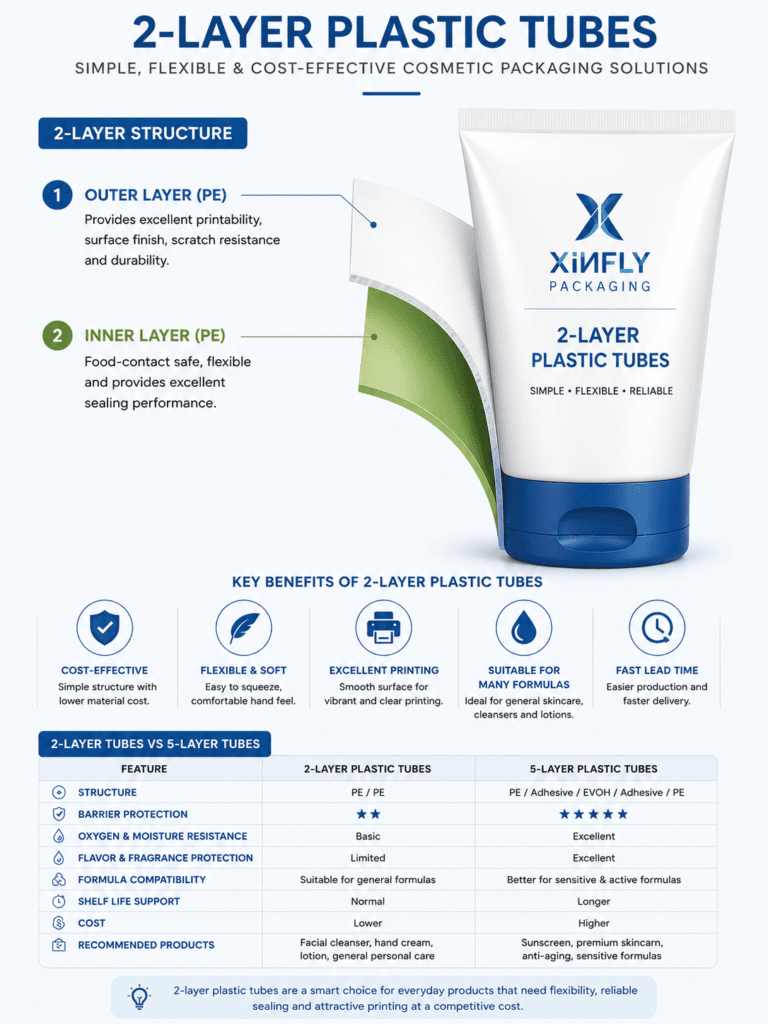
2-layer tubes are made mostly from polyethylene (PE). PE makes the tube strong and bendy. The tube has two layers of PE pressed together. This design is simple and works for many things. There are no extra barrier layers like EVOH in these tubes. So, PE does most of the protecting. The tube is light and easy to squeeze. It is also easier to recycle than tubes with more layers.
Applications
You see 2-layer tubes in lots of products you use every day. Toothpaste, hand creams, and food condiments often come in these tubes. Brands pick these tubes to save money. They use them when the product does not need extra protection. For example, ketchup uses a 2-layer tube because it does not spoil fast. Body cream companies use them for lotions that do not react with air. Yogurt pouches sometimes use 2-layer tubes. These tubes make it easy to open and squeeze out the food.
Basic Protection
A 2-layer tube gives you medium protection. The table below shows how it compares to 5-layer tubes:
| Comparison Item | 5-Layer Plastic Tubes | 2-Layer Plastic Tubes | Best Choice For |
|---|---|---|---|
| Barrier Protection | Higher barrier performance against oxygen and formula migration | Moderate protection for general cosmetic formulas | 5-layer tubes for sensitive formulas |
Sometimes, 2-layer tubes can have problems. You might see a yogurt pouch open at the side seam. A ketchup sachet could leak from a corner. A flexible tube might bubble between layers after hot filling. These things happen when the tube gets hot, squeezed, or bent. Weak spots can make the layers come apart. 2-layer tubes are best for products that do not need strong protection. If your product is hurt by air or water, you should pick a tube with more layers.
5-layer Plastic Tubes
Structure and EVOH Barrier
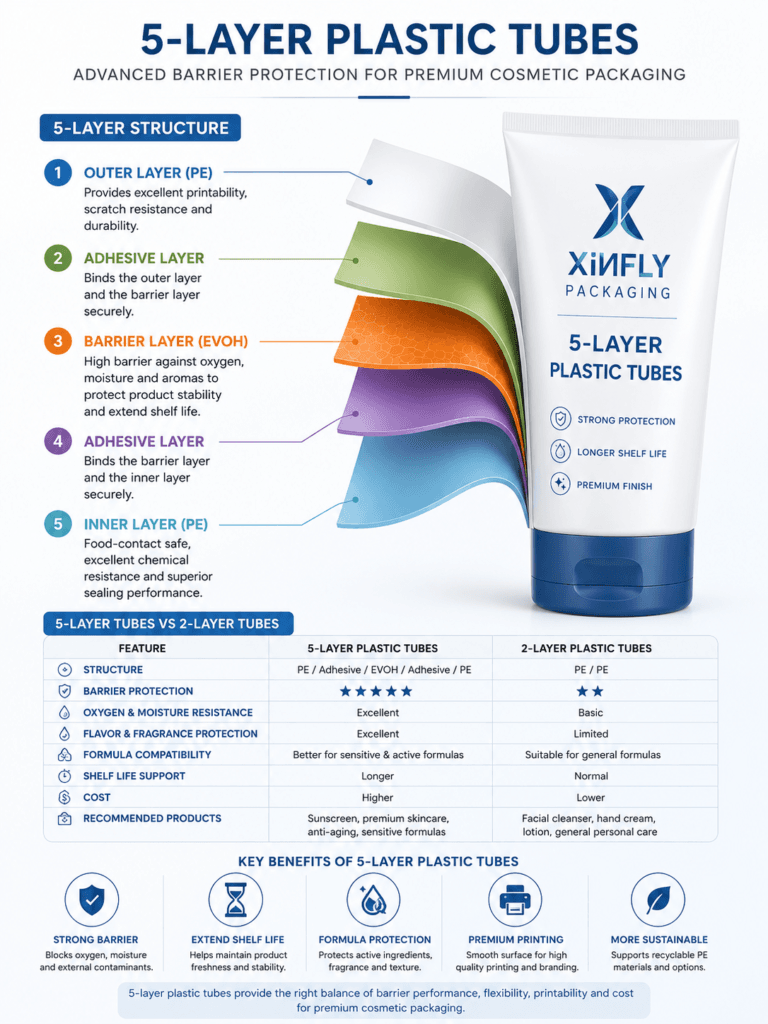
5-layer plastic tubes have a special design to keep things safe. These tubes have five layers in total. The inside and outside layers use polyethylene (PE). PE makes the tube strong and bendy. Two TIE resin layers are in the middle. These layers help all the parts stick together. The most important part is the EVOH layer. EVOH means ethylene vinyl alcohol. This layer gives the tube a better barrier. It stops oxygen from getting inside. This keeps your product fresh for longer. EVOH also helps protect metal parts by blocking air and water. Your product can last longer and stay safe because of this.
Here is a table that shows the structure:
| Layer Type | Function |
|---|---|
| Inner PE | Makes the shape and forms the inside of the tube. |
| Polymer Bonding Layer | Holds the layers together and adds strength. |
| EVOH | Blocks gases, oils, and solvents. |
| Polymer Bonding Layer | Adds more strength and keeps layers together. |
| Outer PE | Protects from outside damage and sunlight. |
Enhanced Protection
A 5-layer tube gives stronger barrier protection. EVOH works better than other materials. It blocks oxygen and water but stays flexible. It is also easier to recycle than some other barriers. This means you can protect your product and help the planet. These tubes stop gas, oil, and solvent from getting in or out. They also keep smells and important ingredients inside. Many skincare and medicine brands use 5-layer plastic tubes for this reason.
- Keeps oxygen and odors out
- Holds in fragrance and important ingredients
- Works well for products that need extra care
Sensitive Product Uses
Pick a 5-layer tube if your product is sensitive or costs a lot. These tubes give better protection from air, water, and germs. They help your product last longer on the shelf. Here are three times when you need 5-layer plastic tubes:
- Premium Skincare: Anti-aging creams stay fresh and strong because the tube blocks air and light.
- Medicinal Creams: Medicine for skin problems does not lose power because the tube keeps out moisture and germs.
- High-end Sunscreen: The formula does not break down, so your skin gets full protection every time.
The table below shows why these tubes are best for sensitive products:
| Advantage | Description |
|---|---|
| Enhanced Protection | Stops outside things from getting in and keeps your product safe. |
| Extended Shelf Life | Makes sure active ingredients stay strong for a long time. |
| Best For | Premium skincare, anti-aging creams, and medicines that need advanced protection. |
You can trust 5-layer plastic tubes to give your product a better barrier and keep it safe.
Comparing 2-layer and 5-layer Tube Protection
Barrier Performance
You need to know how well each tube keeps your product safe. Barrier performance means how much air, water, or other things can get through the tube. A 2-layer tube uses only polyethylene. This material blocks some moisture and air, but not all. You can use it for products that do not spoil quickly. For example, a ketchup brand uses 2-layer tubes because the sauce stays fresh without extra barriers.
A 5-layer tube adds an EVOH layer. EVOH stops oxygen and other gases from getting inside. You get stronger protection for sensitive products. Sunscreen makers choose 5-layer tubes to keep the formula stable. Medicine creams also need this barrier to stay effective.
Tip: If your product loses quality when exposed to air, you should pick a tube with more layers.
Case Examples:
- A skincare company uses 5-layer tubes for anti-aging creams. The barrier keeps the ingredients strong.
- A food brand packs mayonnaise in 2-layer tubes. The product stays good because it does not react with air.
- A toothpaste maker switches to 5-layer tubes for a new formula. The tube stops flavor loss.
Durability
Durability shows how well the tube holds up during use. You want a tube that does not break, leak, or lose shape. A 2-layer tube feels flexible and squeezes easily. It works well for daily products. You might see problems if you squeeze too hard or fill the tube with hot liquid. Sometimes, the tube can split at the seam.
A 5-layer tube feels stronger. The extra layers make it harder to break. You can use it for products that need a tough package. Sunscreen tubes often face rough handling. The 5-layer design keeps them safe.
Table: Durability Comparison
| Tube Type | Durability Level | Common Issues | Best Use Case |
|---|---|---|---|
| 2-layer | Moderate | Seam splits, leaks | Everyday creams, sauces |
| 5-layer | High | Rare leaks, holds shape | Premium skincare, medicine |
Case Examples:
- A yogurt brand uses 2-layer tubes. Some tubes leak after hot filling, so they switch to thicker material.
- A sunscreen company tests 5-layer tubes. The tubes survive drops and squeezing without damage.
- A hand cream maker finds 2-layer tubes work well for gentle use, but not for travel packs.
Cost Considerations
You need to balance quality and price. A 2-layer tube gives you a lower cost. You save money when you do not need extra barriers. Many brands pick 2-layer tubes for cost-effective packaging. You can use them for products that do not need strong protection.
A 5-layer tube costs more. The extra layers and EVOH add to the price. You pay more, but you get better safety for your product. Premium brands choose 5-layer tubes to protect their formulas.
Note: If your budget is tight, you can start with 2-layer tubes. Upgrade to 5-layer tubes when your product needs more protection.
Case Examples:
- A condiment company uses 2-layer tubes to keep costs down. The tubes work well for sauces.
- A skincare brand invests in 5-layer tubes for a new luxury line. The higher price matches the product’s value.
- A toothpaste maker tests both tubes. They find 2-layer tubes are cost-effective for basic formulas, but 5-layer tubes are better for sensitive products.
Choosing the Right Tube
Product Needs
Before choosing a tube, think about your product’s sensitivity, how long it lasts, and your budget. Products that react to oxygen or moisture, like vitamin C creams or retinoid serums, need strong barrier protection. If your product is gentle and stays good for a while, a simpler tube will work. The right tube helps your product stay stable and last longer on the shelf.
Here is a table that shows how different tubes protect sensitive products:
| Tube Type | Benefits for Sensitive Products |
|---|---|
| All-aluminum tubes | Great protection from light, air, and moisture; perfect for oxygen-sensitive products like vitamin C serums. |
| Aluminum-plastic tubes | Good barrier protection and more flexible. |
| PE tubes | Best for gentle products like cleansers and moisturizers. |
| Paper-plastic tubes | Eco-friendly choice for brands that care about sustainability. |
Also, think about how long your product needs to stay fresh. Multi-layer tubes with EVOH keep active ingredients safe and help your product last longer. Moisture barriers stop drying and contamination. This is important for products that need extra stability.
Tip: If your product has antioxidants or other oxygen-sensitive ingredients, pick a tube with strong oxygen barrier features.
Pick 2-layer tubes if your product is simple and cheap, like hand cream. Use 5-layer tubes when your formula needs strong protection, like anti-aging creams or sunscreens. Many brands ask Xinfly Packaging for help so they do not make mistakes. These mistakes can be using the wrong materials, having caps that leak, or printing that does not look good. Xinfly also helps with special designs and checks for quality. Here are some common problems:
| Complaint Type | Description |
|---|---|
| Material Incompatibility | Product reacts with tube, causing spoilage. |
| Decoration Adhesion Failures | Printing peels or fades, hurting your brand. |
| Insufficient Overflow Capacity | Tube size does not match label claims. |
You can count on Xinfly Packaging to help you and keep your brand safe.
Frequently Asked Questions About 2-Layer vs 5-Layer Plastic Tubes
Learn the difference between 2-layer plastic tubes and 5-layer plastic tubes for cosmetic packaging, including barrier performance, PE cosmetic tubes, custom cosmetic tube packaging, skincare tube packaging, sustainable cosmetic packaging and OEM cosmetic tube manufacturing.
What is the difference between 2-layer and 5-layer plastic tubes?
What are 2-layer plastic tubes used for?
What are 5-layer plastic tubes used for?
Which has better barrier performance, 2-layer or 5-layer plastic tubes?
Are 2-layer plastic tubes more cost-effective?
Can 5-layer plastic tubes improve product shelf life?
Can 2-layer and 5-layer plastic tubes be customized?
What printing options are available for plastic cosmetic tubes?
Are 5-layer plastic tubes suitable for sustainable cosmetic packaging?
How do I choose between 2-layer and 5-layer cosmetic tubes?
Can 2-layer and 5-layer tubes be used for private label cosmetic packaging?
Why choose Xinfly Packaging for plastic cosmetic tubes?
Need Help Choosing 2-Layer or 5-Layer Plastic Tubes?
Xinfly Packaging helps skincare and beauty brands select the right plastic cosmetic tube structure based on formula compatibility, barrier performance, sustainability goals, custom printing requirements and OEM cosmetic packaging needs.
