

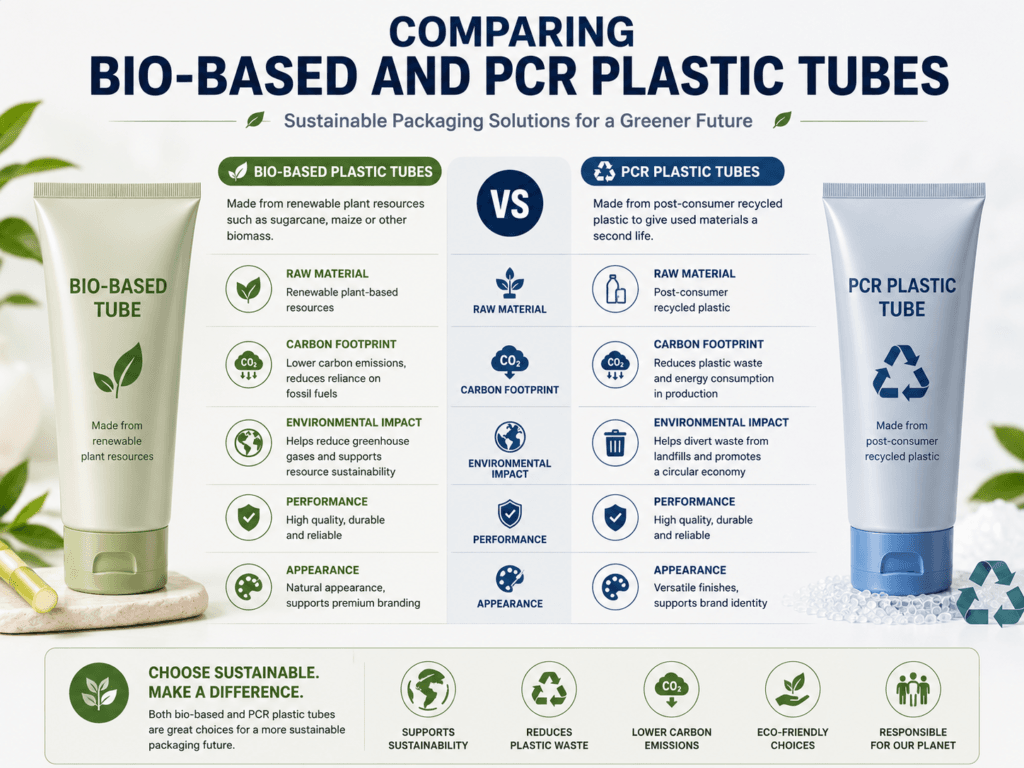
You want to find the best way to package things in 2026. Picking Bio-based Plastic Tubes or PCR plastic tubes is important for your brand and the planet. Both types help cut down on plastic trash, but they do it in different ways. Bio-based tubes use things that can grow again. PCR tubes use plastics that have already been used and recycled. The table below shows how each tube type affects the earth, like their carbon footprint and what happens when you throw them away.
| Material | Cradle-to-Gate Carbon Footprint | End-of-Life Advantage | End-of-Life Limitation |
|---|---|---|---|
| PLA | ~0.5 kg CO₂e/kg | Industrially compostable | Does not home compost; contaminates PET recycling |
| PHA | Variable; certified at −88 kg CO₂e/kg | Home compostable | Expensive to produce |
| Bio-PE | −2.1 to −3.1 kg CO₂e/kg | Recyclable | Not biodegradable |
| rPET | 70–79% lower CO₂ than virgin PET | Keeps material in closed loop | Quality degrades after cycles |
| rHDPE | ~60–70% lower CO₂ than virgin HDPE | Established recycling streams | Food-contact approval limited |
You should think about many things. These include how green the tubes are, if they can be recycled, their carbon footprint, price, how well they work, if you can change how they look, and what people think about green products. The best choice depends on what you want for the earth and your brand. What you pick also changes how much you help the climate and the future of green packaging.
Key Takeaways
- Pick bio-based tubes if you want easy recycling and renewable materials.
- Use PCR tubes to keep plastic in use and show your brand cares about recycling.
- Both tube types give strong and safe packaging for cosmetics.
- Eco-conscious shoppers like green packaging and will pay more for it.
- Using sustainable tubes lowers new plastic use and cuts landfill waste.
- Look at local recycling rules to make sure you throw away bio-based and PCR tubes the right way.
- Think about how your packaging affects the environment to match what customers want.
- Keep up with new trends and ideas in sustainable packaging to make your brand look better.
Quick Verdict on Sustainable Packaging
Summary Comparison
You want to find out which tube is better for the planet in 2026. Bio-based and PCR plastic tubes both help the earth, but they do it in different ways. Bio-based tubes use plants like sugarcane, straw, and wheat straw. These tubes come from things that can grow again. PCR tubes use recycled plastics, so old plastic does not end up in landfills.
You can see how each tube helps cut down waste:
| Mechanism | Description |
|---|---|
| Chemical Recycling | Breaks plastics into small parts. This lets us recycle things that normal ways cannot handle. |
| Bio-plastics and Biodegradable Alternatives | Give us greener choices. They help lower pollution and use less new plastic. |
| Circular Economy | Makes people reuse things. It helps stop waste by getting governments, companies, and buyers to work together. |
When you look at recycling, bio-based PE cosmetic tubes can be recycled up to 90% of the time. PCR cosmetic tubes can be recycled about 70% of the time. This means bio-based tubes get recycled more.
| Type of Tube | Recyclability Rate |
|---|---|
| PE Cosmetic Tubes | Up to 90% |
| PCR Cosmetic Tubes | Around 70% |
You do not need to worry about safety or quality. Both tube types work well for creams and lotions. PCR tubes keep water and air out, just like regular plastics. Bio-based tubes made from straw and wheat straw act like normal plastics.
- PCR tubes are made from recycled materials. They work like regular plastics and keep out moisture and air.
- Bio-based tubes come from sugarcane. They are the same as regular plastics, so they work just as well.
- Both tube types are good for creams and lotions. They do not need extra protection.
You should also think about what buyers want. Most people care about the earth. In 2026, 71% of shoppers pick products with green packaging. About 60-70% will pay more for it. If you use PCR packaging, your brand shows it cares about the planet. This can make shoppers like your brand more.
Key Takeaways for Brands
- Pick bio-based tubes if you want high recycling and renewable materials.
- Pick PCR tubes if you want to keep plastic in use and show your brand cares about recycling.
- Both tube types give you strong and safe packaging for cosmetics.
- Most shoppers want green packaging and will pay extra for it.
- You help the earth by using less new plastic and keeping waste out of landfills.
Tip: Check your local recycling rules. Some places recycle bio-based and PCR tubes in different ways.
You can help the planet by picking the right tube for your products. Both bio-based and PCR plastic tubes help you reach your green goals and connect with people who care about the earth.
Bio-based Plastic Tubes Overview
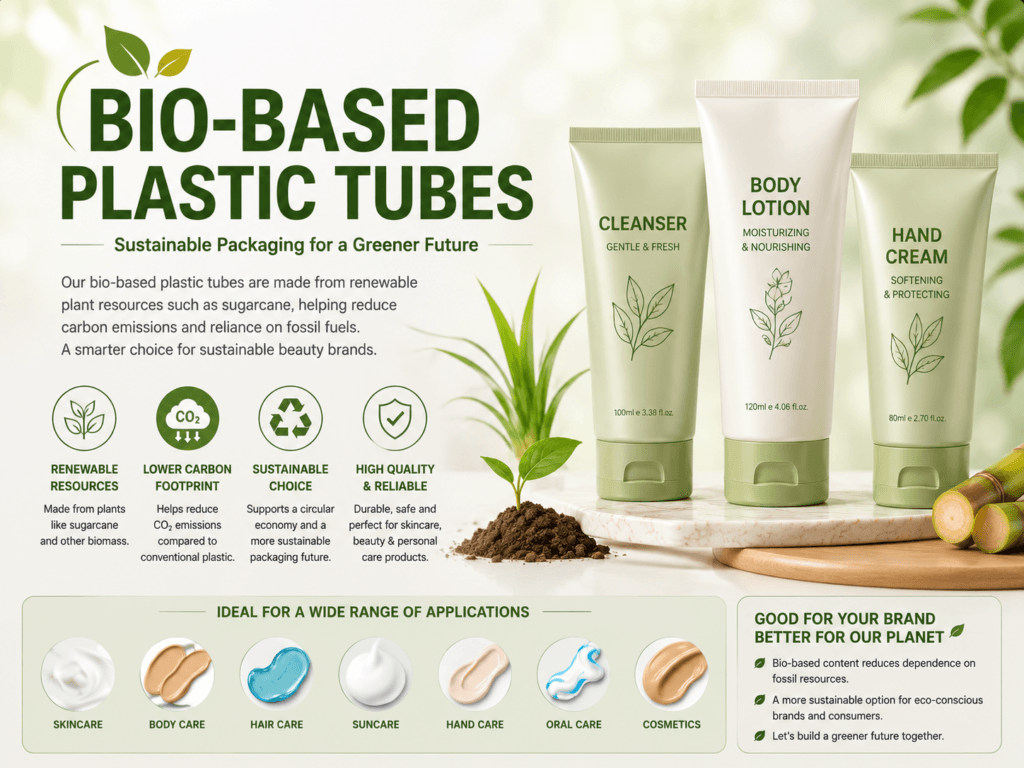
What Are Bio-based Plastic Tubes?
Bio-based plastic tubes are not made from oil. They come from plants and other natural things. These tubes use bioplastics instead of regular plastics. Bioplastics help cut down on fossil fuels and pollution.
Some main ways to make bioplastics are:
- You can use renewable things like corn starch, rice starch, and cellulose.
- Some bioplastics use proteins, such as soy protein or gluten.
- Factories turn sugar into chemicals like lactic acid to make bioplastics.
- Fermentation of sugars or plant oils makes other bioplastics.
- Scientists use microorganisms or special plants to create bioplastics like polyhydroxyalkanoates.
Bio-based plastic tubes use these bioplastics for greener packaging. Picking tubes made from plants helps the planet.
Sugarcane plastic tubes
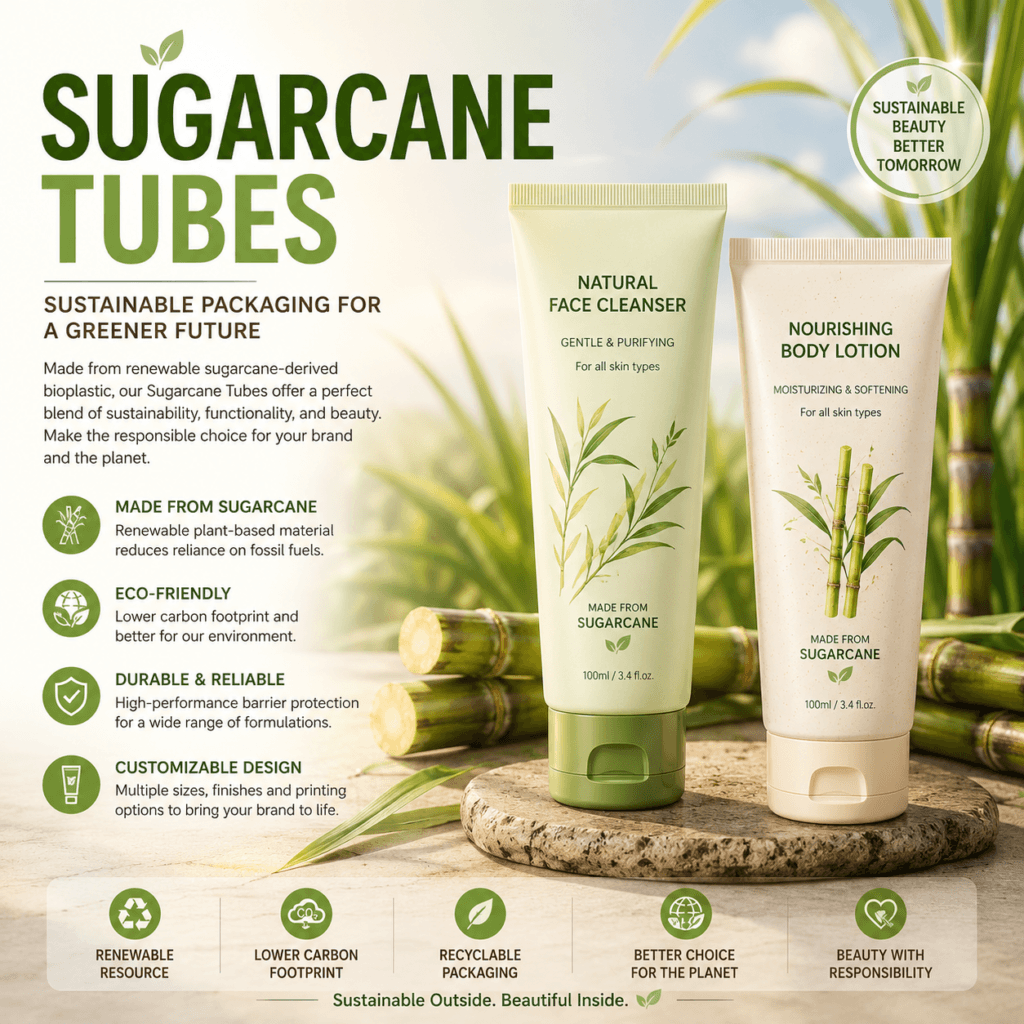
Sugarcane plastic tubes are a common bio-based tube. They come from sugarcane plants. First, workers harvest sugarcane. Factories turn the sugar into ethanol. Ethanol is used to make bioplastics like bio-PE.
Sugarcane grows back every year. It is a renewable resource. Using sugarcane tubes supports a cycle that keeps going. These tubes look and feel like regular plastic tubes. Most places let you recycle them. Many brands pick sugarcane tubes to show they care about the earth.
Straw Material plastic tube
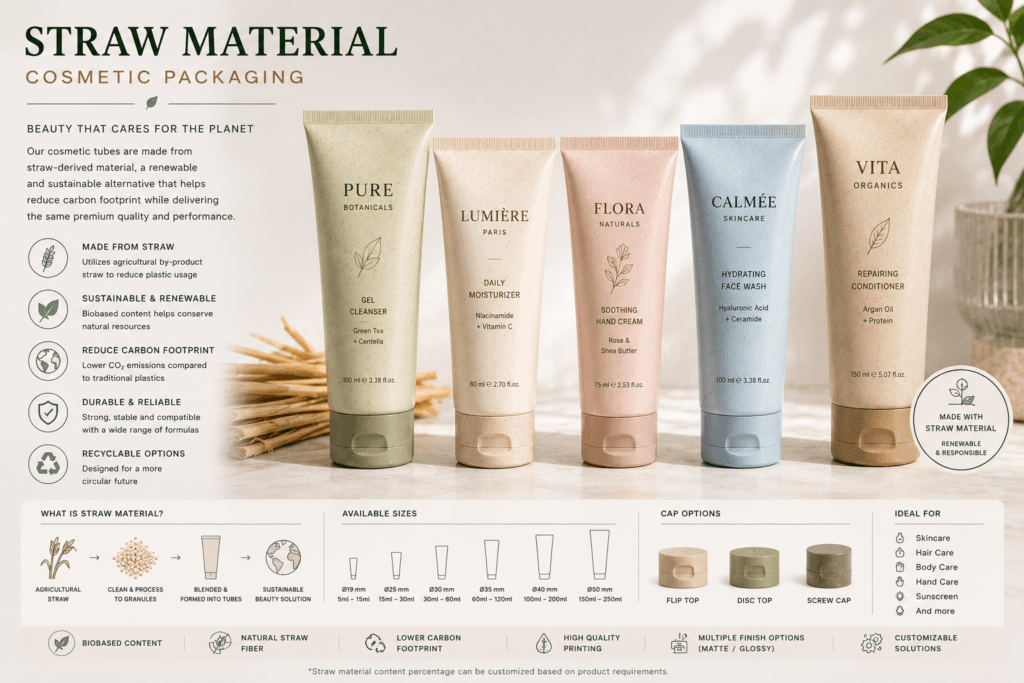
Straw material plastic tubes are another green choice. They use leftover straw from crops like wheat straw. Farmers usually throw away straw after harvest. Now, this waste can be turned into bioplastics for packaging.
Wheat straw plastic tubes work well for many products. They are strong and safe for creams and lotions. Choosing straw tubes helps cut waste. You use less oil and help farmers who grow wheat and other grains.
Both straw material and wheat straw plastic tubes are bio-based tubes. They show how farm leftovers can make useful products. This helps protect the environment and use resources wisely.
Production from Renewable Resources
Bio-based plastic tubes are made from things that grow back. Factories use plants like sugarcane, corn, and wheat straw. These plants grow again every year. This means we never run out of materials. Using bio-based tubes helps us use less oil.
Sugarcane is used a lot. Workers pick sugarcane and send it to factories. Factories change the sugar into ethanol. Ethanol is turned into bio-polyethylene. This makes plastic tubes that look like regular ones. These tubes come from plants, not oil.
Straw material and wheat straw tubes use farm leftovers. Farmers gather straw after picking wheat. Factories use this straw to make bioplastics. This stops waste and helps farmers.
Note: Using things that grow back lowers pollution. It also cuts greenhouse gases. You help keep the earth safe by using these tubes.
Here is a table showing where bio-based tubes come from:
| Resource | How It Is Used | Benefit |
|---|---|---|
| Sugarcane | Turned into ethanol | Renewable, recyclable |
| Corn | Used for bioplastics | Grows quickly |
| Wheat Straw | Farm waste becomes plastic | Reduces landfill waste |
Choosing tubes made from plants helps make the future greener.
Cost-Effectiveness of Bio-based Fillers
You might ask if bio-based fillers save money. Factories use straw material and wheat straw to cut costs. These fillers are farm waste, so they cost less than oil-based stuff.
Using straw material tubes saves money. Farmers sell extra straw to factories. Factories turn straw into bioplastics. These tubes are strong and cheap to make. Wheat straw tubes work the same way. Farmers earn more and waste goes down.
Bio-based fillers help brands reach green goals without high prices. You can sell eco-friendly packaging for less. Many brands use bio-based fillers to show they care about the earth and keep costs low.
Tip: You can mix bio-based fillers with other bioplastics. This helps you get good price and performance.
Here is a table showing how bio-based fillers compare:
| Filler Type | Source | Cost Benefit | Environmental Impact |
|---|---|---|---|
| Straw Material | Farm leftovers | Low production cost | Cuts landfill waste |
| Wheat Straw | Crop residue | Affordable | Supports farmers |
Picking cheap bio-based fillers helps your brand and the planet.
PCR Plastic Tubes Explained
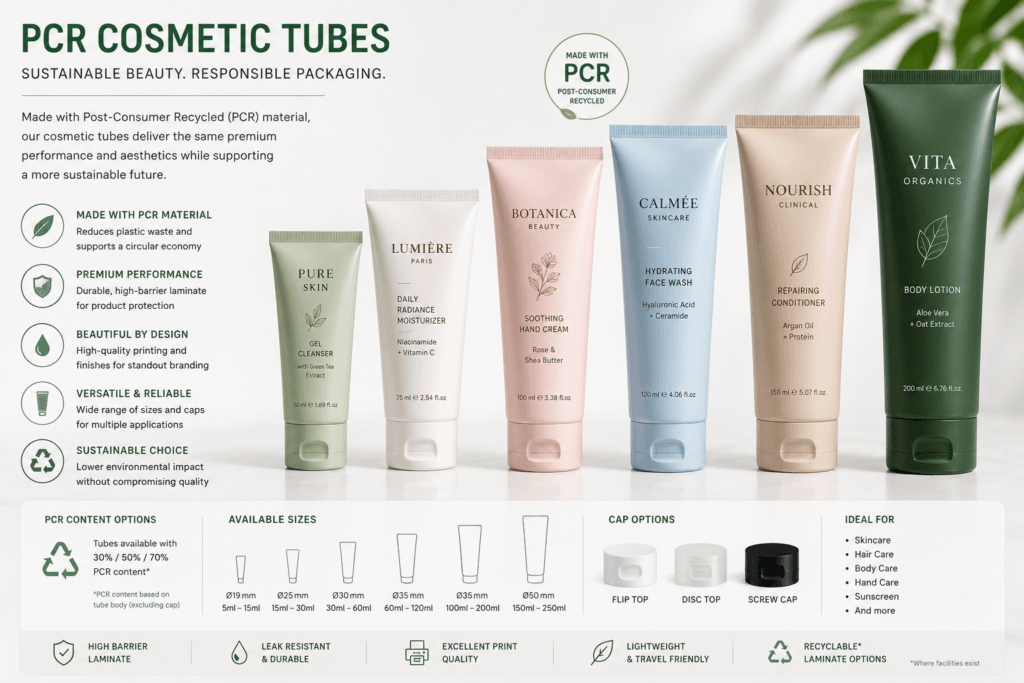
What Are PCR Cosmetic Tubes?
You can find PCR cosmetic tubes in many stores. These tubes are made from recycled plastic waste. Factories collect old bottles and containers. They sort the plastics by type. Then, they wash and shred them into small pieces. Workers turn these pieces into pellets. The pellets are used to make new tubes. PCR cosmetic tubes look like normal cosmetic tubes. You can change how thick or thin the tubes are. You can also pick the shape you want. Factories check the quality because recycled plastic can be different each time. PCR cosmetic tubes are strong like regular plastic tubes. But workers must test every batch to make sure they are the same.
- PCR cosmetic tubes use plastic from old bottles and containers.
- Factories sort, clean, and shred the plastic before making pellets.
- You can make PCR cosmetic tubes in many shapes and sizes.
- PCR cosmetic tubes are strong and last a long time.
How PCR Tubes Reduce Waste
When you pick PCR cosmetic tubes, you help the earth. These tubes stop plastic from going to landfills and oceans. Making PCR cosmetic tubes uses less energy than making new plastic tubes. Factories need up to 88% less energy for recycled plastic. This means less carbon goes into the air. You also save natural resources. PCR cosmetic tubes help you pay less for materials. You do not have to worry about prices going up for new plastic. Using PCR tubes helps lower pollution.
| Benefit | Description |
|---|---|
| Reduces Waste and Pollution | Keeps plastic out of landfills and oceans. This helps stop marine pollution. |
| Conserves Resources | Uses much less energy than making new plastic. This saves energy. |
| Lower Carbon Emissions | Making recycled PET gives off less CO2 than new plastic. |
PCR cosmetic tubes help you save money. You spend less on new materials. You help keep the planet clean. Using recycled plastic supports a circular economy.
Structural Properties and Applications
PCR cosmetic tubes use recycled plastics like rPET, rPP, and rHDPE. Many big beauty brands use these tubes to help the earth. PCR cosmetic tubes can have 30% to 50% recycled plastic. They still work well and do not break easily. The plastic in these tubes is strong but does not break down in nature. PCR cosmetic tubes help brands meet green goals and show they care about the planet.
| Structural Properties | Applications in Cosmetics |
|---|---|
| Made from recycled plastics like rPET, rPP, and rHDPE | Used by beauty brands that want to help the earth |
| Has 30%–50% PCR content and still works well | Helps brands use less new plastic and lower carbon emissions |
| The plastic is strong but not biodegradable | Shows brands care about the earth and green goals |
You can use PCR cosmetic tubes for creams, lotions, and gels. These tubes keep your products safe. PCR cosmetic tubes help you use less new plastic and connect with buyers who care about the earth.
Tip: You can mix PCR cosmetic tubes with other recycled plastics. This can make the tubes work even better and help your brand reach green goals.
Sustainability and Environmental Impact
Resource Use and Raw Materials
You should check where each tube’s materials come from. Bio-based plastic tubes use plants that grow again. Factories make these tubes from sugarcane, straw, and wheat straw. These plants grow back every year. Using bio-based tubes helps cut down fossil fuel use. PCR plastic tubes use recycled plastic. Factories collect old plastic and make new tubes. This keeps plastic waste out of landfills and gives old plastic a new use.
Here is a table showing how each tube uses resources:
| Type of Tube | Source of Raw Material | Sustainability Aspect |
|---|---|---|
| Bio-based | Renewable plant-based resources | Comes from plants, so less fossil fuel is needed |
| PCR | Recycled plastic materials | Uses old plastic, helps recycling, and lowers landfill waste |
When you pick tubes made from plants or recycled plastic, you help the earth. Both choices lower plastic waste and save natural resources.
Land Use and Biodiversity
Bio-based plastic tubes come from crops grown on farms. Factories use sugarcane, straw, and wheat straw to make these tubes. Growing more crops for bioplastics can change how land is used. Farms may clear land to plant more sugarcane or wheat. This can cause animals and plants to lose their homes. Pollution from farming can hurt rivers and soil. These things affect biodiversity. Using bio-based tubes helps cut fossil fuel use, but you should think about how it affects nature.
Note: You can help by picking bio-based tubes made from farm leftovers like straw and wheat straw. These tubes use crop waste and help keep habitats safe.
Pollution and Waste Reduction
You help fight pollution and plastic waste by your choices. PCR plastic tubes use recycled materials. Factories collect old plastic and make new tubes. This keeps plastic out of landfills and oceans. Picking PCR tubes helps lower pollution. Bio-based tubes also help cut plastic waste. Factories use plant materials that break down faster than regular plastic. Straw and wheat straw tubes use farm waste, so less trash goes to landfills.
- PCR tubes keep plastic in use and lower pollution.
- Bio-based tubes use plants and help cut plastic waste.
- Straw and wheat straw tubes use farm leftovers, so less waste goes to landfills.
You help the planet when you pick tubes that fight pollution and plastic waste. Both bio-based and PCR tubes give you ways to protect the earth.
Tip: Ask your supplier how they handle plastic waste and pollution. This helps you make better choices for the planet.
Recyclability and End-of-Life
Recycling Bio-based Plastic Tubes
Most bio-based plastic tubes can be recycled like regular tubes. The type of bioplastic decides how easy it is to recycle. Tubes made from sugarcane, straw material, or wheat straw often use Bio-PE. Bio-PE is easy to recycle in many places. You can put these tubes in the same bin as regular polyethylene tubes.
Straw material and wheat straw tubes also recycle well. They use farm leftovers, so less waste goes to landfills. Recycling these tubes keeps resources in use. The recycling steps for bio-based tubes are like oil-based plastics. You do not need special tools to recycle them.
Note: Always check your local recycling rules. Some places take bio-based tubes, but others do not. Following the right steps helps keep recycling clean and improves rates.
PCR Tubes in Recycling Streams
PCR plastic tubes are made from recycled bottles and containers. Choosing these tubes helps the environment. How well PCR tubes recycle depends on the quality of the plastic. The recycling steps include cleaning, sorting, and melting the plastic. Workers then shape the material into new products.
You may see some problems with PCR tubes in recycling:
- PCR plastic quality can change. This affects how tubes look and feel.
- Processing PCR materials costs more than making new plastic.
- There is not enough PCR plastic because recycling systems are not perfect.
Even with these problems, PCR tubes keep plastic out of landfills. They help create a circular economy by turning waste into new packaging. Using PCR tubes helps lower pollution and saves resources. PCR tubes recycle well, but it depends on your local recycling system.
Compostability and Biodegradability
You might wonder if these tubes break down or compost. Most bio-based plastic tubes, like those made from Bio-PE, can be recycled but are not biodegradable. They do not break down fast in nature. Some special bioplastics, like PLA or PHA, are biodegradable. These break down if the right conditions are met. They must meet standards like ASTM D6400 or EN 13432 to be called compostable.
Straw material and wheat straw tubes are usually not biodegradable unless made from special bioplastics. Check the label to see if a tube is compostable. Compostable packaging breaks down into safe parts at the same speed as food waste.
PCR plastic tubes are not biodegradable or compostable. They focus on recycling instead. PCR tubes keep plastic in use and out of landfills, but they do not break down in nature.
Tip: If you want biodegradable packaging, look for tubes labeled compostable and check for certification. Most tubes focus on recycling, not biodegradability.
| Tube Type | Recyclability | Biodegradable | Compostable |
|---|---|---|---|
| Bio-based (Bio-PE) | Yes | No | No |
| Bio-based (PLA/PHA) | Sometimes | Yes | Sometimes |
| Straw/Wheat Straw Tubes | Yes | No* | No* |
| PCR Plastic Tubes | Yes | No | No |
*Unless made from special biodegradable bioplastics.
You can help the earth by picking tubes that recycle well. If you need tubes that break down, make sure they meet compostable standards.
Carbon Footprint Comparison
Emissions from Production
You want to know how much carbon each tube type puts into the air during production. Bio-based plastic tubes, including straw material plastic tubes and wheat straw plastic tubes, start with plants. Factories turn sugarcane, straw, or wheat straw into plastic. Plants pull carbon dioxide from the air as they grow. This helps lower the total carbon footprint. When factories make bio-based tubes, they use less oil. This means less pollution and fewer greenhouse gases.
PCR plastic tubes use recycled plastic. Factories collect old bottles and containers. They clean and melt the plastic to make new tubes. This process uses less energy than making new plastic from oil. PCR tubes help keep plastic out of landfills. They also cut down on the need for new plastic. However, cleaning and sorting recycled plastic still needs energy.
Here is a table to help you compare:
| Tube Type | Main Material Source | Production Energy Use | Carbon Footprint Impact |
|---|---|---|---|
| Bio-based (Sugarcane, Straw) | Plants | Low to Medium | Lower, plants absorb CO₂ |
| PCR Plastic | Recycled plastics | Low | Lower, less new plastic made |
Note: Bio-based tubes made from straw or wheat straw use farm waste. This means less waste and even lower emissions from production.
Transportation Impacts
You should also think about how tubes travel from the factory to your business. Bio-based tubes often come from places where sugarcane or wheat grows. If you live far from these farms, trucks or ships must move the tubes a long way. This adds to the carbon footprint. Straw material plastic tubes and wheat straw plastic tubes may use local farm waste. If you buy from a local supplier, you help cut down on travel pollution.
PCR plastic tubes use recycled plastic that may come from many places. Factories collect, sort, and ship plastic waste. Sometimes, the plastic travels far before it becomes a new tube. This can add to the carbon footprint. If you choose a supplier close to your business, you help lower transportation impacts.
Here are some tips to lower transportation impacts:
- Pick suppliers close to your factory or store.
- Ask if your tubes use local materials.
- Choose shipping methods that use less fuel.
Tip: You can ask your supplier for details about where the tubes come from and how they ship them. This helps you make greener choices.
You can see that both tube types help lower the carbon footprint. Bio-based tubes use plants that absorb carbon. PCR tubes reuse old plastic and save energy. Where and how you get your tubes also matters. You make the biggest difference when you look at both production and transportation.
Cost and Economic Factors
Material and Manufacturing Costs
You want to know how much making tubes costs. Bio-based plastic tubes use plants like sugarcane, straw material, and wheat straw. Factories get straw and wheat straw from farms. This lowers the price because it is leftover. Sugarcane grows back every year. You do not worry about running out of it. Making tubes from these materials can cost less than oil-based plastics. Buying crop waste helps farmers earn more money.
PCR plastic tubes use recycled plastics. Factories collect old bottles and containers. They clean them and turn them into new tubes. This process saves money because you do not need new plastic. Sometimes, sorting and cleaning recycled plastic costs more. But you still pay less than making tubes from fresh oil. PCR tubes help you avoid price spikes in the oil market.
Here is a table to help you compare costs:
| Tube Type | Main Material Source | Cost Benefit |
|---|---|---|
| Bio-based (Sugarcane) | Renewable plant | Stable price, less oil needed |
| Straw Material/Wheat Straw | Farm leftovers | Low cost, supports farmers |
| PCR Plastic | Recycled bottles/containers | Lower material cost, avoids oil price changes |
Tip: You can mix straw material or wheat straw with other bioplastics. This gives you strong tubes at a good price.
Market Trends for 2026
You see big changes in packaging. More brands want eco-friendly tubes. People care about the earth. Governments make new rules to protect nature. These rules push companies to use tubes that can be recycled or break down in compost. Extended Producer Responsibility laws make brands take care of their packaging after you use it.
Manufacturers now use more bio-based and PCR plastic tubes. Brands in North America and Europe lead the way. They want to attract buyers who care about the planet. If you use non-recyclable tubes, people may think your brand does not care about the earth.
Here is a table showing the latest market trends:
| Evidence Type | Description | Impact |
|---|---|---|
| Surge in Demand for Sustainable Packaging | Environmental concerns and new rules push brands to use biodegradable and recyclable tubes. | Brands get a better reputation and attract buyers who care about the planet. |
| Sustainability Initiatives and Government Regulations | Laws make brands manage packaging waste and use eco-friendly materials. | Companies use more biodegradable plastics and new composites. |
| Growing Sustainability and Environmental Concerns | People and brands want greener packaging because of plastic waste. | Brands that use non-recyclable tubes lose trust and buyers. |
You see that trends in 2026 favor brands that use bio-based and PCR plastic tubes. If you choose these tubes, you help the planet and make your brand stronger.
Note: Bio-based Plastic Tubes include Straw Material plastic tube and Wheat Straw plastic tubes. These options help you meet new rules and save money.
Product Performance
Durability and Barrier Properties
You want your packaging to protect your product. Both bio-based and PCR plastic tubes give you strong and reliable options. These tubes do not break easily. You can squeeze them many times without cracks or leaks. This means your creams, lotions, or gels stay safe inside.
Bio-based tubes, including straw material and wheat straw plastic tubes, have the same strength as regular plastic tubes. They keep out air and water. This helps your product last longer on the shelf. You do not need to worry about moisture or oxygen getting in. PCR plastic tubes also give you good protection. They use recycled plastic but still block air and water like new plastic tubes.
You can trust both tube types for everyday use. They work well for travel, storage, and display. You do not need extra layers or coatings. Your product stays fresh and safe.
Tip: If you want to show your customers that your packaging is tough and eco-friendly, you can choose either bio-based or PCR tubes. Both types meet industry standards for durability.
Compatibility with Formulations
You need packaging that works with many types of products. Both bio-based and PCR plastic tubes fit this need. You can use them for creams, lotions, hair care, and body care products. They do not react with most formulas. This keeps your product pure and safe.
Here is a table to help you compare:
| Tube Type | Compatibility with Formulations | Performance Characteristics |
|---|---|---|
| PCR Cosmetic Tubes | Suitable for most standard formulations | Comparable moisture resistance and oxygen permeability to virgin PE. Commonly used for skincare, body care, and hair care products. |
| Bio-based Tubes | Suitable for creams, lotions, and hair care products | Offers the same oxygen and moisture resistance as traditional plastic tubes. Made from renewable sugarcane ethanol. |
You can see that both tube types work well for most cosmetic products. They do not change the smell, color, or feel of your formula. You get the same results as with regular plastic tubes.
- PCR tubes help you use less new plastic. They support recycling and a circular economy.
- Bio-based tubes come from plants. They lower your carbon footprint and use renewable resources.
- Both tube types let you show your brand cares about the earth. You do not have to give up product quality.
You can pick the tube that matches your brand’s values. Both options keep your products safe and your customers happy.
Customization and Branding
Design Flexibility
You want your packaging to stand out on the shelf. Both bio-based plastic tubes and PCR plastic tubes give you many ways to create a unique look for your brand. Tube packaging acts as a flexible canvas. You can choose from many shapes, sizes, and diameters. This helps you match your product’s style and your brand’s message.
- You can pick tubes that are tall, short, wide, or slim.
- You can select custom diameters to fit your product amount.
- You can design tubes with special shapes for limited editions or holiday themes.
Bio-based polyethylene, including straw material and wheat straw plastic tubes, comes from plants. This lowers your carbon footprint and shows your commitment to the planet. You can also choose refillable tube options. These let your customers reuse the packaging, which supports your brand’s green image.
You can add laminate sleeves to your tubes. These sleeves give you more space for creative designs and extra protection. Custom sizes are easy to make, so you can offer travel-size or family-size products. This flexibility helps you reach more customers and stand out from other brands.
Tip: Try using straw material or wheat straw tubes for a natural look. These materials show your brand cares about both style and the environment.
Printing and Labeling
You can use modern printing technology to make your tubes eye-catching. High-resolution graphics let you show off your logo, product name, and important details. You can add metallic effects for a shiny look or tactile finishes for a special feel. These features help your product grab attention in stores and online.
- You can print bright colors and clear images on both bio-based and PCR tubes.
- You can add raised or textured finishes for a premium touch.
- You can use eco-friendly inks to match your brand’s values.
Labels and printing can cover the whole tube or just a small part. You can choose simple designs or bold patterns. Laminate sleeves allow you to add even more detail and protect your graphics from scratches.
Note: Both bio-based and PCR plastic tubes work well with advanced printing methods. You do not have to give up design quality when you choose sustainable packaging.
You can use your tube’s surface to tell your brand story. Show your commitment to the earth with clear messages and green symbols. Creative design and smart labeling help your product connect with eco-conscious shoppers.
Eco-conscious Consumers and Market Trends
Consumer Preferences
People want different packaging in 2026. Many shoppers look for eco-friendly choices. They want packaging that is good for the earth. They also want it to be easy to recycle or reuse. More shoppers ask brands to care about the planet. This means you must think about your packaging’s impact.
Here are things that matter most to shoppers:
- They want packaging that can be recycled, composted, or reused.
- They look for products with less plastic.
- They like packaging made from paper.
- They expect brands to use new, greener materials.
You can see these preferences in the numbers below:
| Preference Type | Percentage |
|---|---|
| Recyclable, compostable, or reusable | 54% |
| Reduced plastic use | 51% |
| Paper-based options | 31% |
In 2026, shoppers care more about packaging. They pick items with less plastic and more plant-based materials. Bio-based Plastic Tubes, like Straw Material plastic tube and Wheat Straw plastic tubes, fit these needs. These tubes use renewable resources and help cut waste. You can get more buyers by using packaging that matches these trends.
Impact on Brand Image
You build a strong brand by listening to shoppers. Eco-conscious shoppers watch your packaging choices closely. If you use sustainable tubes, your brand shows it cares about the earth. This helps you stand out from other brands.
When you pick bio-based or PCR plastic tubes, you send a clear message. You show you support recycling and use fewer new materials. Shoppers trust brands that make green choices. They feel good buying from you. You also follow new rules about packaging waste.
You can use your packaging to tell your story. Add labels or symbols to show your tubes are recyclable or made from plants. Share facts about your packaging online. This helps shoppers see your brand as a leader in green choices.
Tip: When you choose eco-friendly packaging, you help the earth and build trust with your customers.
By following these trends, your brand gets stronger and more respected. You also help make the future better for everyone.
Ethical and Practical Concerns
Land Use vs. Food Security
You need to think about where the plants for bio-based plastic tubes come from. Factories use crops like sugarcane, corn, and wheat to make these tubes. This includes Straw Material plastic tubes and Wheat Straw plastic tubes. When you use farmland for packaging, you may take land away from growing food. This can cause problems for farmers and people who need food.
You should ask these questions:
- Does the crop for your tube grow on land that could grow food?
- Does the factory use farm leftovers, like straw, instead of food crops?
- Does the crop need a lot of water or chemicals?
If you use Straw Material or Wheat Straw plastic tubes, you help use farm waste. This means you do not take land from food crops. You also help farmers earn more money by selling leftovers. Using only food crops for packaging can raise food prices and hurt people who need cheap food.
Note: You can help protect food security by choosing tubes made from farm waste, not food crops.
Here is a table to help you compare:
| Tube Material | Uses Food Crops? | Uses Farm Waste? | Impact on Food Security |
|---|---|---|---|
| Sugarcane Bio-based Tubes | Yes | No | Can compete with food |
| Straw Material/Wheat Straw | No | Yes | Supports food security |
PCR Supply Chain Transparency
You should know where your PCR plastic tubes come from. PCR stands for Post-Consumer Recycled. Factories collect used plastic bottles and containers to make these tubes. Sometimes, it is hard to know if the plastic is really recycled. Some suppliers mix new plastic with recycled plastic. This can make it hard for you to trust the label.
You can ask your supplier for proof. Ask for certificates or reports that show how much recycled plastic they use. Some brands use QR codes on their packaging. You can scan the code to see the story of the tube. This helps you make sure your packaging is truly green.
Here are steps you can take:
- Ask for supply chain reports from your supplier.
- Look for third-party certifications.
- Use packaging with clear recycling symbols.
Tip: When you know your supply chain, you can tell your customers the truth. This builds trust and shows you care about the planet.
You can help make the packaging world better by asking questions and choosing honest suppliers. This helps everyone move toward a greener future.
Future Outlook and Innovations
Advances in Bio-based Plastics
By 2026, bio-based plastic tubes will change a lot. Scientists and companies are making these tubes better for the earth and for you. New research lets factories use more kinds of plants to make plastics. Tubes can come from sugarcane, corn, straw, and wheat straw. Straw Material plastic tubes and Wheat Straw plastic tubes use farm waste that used to be thrown away. This helps cut down on trash and helps local farmers.
New bio-based plastics need less energy to make. Factories use better machines and cleaner energy. Some new plastics can break down faster in compost centers. You can check labels to see if a tube is compostable or biodegradable. Soon, more tubes will break down safely in nature.
Here are some big changes you will see:
- More plant sources: Tubes will use many crops, not just sugarcane.
- Better compostability: Some tubes will break down in home compost bins.
- Improved strength: New bio-based plastics will keep your products safe like regular plastics.
- Lower costs: Using straw and wheat straw keeps prices low.
Note: Picking bio-based tubes helps farmers and cuts waste. It also shows your customers that your brand cares about the earth.
PCR Processing Innovations
PCR plastic tubes will get better in the next few years. Factories now use smart sorting machines. These machines find and sort plastics faster and make fewer mistakes. You will see more tubes with higher PCR content. Some tubes will have up to 70% PCR and still be strong.
New cleaning steps take out more colors and smells from recycled plastics. This means your tubes can look and feel like new ones. You will also see better ways to track recycled materials. Some brands use QR codes so you can see where the plastic came from.
Here is a table showing what is new with PCR tubes:
| Innovation | Benefit for You |
|---|---|
| Smarter sorting | Cleaner, higher-quality tubes |
| Better cleaning | Tubes look and smell better |
| More PCR content | Less new plastic used |
| Supply chain tracking | More trust in green claims |
Tip: Ask your supplier about new PCR ideas. Using the newest PCR tubes helps your brand stay green.
You will see that new bio-based and PCR tubes make it easier to pick packaging that is good for the earth and your business.
Side-by-Side Comparison Table
Bio-based vs. PCR Tubes
You want to pick the best tube for your brand and the earth. This table shows how bio-based plastic tubes and PCR plastic tubes are different and alike. It helps you see the main points quickly. Use this table to help you decide.
Tip: Choose the things that matter most to your brand, like recyclability, price, or what buyers like.
| Criteria | Bio-based Plastic Tubes (Sugarcane, Straw Material, Wheat Straw) | PCR Plastic Tubes (Post-Consumer Recycled) |
|---|---|---|
| Raw Material Source | Plants like crops and farm waste such as straw and wheat straw | Used plastic bottles and containers |
| Resource Use | Uses things that grow again; helps farmers use crop waste | Cuts landfill waste; keeps plastic in use |
| Carbon Footprint | Low; plants take in CO₂ when they grow | Low; making tubes uses less energy than new plastic |
| Recyclability | High (up to 90% for Bio-PE); fits in regular recycling bins | Good (about 70%); depends on local rules |
| Biodegradability | Not usually biodegradable unless special bioplastics are used | Not biodegradable |
| Compostability | Only some special types like PLA or PHA | Not compostable |
| Cost | Stable; can be low with straw or wheat straw fillers | Often lower than new plastic; may change with supply |
| Product Performance | Strong; works well for creams and lotions | Strong; works like regular plastic tubes |
| Customization | Many shapes, sizes, and finishes; straw gives a natural look | Many shapes, sizes, and finishes |
| Consumer Appeal | Seen as eco-friendly; uses plants and farm waste | Seen as eco-friendly; supports recycling |
| Ethical Concerns | May use land for crops instead of food (except straw/wheat straw tubes) | Needs clear supply chain information |
| Market Trends 2026 | More people want them; meets new rules and buyer needs | More people want them; fits circular economy goals |
Both tube types help you reach green goals. Bio-based tubes use plants and farm leftovers. PCR tubes keep plastic out of landfills. The best choice depends on your brand, your product, and what your buyers care about.
Recommendations for Sustainable Packaging
Choosing the Right Tube
You want to make the best choice for your brand and the planet. Start by thinking about what matters most to you. Do you want to use renewable resources? Bio-based Plastic Tubes, including Straw Material and Wheat Straw plastic tubes, use plants and farm waste. These tubes help lower your carbon footprint and support farmers. If you want to keep plastic out of landfills, PCR Plastic Tubes use recycled bottles and containers. These tubes help create a circular economy and show your brand cares about recycling.
You should also look at your product needs. Both tube types work well for creams, lotions, and gels. They protect your product and keep it fresh. If you want a natural look, straw and wheat straw tubes give your packaging a unique style. If you want to highlight recycling, PCR tubes let you show your commitment to using less new plastic.
Tip: Ask your supplier about local recycling rules. Some places recycle bio-based and PCR tubes in different ways.
Here is a quick table to help you decide:
| Your Priority | Best Tube Option |
|---|---|
| Renewable resources | Bio-based (Straw Material, Wheat Straw) |
| Recycling focus | PCR Plastic Tubes |
| Natural look | Straw Material/Wheat Straw Tubes |
| Circular economy | PCR Plastic Tubes |
Steps for Brands
You can follow these steps to pick and use the right sustainable tube:
- Set Your Goals
Decide what you want to achieve. Do you want to lower your carbon footprint, support farmers, or use more recycled materials? - Check Product Needs
Test both tube types with your products. Make sure the tubes keep your creams or lotions safe and fresh. - Talk to Suppliers
Ask about the source of materials. Find out if the tubes use farm waste or recycled plastic. Request proof or certificates. - Review Local Recycling
Learn how your area recycles tubes. Choose options that fit local recycling systems. - Share Your Story
Use your packaging to tell buyers about your green choices. Add labels or QR codes to show your tubes are eco-friendly. - Stay Updated
Watch for new rules and new tube types. Try new ideas like compostable tubes or higher PCR content.
Note: You help the earth and your brand when you pick the right tube. Small changes in packaging can make a big difference.
You can lead the way in green packaging. Choose tubes that match your values and your buyers’ needs. Your choices today shape a better future for everyone.
You can pick good packaging choices in 2026. Bio-based Plastic Tubes use plants that grow again. Straw Material and Wheat Straw plastic tubes are made from farm leftovers. PCR Plastic Tubes use old plastic and help recycling. You need to think about the earth and how the tubes work.
- Try both tube types with your products.
- Ask suppliers about new ideas and recycling rules.
Watch for new laws and technology. Pick packaging that fits your brand and helps the earth.
Frequently Asked Questions About Bio-Based Plastic Tubes vs PCR Plastic Tubes
Learn the difference between bio-based plastic tubes and PCR plastic tubes for sustainable cosmetic packaging, including sugarcane plastic tubes, recyclable cosmetic tubes, custom cosmetic tubes, OEM cosmetic tube manufacturing and eco-friendly skincare tube packaging.
What is the difference between bio-based plastic tubes and PCR plastic tubes?
What are bio-based plastic tubes?
What are PCR plastic tubes?
Which is more sustainable, bio-based plastic tubes or PCR plastic tubes?
Are bio-based cosmetic tubes recyclable?
Are PCR cosmetic tubes suitable for skincare packaging?
Can bio-based and PCR plastic tubes be customized?
What products can use sustainable plastic tube packaging?
Which option is better for eco-friendly cosmetic packaging?
Can bio-based and PCR plastic tubes support OEM cosmetic packaging?
What should I check before choosing sustainable cosmetic tubes?
Why choose Xinfly Packaging for sustainable cosmetic tubes?
Need Help Choosing Bio-Based or PCR Plastic Tubes?
Xinfly Packaging helps skincare and beauty brands compare bio-based plastic tubes, PCR plastic tubes and sustainable cosmetic packaging options based on material source, formula compatibility, recyclability goals, custom printing and OEM cosmetic packaging requirements.
